
thai salad recipe

The Best thai salad recipe
This recipe is perfect for any occasion. It’s easy to double or triple if you’re feeding a crowd, and it’s just as delicious when you’re just grabbing something quick for lunch or dinner. My family loves it during summer when we’re eating lighter, but it also works well in cooler months if you add a little extra protein or avocado. The health benefits are solid too—it’s loaded with veggies, lean proteins, and healthy fats, all while keeping things light and refreshing. No heavy sauces, no processed junk, just real ingredients that taste amazing. Plus, it’s something you can tweak to suit everyone’s tastes—more spice for the bold, milder for the sensitive. It’s that kind of dish that feels like a little treat without being one.
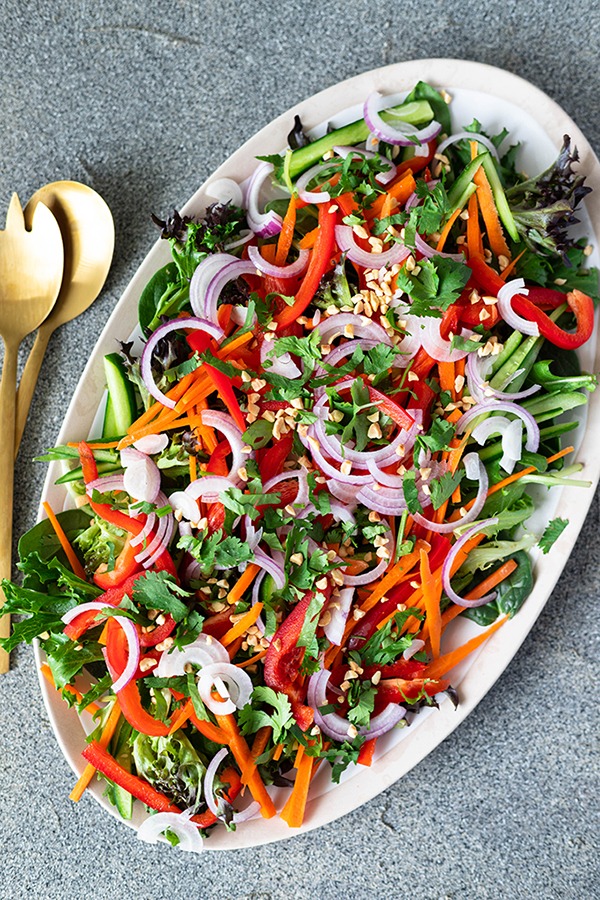
Thai Green Papaya Salad (Som Tam)
A refreshing and tangy Thai salad made with shredded green papaya, mixed vegetables, and a vibrant dressing. Perfect for a light yet flavorful meal.
🥘Ingredients
- 2 cups shredded green papaya (unripe papaya)
- 1 cup shredded cucumber
- 1 cup shredded carrot
- ½ cup chopped red bell pepper
- ½ cup chopped green chili
- ½ cup chopped Thai basil
- 1 tbsp lime juice
- 1 tsp fish sauce (or soy sauce for vegetarian)
- 1 tsp palm sugar (or brown sugar)
- 1 tsp roasted peanuts (optional)
- 1 tbsp lime juice
- 1 tsp fish sauce
- 1 tsp palm sugar (or brown sugar)
- ½ tsp roasted peanuts (optional)
- 1 tsp crushed roasted peanuts (for garnish)
👨🍳Directions
-
1
Shred the green papaya, cucumber, carrot, and red bell pepper into thin, even strips. Set aside. -
2
In a small bowl, mix lime juice, fish sauce, and sugar for the dressing. Set aside. -
3
In a large bowl, combine the shredded vegetables, green chili, and Thai basil. Pour the dressing over and gently toss to coat evenly. -
4
Adjust seasoning with more lime juice, fish sauce, or sugar if needed. Garnish with crushed roasted peanuts and serve immediately.
🔧Equipment
- Sharp knife
- Cutting board
- Mixing bowl
- Small bowl
📊Nutrition Facts (per serving)
📝Notes
- Ensure the green papaya is unripe for the best texture. For extra crunch, add crushed peanuts or toasted cashews.
- Substitute fish sauce with soy sauce if vegetarian. Adjust sweetness and spice levels to taste.
- Serve with grilled chicken, pork, or tofu for a protein boost.
Watch Video Of How Thai Green Papaya Salad (Som Tam) Works
❓ Frequently Asked Questions About Thai Green Papaya Salad (Som Tam)
1. What is the traditional Thai salad, and what are its key ingredients?
The traditional Thai salad, often called Som Tum (ส้มตำ), is a spicy, tangy, and crunchy salad made primarily from shredded green papaya. Its key ingredients include shredded green papaya, cherry tomatoes, green beans, red chili peppers, lime juice, fish sauce, palm sugar (or brown sugar), and a dressing of peanut butter or sometimes sesame oil. The dish is typically garnished with crushed peanuts and cilantro.
—
2. Why is green papaya the star ingredient in Som Tum?
Green papaya is the backbone of Som Tum because its texture—firm yet slightly fibrous—provides the perfect crunch. Its mild, slightly sweet flavor balances the heat and acidity of the other ingredients. The papaya’s natural acidity also helps cut through the richness of the fish sauce and peanut butter, making the dish refreshing and balanced.
—
3. Can I substitute green papaya with another vegetable, and if so, what are the best alternatives?
While green papaya is traditional, you can substitute it with shredded cucumber, jicama, or even shredded carrots for a milder, sweeter version. However, note that these alternatives won’t replicate the authentic crunch and tanginess. For a closer match, try shredded young mango or even slightly underripe papaya (though papaya is less common in Thai cuisine). Avoid overly soft or cooked vegetables like zucchini or bell peppers, as they’ll lose texture.
—
4. Is fish sauce necessary in Som Tum, and what are some vegetarian alternatives?
Yes, fish sauce is a core component of Som Tum, giving it umami depth and saltiness. If you’re avoiding fish sauce, you can use soy sauce, tamari, or coconut aminos as substitutes, though they won’t have the same rich, savory profile. For a vegetarian-friendly version, some recipes replace it with vegan fish sauce (made from mushrooms or seaweed) or a mix of nutritional yeast and soy sauce for a fermented, savory note.
—
5. How do I balance the heat and acidity in Som Tum without burning my mouth?
To control the heat, start with small amounts of chili peppers (such as Thai bird’s eye chilies or serrano peppers) and adjust to taste. If the salad feels too sour, add a pinch of palm sugar or brown sugar to neutralize the acidity. For extra freshness, squeeze lime juice gradually—too much can overpower the dish. If you prefer a milder version, skip the chili or use mild Thai chilies (like Thai chili paste). Always taste as you go!
—
6. Can I make Som Tum ahead of time, and how should I store it?
Som Tum is best eaten fresh, but you can prepare the dressing (peanut or lime-based) separately and mix it with the shredded vegetables just before serving. Store the salad in an airtight container in the fridge for 1–2 days. However, the texture may soften slightly, and the flavors might not be as vibrant. For the best experience, assemble it the night before and eat it fresh the next day.
