
white bread recipe for a bread maker

The Best white bread recipe for a bread maker
What I love most about this recipe is how it’s versatile. It’s not just for everyday eating—it’s perfect for a casual family dinner or even a quick snack when I’m running late. The way it rises and stays soft means it’s great for sandwiches, toast, or even as a base for dips. And honestly, it’s a great way to sneak in a little extra nutrition without anyone even noticing. The whole grain option in this recipe adds fiber and a little extra heartiness, so it’s not just light and fluffy—it’s also good for you in a way that feels satisfying. My family doesn’t even realize how healthy it is because it tastes so good. Plus, it’s foolproof—no one’s ever burned their kitchen trying to make this bread, and that’s a relief. It’s the kind of recipe that makes baking feel simple and stress-free, which is exactly what I want when I’m trying to make dinner happen.
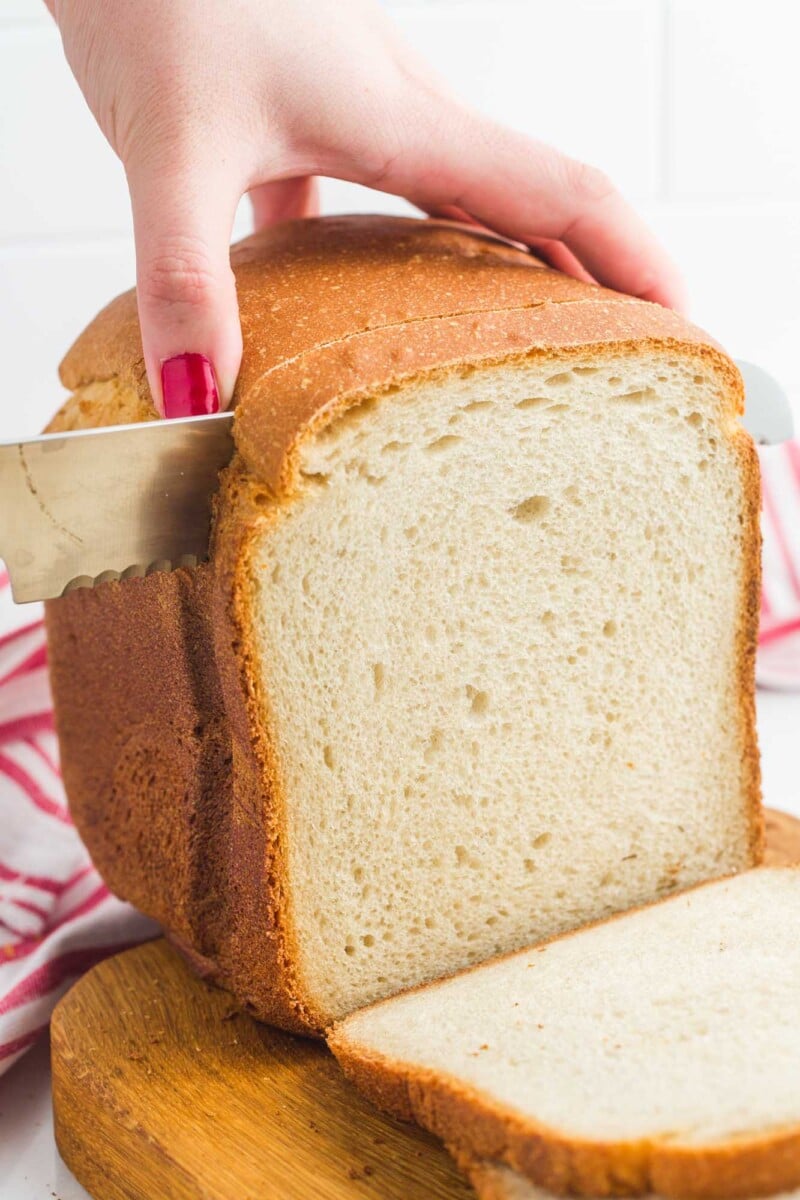
Easy White Bread Recipe for Bread Maker
A simple and fluffy white bread recipe perfect for bread makers, ideal for sandwiches and toast. This recipe is a must-try for any occasion.
🥘Ingredients
- 2 ½ cups all-purpose flour
- 1 teaspoon salt
- 1 teaspoon sugar
- 1 packet (2 ¼ tsp) active dry yeast
- 1 ½ cups warm water (about 110°F/43°C)
- 2 tablespoons unsalted butter, melted
- 1 tablespoon honey or maple syrup (for extra sweetness)
- 1 teaspoon dried herbs (e.g., rosemary, thyme)
👨🍳Directions
-
1
In a mixing bowl, combine flour, salt, sugar, and yeast. Stir well. -
2
Add warm water and melted butter. Mix until a shaggy dough forms. -
3
Transfer dough to the bread maker’s pan. Select the dough cycle (typically 6–8 hours). -
4
After the dough cycle completes, let the bread cool slightly (about 15 minutes). -
5
Transfer the bread to a lined baking sheet. Bake at 375°F (190°C) for 15–20 minutes until golden.
🔧Equipment
- Bread maker machine with dough cycle
- Mixing bowl
- Whisk
- Measuring cups and spoons
- Clean kitchen towel or parchment paper
📊Nutrition Facts (per serving)
📝Notes
Tips
- Ensure water is warm but not boiling to activate yeast properly.
- For a softer bread, add 1 extra tablespoon of butter.
- Store in an airtight container to keep fresh for up to 3 days.
Substitutions
- {“flour”:”Whole wheat flour (replace 1 cup with whole wheat flour for a healthier version)”,”yeast”:”Instant yeast (use 1 ¼ tsp instead of 1 packet)”}
Watch Video Of How Easy White Bread Recipe for Bread Maker Works
❓ Frequently Asked Questions About White Bread for Bread Maker
What is the best type of flour to use for white bread in a bread maker?
The best type of flour for white bread in a bread maker is all-purpose flour (Type 45 or 55). It provides a good balance of protein and gluten development for a soft, slightly dense loaf. For a slightly lighter texture, you can also use bread flour (Type 110 or 120), but it may require a slightly longer proofing time.
—
How much water should I add to the bread maker for white bread?
The ideal water-to-flour ratio for white bread in a bread maker is typically 60% by weight. For example, if you’re using 500g of all-purpose flour, add 300–320ml of warm water (around 105–110°F or 40–43°C). Too much water can make the bread gummy, while too little may result in a dry loaf. Adjust as needed based on your dough’s consistency.
—
Can I use milk or yogurt instead of water for the white bread recipe?
Yes, you can substitute water with milk (whole, 2%) or plain yogurt for a softer, slightly richer bread. For every 500g of flour, use 350ml of milk or yogurt instead of water. This adds moisture and enhances flavor, but the bread may have a slightly denser texture compared to water-based white bread.
—
How long should I let the dough rest before starting the bread maker cycle?
For white bread, you should let the dough rest for at least 30 minutes to 1 hour after mixing—this allows the gluten to relax and the yeast to activate fully. If your bread maker has a “delay start” feature, use it to ensure the dough has time to proof before the cycle begins. Skipping this step may result in a dense or uneven loaf.
—
What are the common mistakes to avoid when making white bread in a bread maker?
1. Overmixing – Stop mixing once the dough forms a shaggy mass; overworking it can make the bread tough.
2. Incorrect hydration – Too much water leads to a sticky, dense loaf; too little makes it dry. Aim for a soft, pliable dough.
3. Skipping proofing – If the dough isn’t proofed enough before baking, the bread may not rise properly.
4. Using cold water – Cold water slows yeast activity; use warm water (around 105°F/40°C) for best results.
5. Ignoring the bread maker’s settings – Follow the manufacturer’s recommended cycle (e.g., dough development, baking) for optimal texture.


