
yaki udon recipe

The Best yaki udon recipe
I love that yaki udon is so versatile. It’s great for a casual weeknight meal when everyone’s tired after a long day, but it also shines as a showstopper for a dinner party or even a family gathering. The way the noodles stick together in the sauce makes it feel festive, and the fact that it’s packed with vegetables and lean protein means it’s not just about empty calories. Plus, the caramelization process gives it a depth of flavor that’s hard to replicate with other dishes. My husband especially loves it because it’s one of those meals that doesn’t require constant attention—just a little stir here and there, and it comes together beautifully. And the best part? It’s something the whole family can enjoy without feeling like it’s “too healthy” or “too fancy.”
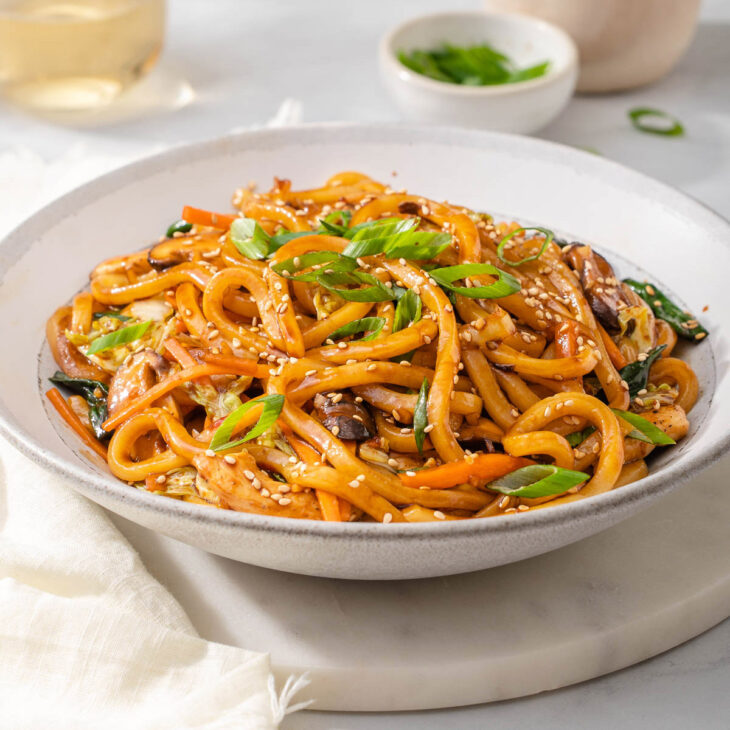
Japanese Yaki Udon (Grilled Udon Noodles)
A flavorful Japanese dish featuring thick udon noodles grilled to perfection with a savory sauce, often topped with soft-boiled eggs, green onions, and sesame seeds. This recipe is a must-try for any occasion.
🥘Ingredients
- 2 cups (250g) all-purpose flour
- 1 tsp salt
- 1/2 tsp instant yeast (optional, for slight chewiness)
- 2 lbs (900g) fresh udon noodles
- 2 tbsp vegetable oil
- 1 cup (240ml) soy sauce
- 1 cup (240ml) mirin
- 1 cup (240ml) water
- 3 tbsp sake (optional)
- 2 tbsp brown sugar
- 1 tbsp grated ginger
- 2 cloves garlic, minced
- 1 tbsp sesame oil
- 4 soft-boiled eggs (peeled)
- 4 green onions, sliced
- 2 tbsp toasted sesame seeds
- 1/2 cup (50g) shredded daikon radish (optional)
- 1/2 cup (50g) shredded napa cabbage (optional)
👨🍳Directions
-
1
Prepare the sauce: In a saucepan, combine soy sauce, mirin, water, sake (if using), brown sugar, ginger, garlic, and sesame oil. Simmer for 5-7 minutes until slightly thickened. Set aside. -
2
Make the dough: Mix flour and salt in a bowl. Add water gradually to form a soft, pliable dough. Knead for 5-7 minutes until smooth. Cover and rest for 30 minutes. -
3
Roll out the dough: Divide dough into 8 equal pieces. Roll each piece into a thin rectangle (about 12×18 inches). Cut each rectangle into 2 equal strips, then roll each strip into a long log. Flatten slightly into noodle shapes. -
4
Preheat a grill pan or skillet over medium-high heat. Lightly oil the pan. Grill udon noodles for 2-3 minutes per side until golden brown and slightly charred. Set aside. -
5
Boil water in a pot and cook udon noodles according to package instructions until al dente. Drain and rinse with cold water to stop cooking. -
6
While noodles cook, prepare toppings: Boil eggs for 6-7 minutes, then cool in ice water. Slice green onions and shred daikon/cabbage if using. -
7
Toss cooked udon noodles with the grilled sauce until evenly coated. Divide among plates, top with soft-boiled eggs, green onions, sesame seeds, and optional vegetables.
🔧Equipment
- Mixing bowls
- Kitchen scale (for precise measurements)
- Rolling pin (or a heavy object to flatten dough)
- Large skillet or wok (for grilling)
- Oven (optional, for baking)
- Slotted spoon
- Cutting board
- Knife
📊Nutrition Facts (per serving)
📝Notes
Tips
- For extra flavor, add a dash of Worcestershire sauce to the sauce mixture.
- Use a mix of all-purpose and whole wheat flour for a healthier, nuttier texture.
- Grilled udon can be served immediately or reheated gently before adding toppings.
- Adjust the sauce to taste; add more soy sauce for saltiness or mirin for sweetness.
Variations
- Add shredded chicken or shrimp to the noodles for a protein boost.
- Top with avocado slices for a creamy texture.
- Use a lighter sauce by reducing mirin and adding a splash of sake.
Watch Video Of How Japanese Yaki Udon (Grilled Udon Noodles) Works
❓ Frequently Asked Questions About Japanese Yaki Udon (Grilled Udon Noodles)
What is the difference between yaki udon and regular udon noodles?
Yaki udon is a type of Japanese noodle dish that involves stir-frying thick, chewy udon noodles with a savory sauce, often including ingredients like pork belly, onions, and green onions. Unlike regular udon, which is typically served cold or hot in a broth, yaki udon is cooked and eaten hot, with a crispy, caramelized exterior from the stir-frying process.
—
How can I achieve the perfect crispy exterior on yaki udon?
To get a crispy exterior, start by parboiling the udon noodles for about 2 minutes to soften them slightly but keep them firm. Then, immediately drain and rinse with cold water to stop cooking. Heat oil in a wok or large pan over high heat and stir-fry the noodles for about 2-3 minutes until they develop a golden, crispy crust. Adding a bit of cornstarch or flour to the noodles before cooking can also enhance crispiness.
—
What are the classic ingredients used in yaki udon and can I substitute any of them?
Classic yaki udon typically includes udon noodles, pork belly (or chicken/thinly sliced pork), onions, green onions, garlic, ginger, and a sweet-savory sauce made from soy sauce, mirin, sake, sugar, and sometimes a touch of sesame oil. You can substitute pork belly with chicken, tofu, or even shrimp, but keep in mind that the flavor profile will differ. For the sauce, reducing soy sauce with a bit of sugar and mirin works well, but you can adjust ratios based on taste.
—
Why does my yaki udon come out mushy or undercooked? Mushy udon can be a common issue when stir-frying. How do I avoid it?
Mushy udon often happens because the noodles are overcooked or not handled properly. To prevent this:
1. Parboil first: Boil udon for about 2 minutes, then drain and rinse with cold water to stop further cooking.
2. Stir-fry quickly: Cook the udon immediately after parboiling in high heat to crisp them up without overcooking.
3. Use fresh noodles: Older udon noodles can absorb too much water and become mushy. Use fresh, firm udon for best results.
4. Don’t overcrowd the pan: Cook in batches if needed to ensure even heat and prevent steam buildup.
—
Can I make yaki udon without pork belly, and if so, what are some good alternatives?
Absolutely! If you’re avoiding pork belly, you can use other proteins like:
– Chicken: Thinly sliced or diced breast or thigh, stir-fried until crispy.
– Shrimp or scallops: Quickly seared for a delicate, slightly sweet flavor.
– Thinly sliced beef (like flank steak): Adds a rich, savory taste.
– Tofu: Pressed and cubed for a vegetarian option, marinated in soy sauce and fried until crispy.
For a vegetarian yaki udon, you can also add mushrooms, bell peppers, or zucchini for extra texture and flavor.


