
fudge recipe fudge recipe

The Best fudge recipe fudge recipe
What I love most about this recipe is how versatile it is. It’s great for holidays, of course—packaged in little boxes or wrapped in cellophane for gifts—but it’s also just as good for everyday snacking. I’ve even brought it to potlucks, and it’s always the first thing to disappear. Plus, because it’s made with dark chocolate, it’s got some actual health benefits. Dark chocolate is packed with antioxidants, and if you use high-quality cocoa, you’re getting a decent amount of iron and magnesium too. It’s not health food by any stretch, but it’s a better option than most store-bought sweets.
My family has a tradition of making this fudge together during the winter months. The kids love helping with the stirring (even if they sneak a few spoonfuls of the warm mixture), and it’s one of those recipes that feels special without being complicated. It sets in about an hour, so you can whip up a batch in the afternoon and have it ready for dessert that night. And if you’re feeling fancy, you can mix in nuts, marshmallows, or even a swirl of peanut butter. But honestly, the classic version is my favorite—simple, reliable, and always delicious.
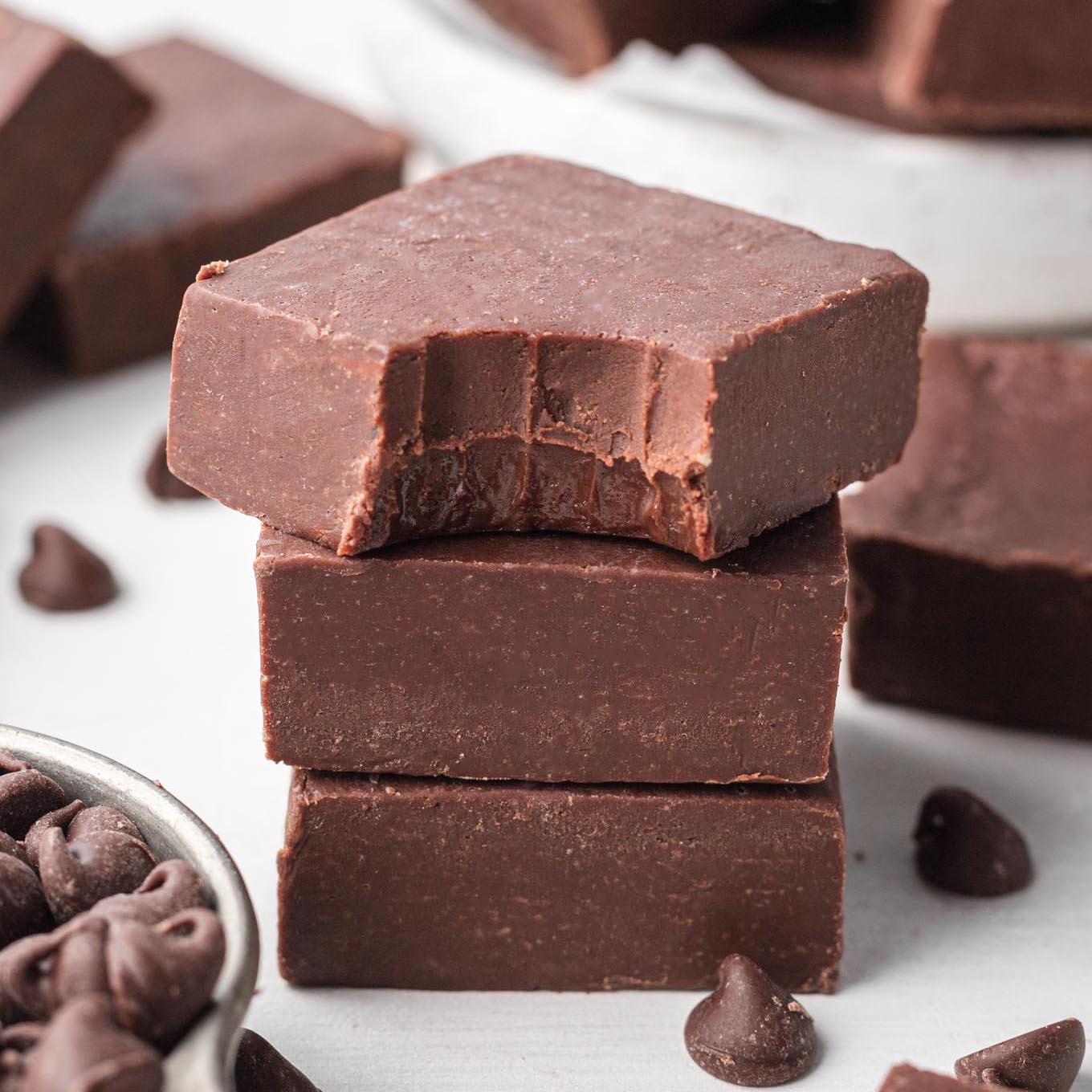
Classic Chocolate Fudge
Rich, creamy, and decadent, this classic chocolate fudge is a timeless treat that melts in your mouth. Perfect for holidays, gifts, or satisfying a sweet tooth with minimal effort.
🥘Ingredients
- 3 cups granulated sugar
- ¾ cup unsalted butter
- ⅔ cup evaporated milk (or heavy cream)
- 1 (12 oz) package semi-sweet chocolate chips
- 1 (7 oz) jar marshmallow fluff
- 1 tsp vanilla extract
- ¼ tsp salt
- ½ cup chopped nuts (walnuts or pecans)
- ½ cup mini marshmallows
- 1 tsp instant coffee (for mocha fudge)
👨🍳Directions
-
1
Line an 8×8-inch baking dish with parchment paper, leaving an overhang for easy removal. Lightly grease the paper. -
2
In a medium saucepan, combine sugar, butter, and evaporated milk. Stir over medium heat until the sugar dissolves and the mixture comes to a rolling boil. -
3
Once boiling, reduce heat to medium-low and let it cook for 10 minutes without stirring, until it reaches 234°F (112°C) on a candy thermometer (soft-ball stage). -
4
Remove from heat and immediately stir in chocolate chips, marshmallow fluff, vanilla, and salt until smooth and fully melted. Fold in nuts or other add-ins if using. -
5
Pour the fudge mixture into the prepared baking dish and smooth the top with a spatula. Let it cool at room temperature for 2 hours or refrigerate for 1 hour to set. -
6
Once set, lift the fudge out of the dish using the parchment paper and cut into 1-inch squares. Store in an airtight container at room temperature for up to 2 weeks.
🔧Equipment
- Medium saucepan
- Wooden spoon or silicone spatula
- 8×8-inch baking dish
- Parchment paper
- Mixing bowl
- Measuring cups and spoons
📊Nutrition Facts (per serving)
📝Notes
Watch Video Of How Classic Chocolate Fudge Works
❓ Frequently Asked Questions About Chocolate Fudge
1. Why did my fudge turn out grainy instead of smooth?
Grainy fudge usually happens when sugar crystals form too early or unevenly during cooking. To prevent this, avoid stirring the mixture once it starts boiling, use a candy thermometer to ensure accurate temperature (typically 234–238°F for soft fudge), and gently stir only after the mixture has cooled slightly (around 110°F). Adding a small amount of corn syrup or an acid (like lemon juice) can also help inhibit crystal formation.
2. Can I make fudge without a candy thermometer?
Yes, but it’s trickier. You can use the cold water test: Drop a small amount of the fudge mixture into ice water. If it forms a soft ball that holds its shape but flattens when pressed, it’s ready (soft-ball stage, ~234–238°F). However, a thermometer is more precise and reduces the risk of over- or under-cooking. If you don’t have one, follow the recipe’s timing carefully and test frequently.
3. My fudge didn’t set—what went wrong?
Fudge may not set if it wasn’t cooked to the correct temperature (too low) or if it was stirred too vigorously after cooling. Other common causes include high humidity (which can affect sugar crystallization) or not letting it cool enough before beating. To fix unset fudge, reheat it gently with a splash of milk or cream, bring it back to the soft-ball stage, then cool and beat again. Adding a teaspoon of corn syrup can also help stabilize it.
4. How do I store fudge to keep it fresh?
Store fudge in an airtight container at room temperature for up to 2 weeks. For longer storage (up to 3 months), wrap individual pieces in wax paper and place them in a sealed container in the fridge. Freezing fudge is also an option—wrap it tightly in plastic wrap and foil, then thaw in the fridge before serving. Avoid storing fudge in humid or warm environments, as it can become sticky or dry out.
5. Can I substitute ingredients in fudge recipes?
Some substitutions work, but others can alter texture or flavor. For example:
– Sugar: Granulated sugar is standard, but brown sugar can add a caramel note (reduce slightly as it’s moister). Avoid powdered sugar—it contains cornstarch, which can make fudge grainy.
– Butter: Margarine or coconut oil can be used, but butter’s flavor and fat content are ideal. If using salted butter, reduce added salt in the recipe.
– Condensed milk: Evaporated milk + sugar can work, but sweetened condensed milk is preferred for its thickness and sweetness.
– Chocolate: Swap semi-sweet for dark or milk chocolate, but adjust sugar accordingly (dark chocolate needs less, milk chocolate may need more). Avoid chocolate chips—they contain stabilizers that can affect texture.

