
ramen egg recipe

The Best ramen egg recipe
What I love most about this recipe is how balanced it is. The protein from the egg, the fiber from the noodles, and the nutrients in the broth make it a decent meal without being overly heavy. My kids especially love how it’s customizable—add some green onions, a sprinkle of sesame seeds, or even a dash of chili oil if they’re feeling spicy. It’s not just comforting, it’s practical. I’ve made it for family dinners, potlucks, and even when we’re short on time but still want something tasty. Plus, the health benefits are pretty solid: the broth can be made with chicken or vegetables, and the egg adds protein without too much fat if you keep it simple. It’s that kind of dish that feels like a treat but isn’t a guilty pleasure—just a good, solid meal that everyone enjoys.
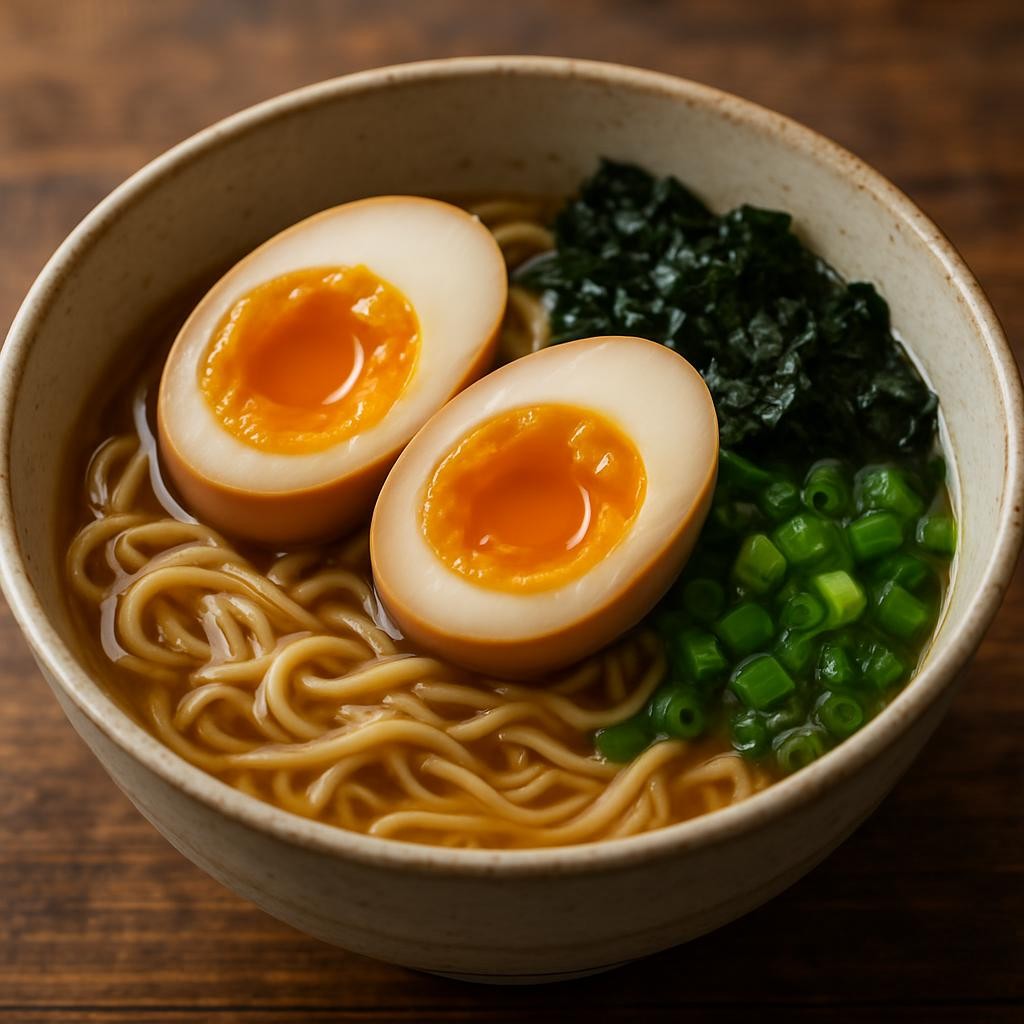
Ramen Egg Ramen (Ramen Egg Bowl)
A quick and flavorful ramen bowl featuring soft-boiled eggs, savory ramen broth, and customizable toppings. Perfect for a comforting meal.
🥘Ingredients
- 4 cups water
- 1 packet ramen noodles (or 200g dried ramen)
- 1 tbsp oil
- 1 tbsp soy sauce
- 1 tbsp sesame oil
- 1 tsp sugar
- 1 clove garlic, minced
- 1 tsp grated ginger
- 1 tsp green onion, chopped
- 2 large eggs
- 1 tsp salt
- 1 tsp white vinegar
- 1 cup shredded carrots
- 1 cup sliced mushrooms
- 1/2 cup corn kernels
- 1/2 cup chopped green onions
- 1/4 cup sliced black pepper
- 1/4 cup chopped cilantro
- 1/4 cup sesame seeds
- 1 tbsp chili oil (optional)
👨🍳Directions
-
1
Prepare the ramen broth: Boil water in a large pot. Add the ramen noodles and cook according to package instructions (usually 3-5 mins). Drain and rinse with cold water to stop cooking. Set aside. -
2
In the same pot, heat oil over medium heat. Add garlic, ginger, and green onions. Sauté for 30 seconds until fragrant. Pour in soy sauce, sesame oil, and sugar. Stir well and add the drained noodles. Mix thoroughly. -
3
While the broth heats, prepare the eggs: In a bowl, whisk eggs with salt and vinegar. Boil a pot of water, then gently slide eggs into the water. Cook for 6-7 minutes for soft-boiled eggs. Drain and let cool in cold water for 1 minute. -
4
Peel the eggs carefully and slice them in half. Set aside. -
5
Prepare toppings: Chop carrots, mushrooms, corn, and green onions finely. Arrange toppings on plates. -
6
Divide the ramen broth among bowls. Place sliced eggs on top. Add toppings and drizzle with chili oil if desired.
🔧Equipment
- Large pot
- Medium saucepan
- Slotted spoon
- Mixing bowls
- Knife and cutting board
- Chef’s knife
- Measuring spoons
- Whisk
📊Nutrition Facts (per serving)
📝Notes
- For extra flavor, add a dash of miso paste to the broth.
- Substitute regular ramen noodles with shirataki noodles for a lower-carb option.
- Ensure eggs are cooked just right for a runny yolk—adjust cooking time as needed.
- Customize toppings based on preference (e.g., add avocado, bean sprouts, or sesame seeds).
Watch Video Of How Ramen Egg Ramen (Ramen Egg Bowl) Works
❓ Frequently Asked Questions About Ramen Egg Ramen (Ramen Egg Bowl)
What is the key difference between ramen egg (chawanmushi) and a regular boiled egg in ramen broth?
The key difference lies in preparation: Ramen egg is poached in a delicate, slightly sweet, and savory broth (often made with dashi, soy sauce, mirin, and sometimes pork fat or chicken stock) and then steamed or baked until tender and fluffy. Unlike a plain boiled egg, it’s infused with aromatic ingredients like mushrooms, scallions, and sometimes seafood, giving it a richer, more complex flavor. The egg is typically soft-boiled to a “runny-yolk” consistency, allowing the yolk to blend seamlessly with the broth.
—
Why does my ramen egg turn out rubbery or dry instead of fluffy?
A rubbery or dry ramen egg usually happens due to overcooking or improper steaming. To fix it:
– Poach first: Start by lightly poaching the egg in the broth (about 3–4 minutes) to set the white while keeping the yolk runny.
– Steam gently: Transfer the egg to a steamer basket over simmering broth (not boiling) and steam for 10–12 minutes until the yolk is fully set but still slightly creamy.
– Avoid overfilling: Don’t pack the steamer too tightly—leave space for steam to circulate.
– Check consistency: If the yolk is still runny after steaming, return it to the broth for 1–2 minutes to firm it up.
—
Can I substitute any ingredients in the ramen egg recipe, and if so, which ones?
Yes, you can adjust ingredients based on preference or dietary needs, but some substitutions work better than others:
– Broth: Replace dashi with a mix of chicken or vegetable stock + a splash of soy sauce/mirin for depth. For a richer flavor, add a small piece of pork belly or chicken thigh (simmered separately).
– Mushrooms: Skip shiitake or enoki if needed, but add mushroom powder (½ tsp) for umami if you dislike mushrooms.
– Scallions: Use green onions or chives for a milder onion taste.
– Seafood: Omit shrimp or scallops if allergic or vegetarian—add tofu cubes (pan-fried for texture) or seaweed flakes for saltiness.
– Egg: If using a larger egg, reduce broth slightly to avoid overflowing the dish.
—
How do I prevent the ramen egg from sinking to the bottom of the bowl?
The egg can sink if the broth is too thick or the egg isn’t poached properly. Solutions:
– Thin the broth: If the egg sinks after steaming, gently stir the broth with a spoon to create a “whisked” effect, then return the egg to the bowl.
– Poach longer: Poach the egg in the broth for 5 minutes instead of 3 to help it “float” better.
– Use a wider bowl: If you’re serving in a small bowl, transfer the egg to a larger one before adding broth.
– Add a bit of oil: Lightly drizzle neutral oil (like canola) into the broth before adding the egg to create a “floating layer.”
– Serve immediately: If the egg sinks after steaming, eat it right away—the broth will help it stay in place.
—
How can I make the ramen egg extra flavorful without overpowering the dish?
Enhance the flavor subtly by focusing on layered aromatics and umami boosts:
– Infuse the broth: Add 1 tsp grated ginger (simmered for 2 minutes) or a dash of sake to deepen the aroma.
– Sauté aromatics first: Cook minced garlic, shallots, or ginger in a little oil for 30 seconds before adding broth to build flavor.
– Add a splash of mirin or sugar: Stir in ½ tsp mirin + ¼ tsp sugar while simmering for a subtle sweetness.
– Top with fresh ingredients: Garnish with thinly sliced scallions, nori strips, or a sprinkle of toasted sesame seeds for brightness.
– Use high-quality dashi: If possible, make your own dashi (kombu + bonito flakes) for a richer base.
– Balance with acidity: A tiny bit of rice vinegar or a squeeze of lemon can cut through richness if the broth is too heavy.

