
dragon fruit recipe

The Best dragon fruit recipe
Health-wise, dragon fruit is packed with vitamins and fiber, which makes it a smart choice for anyone looking to eat better without feeling deprived. My kids adore it because it’s naturally sweet and doesn’t require much sugar, and I love that it’s a great way to sneak in some nutrients without them even realizing it. It’s also perfect for special occasions—whether it’s a brunch spread, a summer potluck, or just a simple dessert after dinner. The way it looks on a plate, with its bright pink rind and juicy segments, makes it feel special, even if it’s just a quick bite. Plus, it’s versatile enough to be eaten on its own, in smoothies, or even mixed into yogurt or oatmeal. My husband and I both agree—it’s one of those foods that’s as good for you as it is for your taste buds.
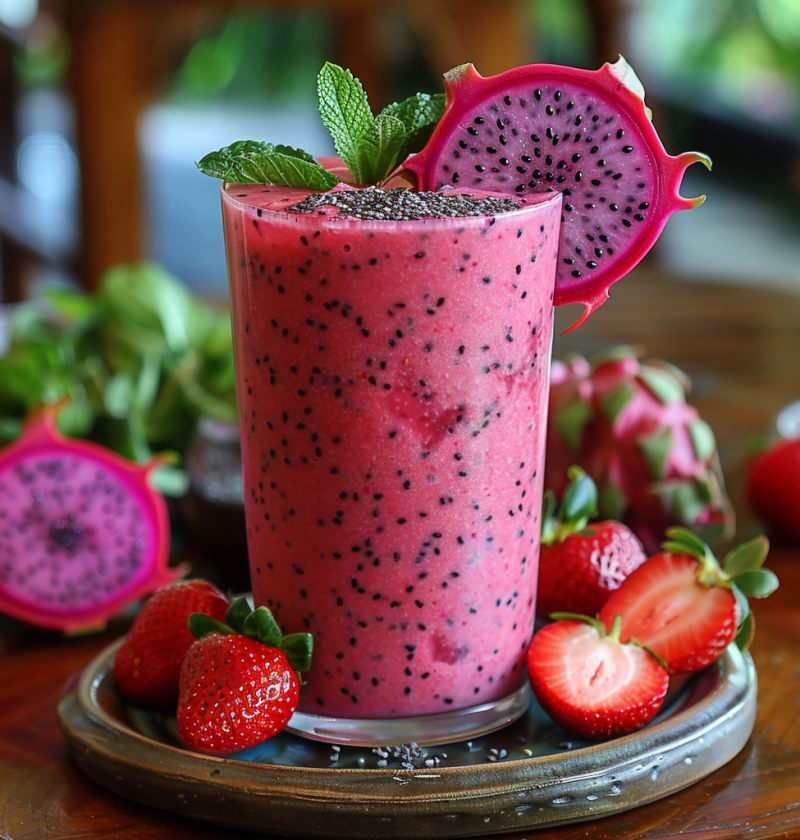
Dragon Fruit and Mango Smoothie Bowl
A refreshing, vibrant smoothie bowl made with dragon fruit, mango, and topped with granola and coconut flakes. High in antioxidants and packed with natural sweetness.
🥘Ingredients
- 1 ripe dragon fruit (about 1 cup, peeled and segmented)
- 1 ripe mango (peeled and diced)
- 1 cup coconut water (or regular water)
- ½ cup orange juice (optional, for extra sweetness)
- 2 tbsp granola
- 1 tbsp shredded coconut
- 1 tsp chia seeds
- Handful of fresh mint leaves (optional)
👨🍳Directions
-
1
Wash and peel the dragon fruit, then segment it. Dice the mango into small chunks. -
2
In a blender, combine the dragon fruit segments, mango, coconut water, and orange juice (if using). Blend until smooth and creamy. -
3
Pour the smoothie into bowls. Sprinkle granola, shredded coconut, chia seeds, and mint leaves on top.
🔧Equipment
- Blender
- Bowls
- Spoon
- Spatula
📊Nutrition Facts (per serving)
📝Notes
Tips
- For extra protein, add a scoop of vanilla protein powder to the smoothie.
- Replace coconut water with almond milk for a dairy-free option.
- Freeze the smoothie for a thicker, icy texture.
Variations
- Add a spoonful of almond butter for a nutty twist.
- Top with sliced kiwi or strawberries for additional fruit flavors.
Watch Video Of How Dragon Fruit and Mango Smoothie Bowl Works
❓ Frequently Asked Questions About Dragon Fruit and Mango Smoothie Bowl
1. What is dragon fruit, and where does it come from?
Dragon fruit, also known as pitaya, is a vibrant, tropical fruit with a unique appearance—bright pink or yellow flesh speckled with small black seeds. It originates from Central America but is now widely grown in countries like Thailand, Mexico, and parts of Southeast Asia. The fruit has a mild, slightly sweet taste with a texture similar to kiwi or pear.
2. How do I choose the best dragon fruit when shopping?
Look for a dragon fruit with a smooth, firm skin that’s uniformly colored (pink, red, or yellow). Avoid fruit with soft spots, bruises, or an overly wrinkled peel. The stem end should be closed, indicating freshness. If buying pre-cut dragon fruit, check for freshness by looking for a firm texture and no signs of mold.
3. Can I eat dragon fruit raw, or does it need to be cooked?
Dragon fruit is best enjoyed raw—its delicate texture and sweet flavor are lost when cooked. However, you can lightly toast the flesh for a nutty flavor (similar to toasting nuts) or blend it into smoothies, sorbets, or salads. Some recipes use it in desserts like cheesecakes or chia puddings.
4. What are the health benefits of dragon fruit?
Dragon fruit is packed with vitamins (C, B1, B2, and B3), antioxidants, and fiber. It supports digestion, boosts immunity, and may help regulate blood sugar. Additionally, its high water content makes it hydrating, and it contains compounds like polyphenols that promote heart health.
5. How do I prepare dragon fruit for a recipe?
To prepare dragon fruit, cut it in half lengthwise, scoop out the flesh with a spoon (removing the seeds if you prefer), and rinse it gently if needed. For smoothies, blend it with yogurt, fruit juice, or a touch of honey. For desserts, use it in mousses, parfaits, or as a topping for bowls. If toasting, spread the flesh on a baking sheet and toast at 350°F (175°C) for 5–10 minutes until caramelized.
