
split pea soup with ham hock recipe


The Best split pea soup with ham hock recipe
I’ve been making split pea soup with ham hock for years, and it’s always a hit with my family. The recipe originated in the UK, where split peas have been a staple ingredient for centuries.
I love the simplicity of this recipe – it’s easy to make and requires minimal ingredients. The combination of tender peas, rich ham flavor, and subtle spices creates a delicious and comforting meal that’s perfect for any occasion.
My kids devour it, and I appreciate the fact that it’s a healthy and nutritious option for them. Plus, it freezes beautifully, making it an excellent choice for meal prep or for serving at family gatherings.
As an added bonus, split pea soup is incredibly easy to digest, making it a great option for those with sensitive stomachs or digestive issues. I’ve even served it to friends and family members who are vegetarian or vegan, simply by substituting the ham hock with a plant-based alternative.
This versatile recipe has earned its place in our household as a regular staple.
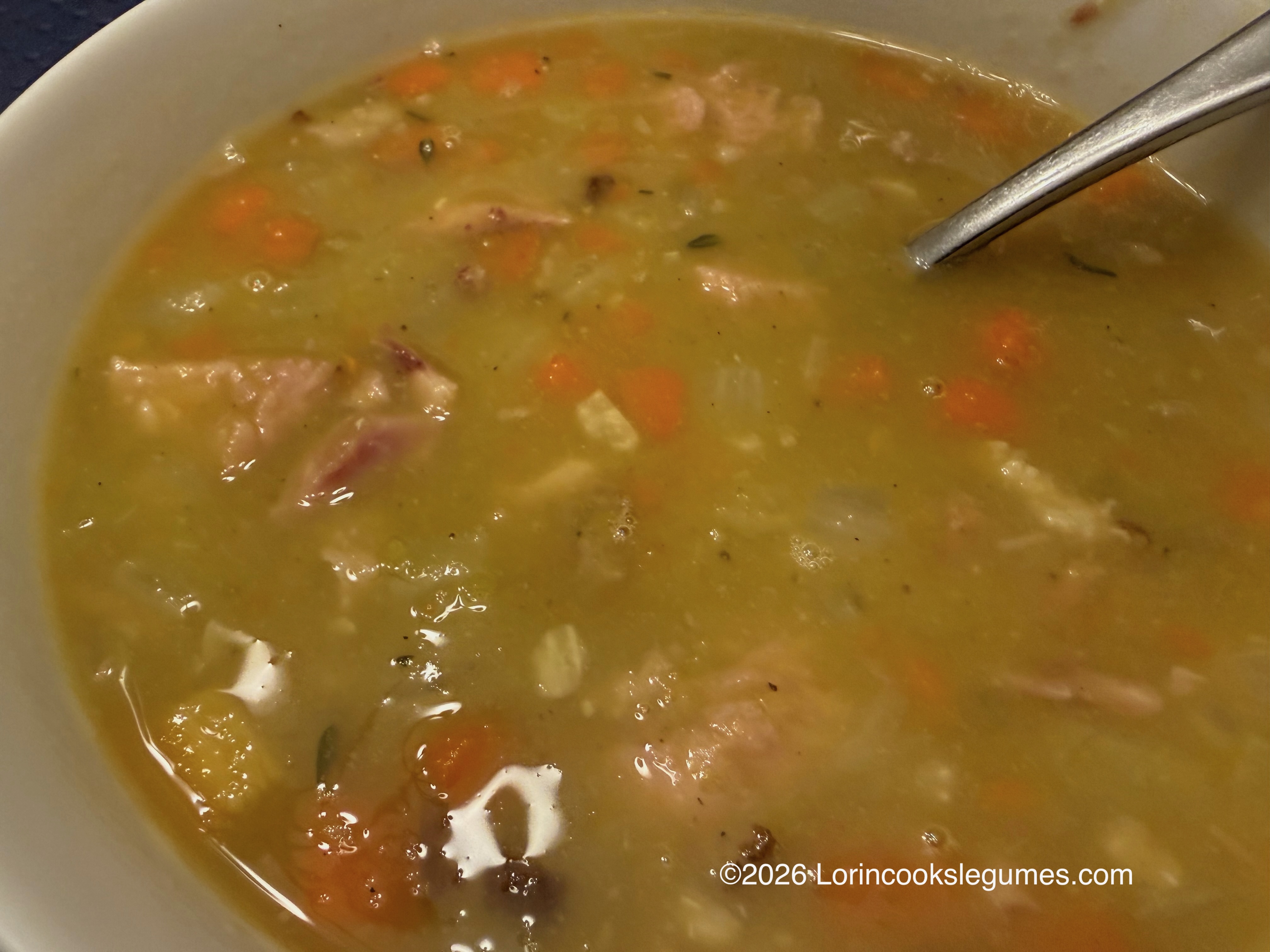
Split Pea Soup with Ham Hock
A hearty and comforting soup made with dried split peas and a smoked ham hock, slowly simmered until the peas break down into a creamy texture. The ham hock infuses the broth with a rich, smoky flavor, and the meat is shredded and added back for a satisfying meal.
🥘Ingredients
For the Soup
👨🍳Directions
Set aside.
Serve hot.
🔧Equipment
📊Nutrition Facts (per serving)
📝Notes
Watch Video Of How Split Pea Soup with Ham Hock Works
Split pea soup with ham hock is one of those recipes I keep coming back to because it works for a casual weeknight and still feels right when I’m feeding a crowd at a family gathering.
I can make a big pot, set out bread and a few toppings, and everyone leaves happy without me spending all day in the kitchen.
It’s simple, filling, and always a good idea no matter the occasion.
❓ Frequently Asked Questions About Split Pea Soup with Ham Hock
1. Do I need to soak split peas overnight before cooking?
No. Split peas are already dried and split, so they soften quickly without soaking. Rinse them under cold water and pick through for any stray bits, then add them straight to the pot. They will break down in about 45 to 60 minutes of gentle simmering.
2. Why are my split peas still hard after an hour of cooking?
Old peas are the most common culprit. Dried split peas lose the ability to soften after a year or two in the pantry, so check the date on the bag and buy from a store with steady turnover. A second cause is acidity: adding tomatoes or a lot of lemon juice early in cooking can slow the softening process, so hold those until the peas are tender. Salting at the start is fine, but keep the pot at a true simmer rather than a rolling boil.
3. Can I use a ham bone or leftover diced ham instead of a ham hock?
Yes. A leftover ham bone works well and gives similar smoky depth, though you may want to add a little extra salt since a bone carries less meat. Diced leftover ham can go in, but stir it in during the last 15 to 20 minutes so it does not turn mushy. If you skip the pork entirely, add a smoked paprika or a splash of liquid smoke to keep the flavor from tasting flat.
4. How do I get the soup to the right thickness?
Split pea soup thickens considerably as it sits, both on the stove and in the fridge. If it looks loose near the end of cooking, uncover the pot and simmer for another 10 to 15 minutes, stirring often so the bottom does not catch. If it turns too thick, loosen it with a splash of broth or water a little at a time. Pull the ham hock, shred the meat, and return it to the pot just before serving.
5. Can I make this split pea soup in a slow cooker or freeze the leftovers?
For a slow cooker, combine the rinsed peas, ham hock, onion, carrot, celery, and broth and cook on low for seven to eight hours or on high for four to five, then shred the meat and season at the end. The soup freezes well for up to three months in airtight containers. Leave a little headroom, since it expands as it freezes, and reheat gently on the stove with a splash of broth to bring back the texture.
