
tuna salad recipe with egg

The Best tuna salad recipe with egg
My kids have loved this recipe since they were little—especially when we serve it with whole-grain crackers or a side of fresh veggies like baby carrots or cucumber slices. It’s the kind of meal that feels special but doesn’t require a lot of fuss, which makes it perfect for family gatherings or even just a regular weeknight when we’re all still in our pajamas. I’ve used it for potlucks, packed it for school lunches, and even served it as part of a larger spread at a small get-together. The egg adds a nice richness that makes it feel indulgent, but it’s still light enough that it doesn’t weigh anyone down. Plus, the tuna keeps well in the fridge, so it’s a great way to use up any canned fish without waste. It’s that kind of recipe that makes life simpler—something you can trust, no matter what’s going on.
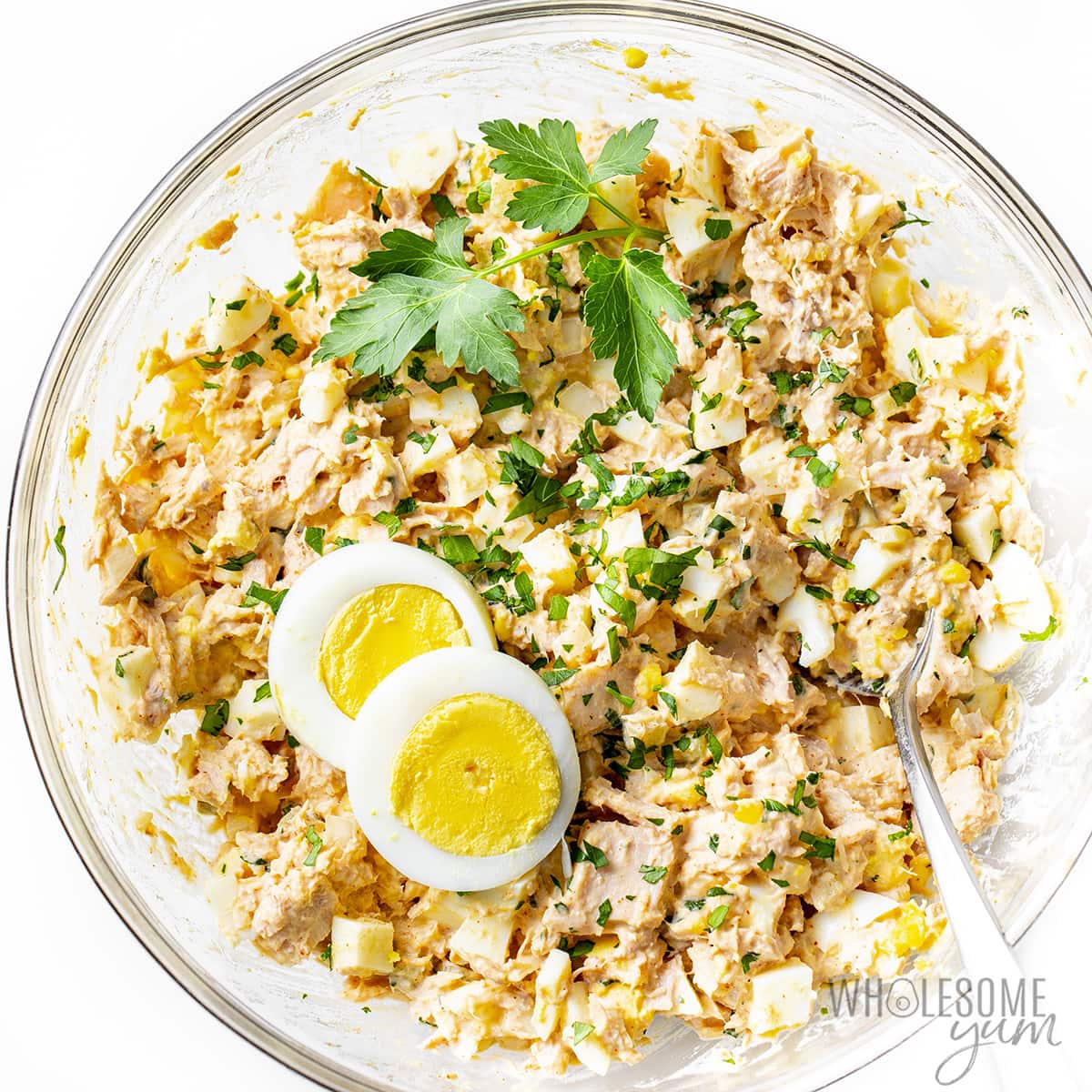
Classic Tuna Salad with Egg
A refreshing and protein-packed salad combining canned tuna with hard-boiled eggs, fresh vegetables, and a light dressing. Perfect for sandwiches, wraps, or as a side dish.
🥘Ingredients
- 2 cans (5 oz each) tuna in water, drained
- 4 large eggs
- 1 tbsp mayonnaise
- 1 cup diced celery
- 1/2 cup finely chopped red onion
- 1/2 cup diced bell peppers
- 1/4 cup chopped fresh parsley
- 1 tbsp Dijon mustard
- 1 tbsp lemon juice
- Salt and pepper to taste
- 1 tbsp olive oil
👨🍳Directions
-
1
Boil water in a pot and gently place eggs in it. Cook for 9-10 minutes, then transfer to an ice bath to cool. Peel and slice the eggs. -
2
In a large bowl, combine drained tuna, sliced eggs, celery, red onion, bell peppers, and parsley. -
3
In a small bowl, mix mayonnaise, Dijon mustard, lemon juice, olive oil, salt, and pepper to make the dressing. -
4
Pour the dressing over the tuna salad mixture and gently fold until well combined.
🔧Equipment
- Mixing bowls
- Knife and cutting board
- Salad spinner or bowl for boiling eggs
- Measuring spoons
- Food processor (optional)
📊Nutrition Facts (per serving)
📝Notes
- For a lighter version, use Greek yogurt instead of mayonnaise.
- Substitute canned tuna with smoked salmon for a different flavor profile.
- Store leftovers in an airtight container in the refrigerator for up to 3 days.
Watch Video Of How Classic Tuna Salad with Egg Works
❓ Frequently Asked Questions About Tuna Salad with Egg
What is the best way to prepare egg for tuna salad to ensure it’s fully cooked and safe to eat?
The best way is to hard-boil the eggs—place them in a pot of cold water, bring to a boil, then remove from heat, cover, and let sit for 10–12 minutes. After cooling, peel them and chop finely. Alternatively, you can soft-boil them (6–7 minutes) for a slightly creamier texture, but hard-boiled is safer for avoiding undercooked risks.
Can I substitute mayonnaise with another type of dressing for tuna salad with egg?
Yes! You can use Greek yogurt, light mayo, or even avocado cream for a lighter option. For a tangy twist, try Dijon mustard mixed with Greek yogurt or lemon juice with olive oil. Just adjust the texture—some dressings may require extra egg for binding.
How do I prevent the tuna from becoming mushy when mixing it with egg and dressing?
To keep tuna firm, use fresh, high-quality canned tuna (in water, not oil) and drain it well. Mix it with just enough dressing to coat—too much liquid can make it soggy. You can also chill the mixture for 15–20 minutes before serving to let flavors meld and textures firm up slightly.
Should I add any spices or herbs to enhance the flavor of this tuna salad with egg?
Absolutely! Classic additions include salt, black pepper, lemon juice, dill, or parsley for freshness. For a savory kick, try garlic powder, smoked paprika, or a dash of Worcestershire sauce. A pinch of red pepper flakes adds heat, while celery or red onion brings crunch.
How long can I store the tuna salad with egg in the fridge, and how should I reheat it?
Store it in an airtight container for up to 3–4 days in the fridge. To reheat, warm gently in a microwave (30–60 seconds on low) or toast in a pan with a little oil to avoid drying it out. Avoid reheating multiple times to maintain freshness and safety.

