
no yeast bread recipe

The Best no yeast bread recipe
My family loves it because it’s easy to make, but it still feels special—like a homemade touch without the fuss. My kids, especially my little one who’s picky, will grab a slice of this bread right out of the oven and eat it straight from the loaf. It’s not too soft, not too dry, and it doesn’t taste like anything artificial. Plus, it’s a great way to sneak in some extra nutrients without them even realizing it. The whole-grain versions or the ones with seeds or nuts are my go-to for dinner nights because they’re filling, and they don’t require a ton of prep. And let’s be honest, when you’re hosting a little gathering or just having a regular family dinner, this bread is the perfect centerpiece—warm, inviting, and always a hit. No one has to wonder if they’re eating something fancy or if they’re getting a real meal. It’s just good food, done right.
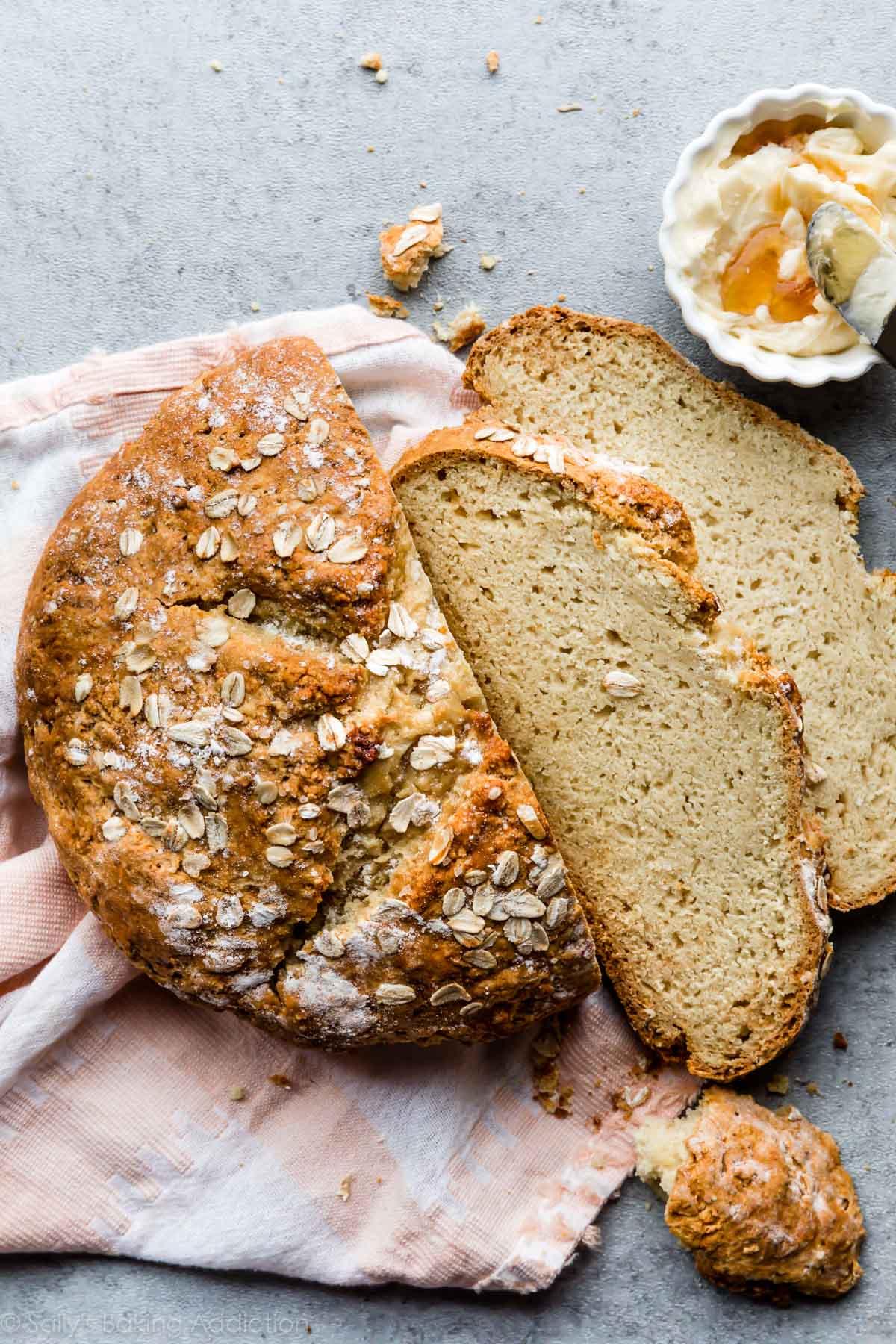
Easy No-Yeast Garlic Herb Bread
A simple, fluffy bread without yeast, perfect for sandwiches or dipping. Packed with garlic and herbs for a savory flavor boost.
🥘Ingredients
- 3 cups all-purpose flour
- 1 tsp salt
- 1 tsp instant yeast
- 1 tbsp olive oil
- 1/2 cup warm water
- 1 tbsp melted butter
- 1 tsp dried parsley
- 1 tsp dried oregano
- 2 cloves garlic, minced
- 1/2 tsp garlic powder
- 1/2 cup grated Parmesan cheese
👨🍳Directions
-
1
Preheat oven to 375°F (190°C). Mix flour, salt, and instant yeast in a bowl. -
2
Add olive oil and warm water, then whisk until a soft dough forms. -
3
Shape dough into a loaf, place on a baking sheet, and let rise for 15 minutes. -
4
Preheat oven to 425°F (220°C). Mix melted butter, herbs, garlic, and Parmesan. Brush onto risen dough. -
5
Bake for 25-30 minutes until golden brown.
🔧Equipment
- Mixing bowls
- Whisk
- Oven
- Baking sheet
- Pastry brush
📊Nutrition Facts (per serving)
📝Notes
Watch Video Of How Easy No-Yeast Garlic Herb Bread Works
❓ Frequently Asked Questions About No-Yeast Garlic Herb Bread
1. What is the primary difference between this no-yeast bread recipe and traditional yeast-based bread?
This no-yeast bread relies on sourdough starter, baking soda, or baking powder for leavening instead of active yeast. Traditional yeast bread relies on yeast cells that ferment and produce carbon dioxide, creating air pockets for rise. In this recipe, the leavening agents react with moisture to create lift, resulting in a lighter texture with a quicker rise time (often within 1–2 hours). The flavor profile is also subtly different—no-yeast bread tends to have a slightly tangy or buttery depth from the starter or baking soda, while yeast bread can be more neutral or slightly sweet.
—
2. Can I substitute baking soda for baking powder in this recipe, and if so, what adjustments should I be made?
Yes, you can substitute baking soda for baking powder, but you’ll need to adjust the recipe slightly. Since baking powder already contains an acid (like cream of tartar), adding baking soda alone will make the dough too alkaline, leading to a bitter or flat taste. Instead, use half the amount of baking powder (e.g., replace 1 tsp baking powder with ½ tsp baking soda) and add ½ teaspoon of vinegar or lemon juice to the wet ingredients to balance the pH. This mimics the acidic component in baking powder. If using baking soda exclusively, ensure the other ingredients (like buttermilk or yogurt) already provide mild acidity.
—
3. Why does the bread sometimes rise unevenly or not at all, and how can I troubleshoot it?
Uneven or failed rise in no-yeast bread often stems from proper hydration, leavening timing, or ingredient ratios. Here’s how to fix it:
– Too dry dough? If the mixture is lumpy or doesn’t incorporate easily, add 1–2 tablespoons of water or milk at a time, kneading gently until smooth. Overly dry dough restricts gas expansion.
– Starter not active? If using sourdough, ensure it’s fed and bubbly 12–24 hours before use. Test it by dropping a spoonful into water—it should float.
– Incorrect leavening timing? Baking soda/baking powder reactions work best in hotter environments (e.g., preheated oven or warm kitchen). If the dough sits too long before baking, the gas may dissipate.
– Overmixing? Unlike yeast bread, no-yeast doughs can become dense if overworked. Stop kneading once smooth (~5–7 minutes).
– Too much flour? Flour absorbs moisture; if added in excess, the dough won’t rise properly. Measure by weight (grams) for accuracy.
—
4. Can I make this bread gluten-free, and if so, what substitutions would work best?
Yes! For a gluten-free no-yeast bread, replace all-purpose flour with a 1:1 gluten-free blend (like King Arthur or Bob’s Red Mill) or a mix of:
– ½ cup gluten-free all-purpose flour (e.g., brown rice or chickpea flour)
– ¼ cup almond flour or coconut flour
– ¼ cup tapioca starch or arrowroot powder
– 2–3 tbsp xanthan gum (if not already in your blend; essential for structure).
Key adjustments:
– Increase liquid by 1–2 tbsp (gluten-free flours absorb more moisture).
– Add 1 extra teaspoon baking powder (GF flours often need more leavening).
– Use a slightly wetter dough (e.g., add 1–2 tbsp extra milk or yogurt).
– Avoid overmixing—GF doughs are fragile; knead just until combined.
– For extra texture, fold in 1–2 tbsp seeds or nuts (e.g., sunflower, pumpkin, or walnuts).
—
5. How can I store leftover no-yeast bread to keep it fresh longer?
No-yeast bread dries out faster than yeast bread due to its lower moisture content, but you can extend freshness with these methods:
– Room temperature: Wrap in plastic wrap tightly or store in an airtight container with a slice of apple or lemon (the acidity helps retain moisture). Keep it in a cool, dark place (not the fridge) for 2–3 days.
– Freezing: Slice before freezing. Store in a freezer bag with parchment paper between layers. Thaw at room temperature or toast from frozen. For sourdough bread, freeze in a loaf pan first, then transfer to a bag after rising.
– Reviving stale bread: Toast slices lightly, then brush with melted butter + 1 tsp milk to rehydrate. For sandwiches, use toasted bread to prevent sogginess.
– Bread crumbs: Use stale slices to make crusty breadcrumbs (bake in a dry pan at 350°F/175°C for 5–7 minutes until crisp).

