
habesha food recipe

The Best habesha food recipe
This recipe is perfect for so many reasons. It’s hearty enough for a big family meal, yet simple enough to whip up on a weeknight when everyone’s tired. My kids love it because it’s filling and full of flavor, and the kids’ version—like the milder, slightly sweet versions of some dishes—makes it approachable. Plus, the health benefits? Oh, you’re gonna love that. Teff is packed with protein and fiber, and the whole meal is balanced with protein from the stew, carbs from the injera, and fresh veggies. It’s not just good for you, it’s a way to keep things interesting without the fuss of complicated recipes. And when you serve it with a side of fresh Ethiopian salad, it’s like a complete meal in one dish—no extra work, just deliciousness. It’s why I keep it in my rotation, whether it’s for a holiday feast or just a cozy Sunday dinner.
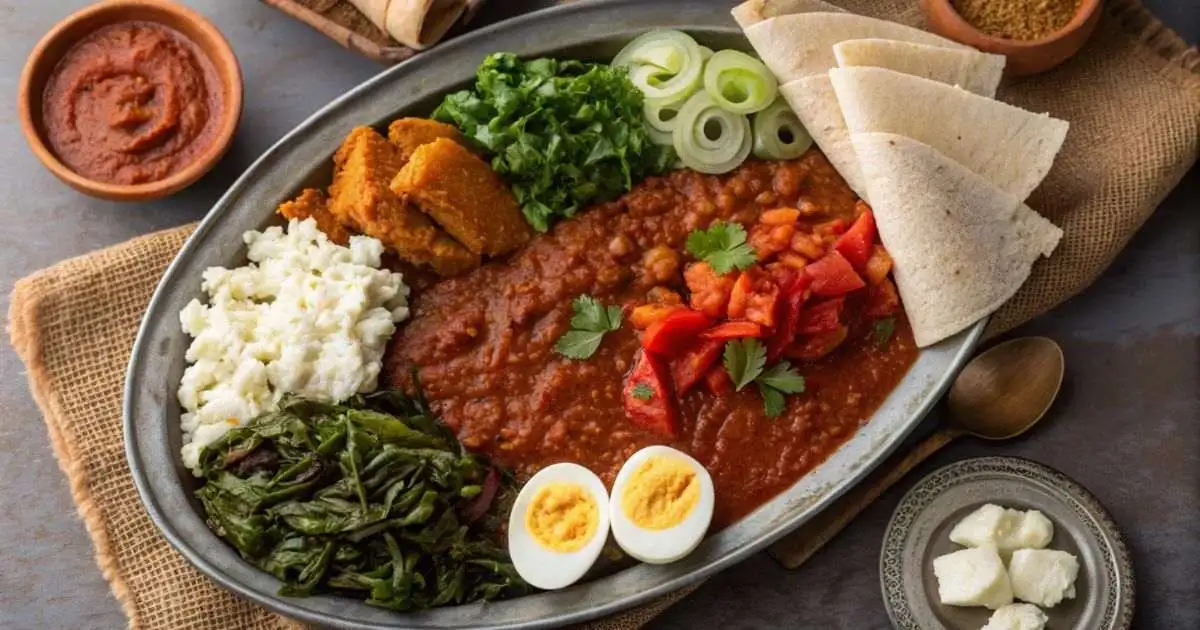
Injera with Wat (Ethiopian Stew)
A traditional Ethiopian dish featuring spongy sourdough flatbread called injera, served with flavorful stews called wat. The combination of tangy injera and rich, spiced meat or vegetable stew is a staple in Ethiopian cuisine.
🥘Ingredients
- 2 cups teff flour (or all-purpose flour as substitute)
- 1 cup water
- 1 tsp salt
- 1 tbsp yeast (optional, for faster fermentation)
- 1 lb beef or chicken (or mixed vegetables for vegan option)
- 2 tbsp Ethiopian spice mix (berbere)
- 1 large onion, chopped
- 3 cloves garlic, minced
- 1 red bell pepper, diced
- 1 can (14.5 oz) crushed tomatoes
- 2 cups water or broth
- 1 tbsp olive oil
👨🍳Directions
-
1
Prepare the Injera Dough: In a large bowl, mix teff flour and salt. Add water and yeast (if using) and stir until smooth. Cover with a damp towel and let ferment at room temperature for 12-24 hours or until bubbly and slightly sour. -
2
Cook the Wat: Heat olive oil in a pot over medium heat. Add onions and sauté until soft. Add garlic, bell pepper, and berbere spice mix; cook for 1 minute. Add meat (or vegetables) and cook until browned. Pour in crushed tomatoes and water/broth, then simmer for 20-25 minutes until meat is tender. -
3
Divide the Dough: Once fermented, divide the dough into 6 equal portions. Roll each portion into a ball, then flatten into a round disc about 1/4-inch thick. -
4
Cook Injera: Heat a skillet or cast iron pan over medium heat. Cook each injera disc for 1-2 minutes per side until golden brown and puffed. Serve hot with the wat.
🔧Equipment
- Mixing bowls
- Large pot
- Wooden spoon
- Skillet or cast iron pan
- Oven or stovetop
- Measuring cups and spoons
📊Nutrition Facts (per serving)
📝Notes
Tips
- For a quicker injera, use instant yeast or skip fermentation and cook immediately.
- Adjust spice levels in the berbere mix to taste.
- Use mixed vegetables like carrots, potatoes, and cabbage for a vegetarian wat.
- Serve with a side of spicy Ethiopian chili sauce (misir wat) if desired.
Substitutions: {“flour”:”Substitute teff flour with all-purpose flour or whole wheat flour for a less traditional but still delicious injera.”,”meat”:”For a vegetarian option, replace meat with mushrooms, lentils, or a combination of vegetables.”}
Watch Video Of How Injera with Wat (Ethiopian Stew) Works
❓ Frequently Asked Questions About Injera with Wat (Ethiopian Stew)
What is Habesha cuisine, and how is it distinct from other Ethiopian or Eritrean dishes?
Habesha cuisine refers to the traditional food culture of the Ethiopian and Eritrean highland regions, characterized by its rich, flavorful, and communal dining style. Unlike many dishes that rely on spice blends like berbere, Habesha cuisine often features hearty stews (wat), flatbreads (injera), and a variety of grains like teff flour. The dishes are typically served with a side of spicy stews, lentils, or vegetables, and the communal eating style, where people share a large plate of injera, sets it apart from other cuisines.
—
What are the key ingredients used in a classic Habesha dish like Wat Kik Alicha?
A classic Wat Kik Alicha (Spicy Chickpea Stew) relies on a few key ingredients: chickpeas, onions, garlic, ginger, tomatoes, spices like berbere, coriander, and pepper. The dish also includes butter or ghee, which adds richness, and sometimes dried red chilies for extra heat. The stew is often served with injera, a sourdough flatbread made from teff flour, which acts as both a plate and a utensil.
—
How is injera different from other Ethiopian flatbreads, and why is it essential to Habesha dining?
Injera is a spongy, slightly sour flatbread made from fermented teff flour, giving it a unique tangy flavor and chewy texture. Unlike traditional flatbreads like naan or pita, injera is thick, porous, and acts as a dish, utensil, and plate in Ethiopian culture. It’s essential because it’s used to scoop up stews (wat), share food communally, and even absorb sauces. The fermentation process also enhances its nutritional value, making it a staple in Ethiopian meals.
—
Can you explain the role of berbere spice blend in Habesha cooking, and what makes it unique?
Berbere is a fiery red spice blend made from dried red chilies, fenugreek, cumin, cardamom, ginger, nutmeg, allspice, and other aromatic spices. It’s the backbone of Ethiopian and Eritrean cooking, adding heat, depth, and complexity to dishes. What makes berbere unique is its balance of sweet, spicy, and earthy flavors, along with a subtle citrusy tang from the chilies. Unlike generic chili powders, berbere is finely ground and often used fresh for the best results.
—
What are some common misconceptions about Habesha food, and how do they differ from reality?
One common misconception is that Habesha food is only spicy—while berbere adds heat, many dishes like Misir Wat (spicy lentil stew) or Shiro (chickpea flour stew) can be adjusted for mildness. Another myth is that Habesha cuisine is vegetarian-heavy, though meat dishes like Doro Wat (spicy chicken stew) are also central. Additionally, some assume injera is just a flatbread, but it’s a fermented, nutrient-rich staple with a unique texture and role in communal eating. Finally, the idea that Habesha food is only eaten in churches is false—while it’s common in religious settings, it’s also enjoyed at home, gatherings, and festivals.

