
queso fresco recipe

The Best queso fresco recipe
I love queso fresco because it’s so versatile and healthy in its own way. It’s got that mild, slightly tangy flavor that doesn’t overpower anything, and it’s packed with protein and calcium without being heavy. My family loves it because it’s light but filling, and it works in so many dishes—grilled veggies, wraps, even on top of avocado toast. Plus, it’s so easy to make at home, so you know exactly what’s going into it, no preservatives or weird additives. It’s that kind of recipe that makes you feel proud, like you’re giving people something real and good. And honestly? It’s perfect for any occasion—whether you’re serving it as a snack, a side, or a topping for something hearty. It’s that kind of staple that just keeps getting better with practice.
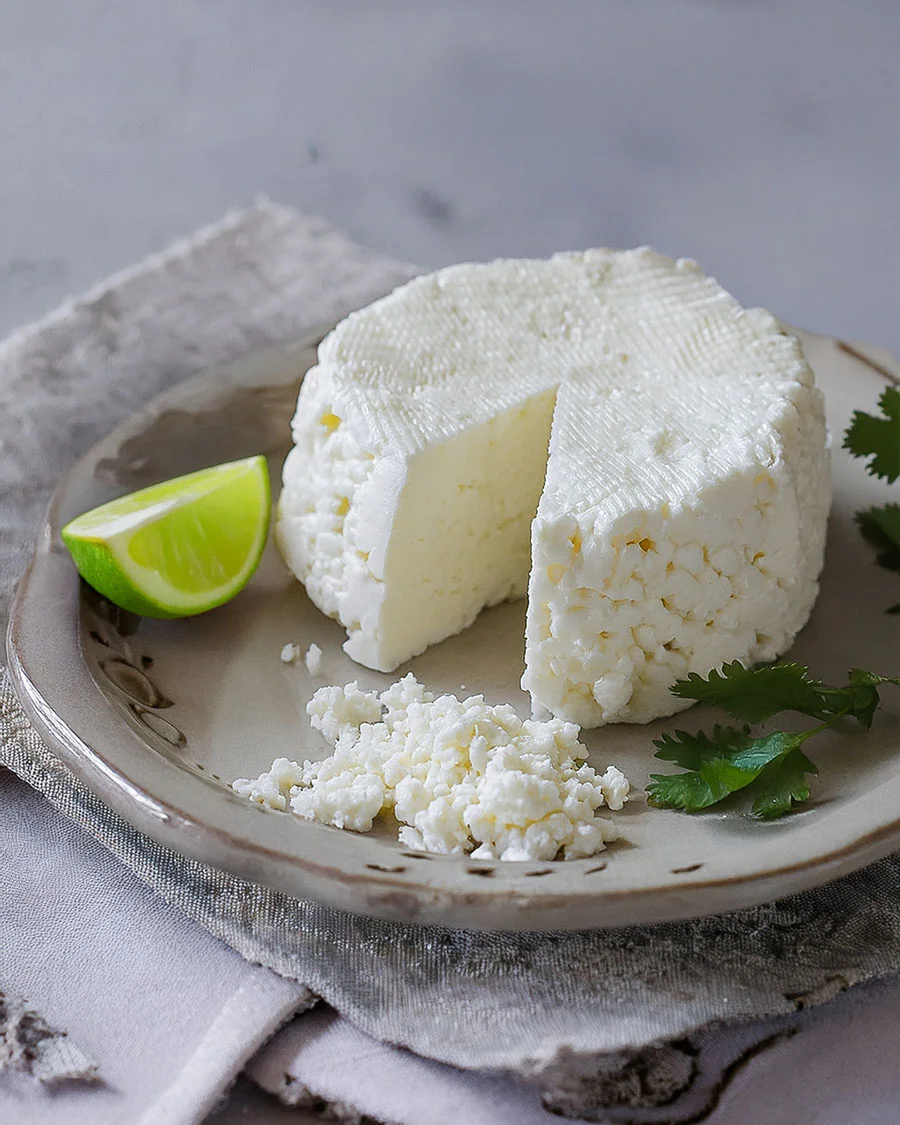
Homemade Queso Fresco Recipe
A fresh, creamy, and versatile Mexican cheese made from simple ingredients. Perfect for tacos, salads, or as a topping for various dishes.
🥘Ingredients
- 2 cups whole milk
- 1 cup buttermilk
- 1 cup plain yogurt
- 1 tsp salt
- 1 tsp white vinegar or lemon juice
- 1/2 tsp garlic powder (optional)
- 1 cup water
- 1 tbsp vinegar
👨🍳Directions
-
1
In a mixing bowl, combine milk, buttermilk, yogurt, salt, and garlic powder (if using). Stir well. -
2
Pour the mixture into a fine-mesh strainer lined with cheesecloth or a clean kitchen towel. Place the strainer over a colander and let it drain in a cool place for about 1 hour. -
3
After draining, squeeze the cheesecloth gently to remove excess liquid. If you prefer a smoother texture, blend the drained cheese with a little water to make it creamy. -
4
For storage, mix the reserved water and vinegar, then pour it into a container. Store the queso fresco in this mixture to keep it fresh for up to 5 days.
🔧Equipment
- Mixing bowl
- Fine-mesh strainer
- Cheesecloth or clean kitchen towel
- Colander
- Blender (optional)
📊Nutrition Facts (per serving)
📝Notes
Tips
- Ensure the mixture is fully drained to avoid a watery texture.
- For extra tanginess, add a pinch of cumin or chili powder to the cheese before storing.
- Use within 5 days for best flavor and texture.
Substitutions
- Substitute buttermilk with sour cream for a slightly richer texture.
- Use skim milk for a lower-fat version.
Watch Video Of How Homemade Queso Fresco Recipe Works
❓ Frequently Asked Questions About Queso Fresco
1. What is the difference between queso fresco and other types of cheese like feta or cotija?
Answer: Queso fresco is a fresh, mild, and crumbly cheese made primarily from cow’s milk (though goat or sheep milk versions exist). It has a slightly tangy flavor and a soft, delicate texture, making it ideal for topping salads, tacos, and guacamole. Unlike feta (a salty, brined Greek cheese) or cotija (a harder, sharper Mexican cheese), queso fresco is not aged and retains a neutral, fresh taste. It’s often used in Mexican and Latin American cuisine as a finishing ingredient rather than a main component.
—
2. Can I make queso fresco without a cheesecloth, and if so, what alternative do I use?
Answer: Yes, you can make queso fresco without a cheesecloth! If you don’t have one, you can use a clean kitchen towel, a coffee filter, or even a fine-mesh strainer lined with a cloth. Just ensure the strainer has holes large enough to allow whey to drain while trapping the cheese curds. Strain the mixture for about 2–4 hours (or overnight for a firmer texture) to remove excess liquid.
—
3. How do I know if my queso fresco is ready to use?
Answer: Your queso fresco is ready when it’s thick enough to hold its shape but still crumbly. It should have a smooth, white surface with no visible liquid whey left. If it’s too runny or still liquidy, let it strain longer. For a softer, fresher texture (like for tacos), it should be slightly damp but not dripping. If it’s too dry, it may be over-strained—just add a splash of milk or water to rehydrate it.
—
4. Can I freeze queso fresco, and how should I store it?
Answer: Yes, you can freeze queso fresco, but it’s best to use it within 2–3 months for the best texture. To freeze, place the cheese in an airtight container or bag, pressing out excess air to prevent freezer burn. When ready to use, thaw it in the fridge overnight. After thawing, it may become slightly grainier, so it works best for dishes where texture isn’t critical (like soups or baked goods). For toppings (like tacos or salads), thaw it at room temperature or warm it gently in the microwave for 10–15 seconds.
—
5. Why does my queso fresco turn out grainy or crumbly instead of smooth?
Answer: Grainy or crumbly queso fresco often happens due to one of these reasons:
– Over-straining: If you strain it for too long, the cheese loses moisture and becomes dry and coarse. Aim for 2–4 hours of straining.
– Milk quality: Using low-quality or overly acidic milk (e.g., expired or improperly stored) can affect texture. Use fresh, pasteurized milk.
– Temperature: Straining at room temperature (not cold) helps prevent graininess. If your kitchen is cold, let the mixture warm slightly before straining.
– Curd size: If the curds are too small (from over-heating or using a rennet), the cheese may not hold together. Cook the mixture until it reaches 190–200°F (88–93°C) for medium-sized curds.
To fix it, gently knead the cheese after draining to break up any clumps, or mix it with a little milk or cream to restore moisture.
