
savory puff pastry recipe

- The Best savory puff pastry recipe
- Savory Savory Puff Pastry with Tomato Garlic Sauce
- 🥘Ingredients
- 👨🍳Directions
- 🔧Equipment
- 📊Nutrition Facts (per serving)
- 📝Notes
- Watch Video Of How Savory Savory Puff Pastry with Tomato Garlic Sauce Works
- ❓ Frequently Asked Questions About Savory Savory Puff Pastry with Tomato Garlic Sauce
The Best savory puff pastry recipe
One of the best parts about savory puff pastry is how adaptable it is. You can use it for everything from a hearty lasagna to a simple breakfast hash with eggs and bacon, and it always comes out better than store-bought. Plus, it’s actually pretty healthy when you think about it—it’s made with real butter and flour, not that processed stuff you find in most packaged goods. I don’t know about you, but I’d rather eat something that tastes good and feels good for me than something that’s just going to sit in my stomach for hours. And honestly? It’s a game-changer for meal prep. You can make a big batch, freeze it, and pull it out whenever you need a quick, impressive side or main dish. My husband always says it’s the secret weapon in my kitchen, and I can’t argue with that. It’s that kind of reliable, satisfying comfort food that makes every meal feel like a little celebration.
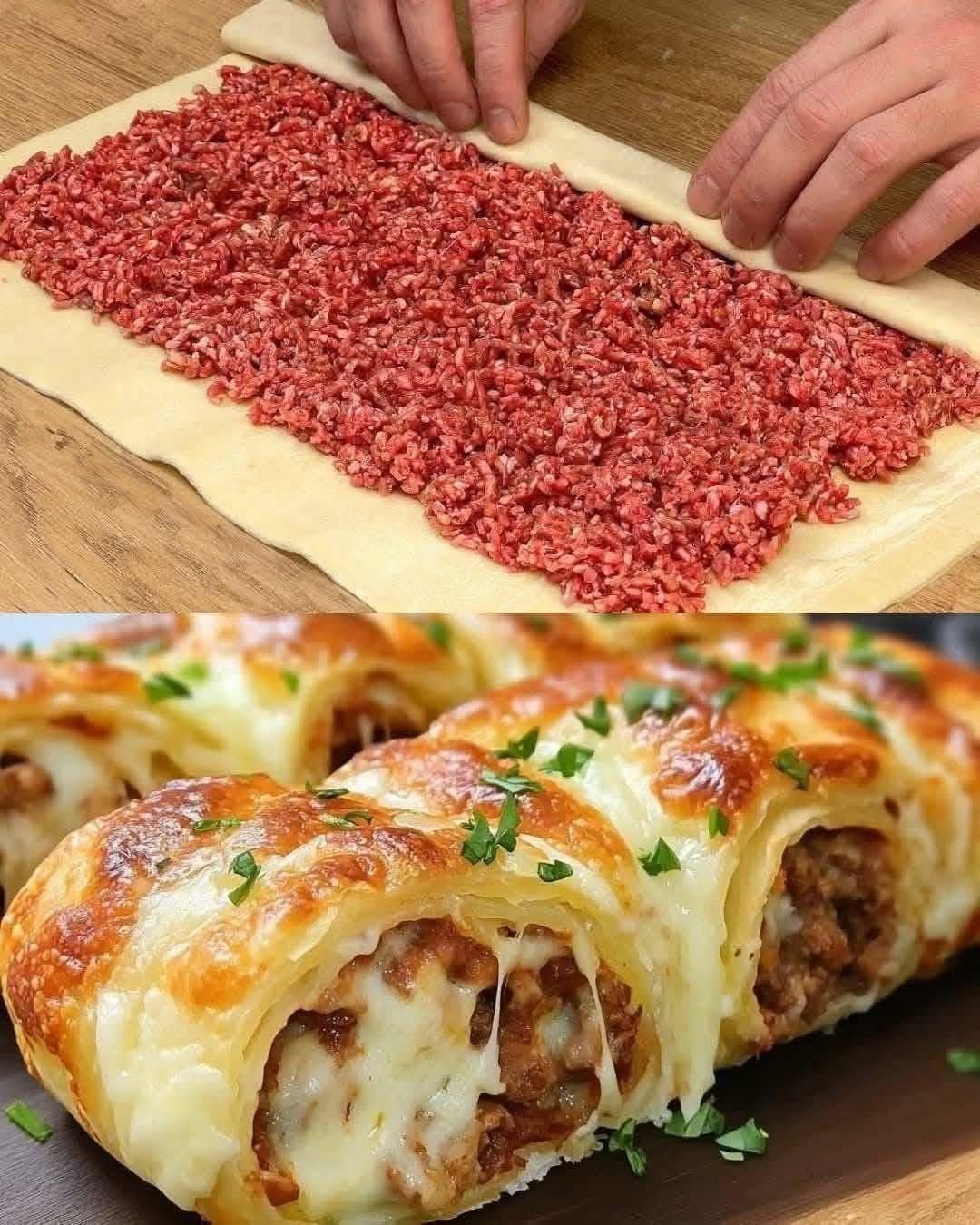
Savory Savory Puff Pastry with Tomato Garlic Sauce
A flaky, buttery puff pastry filled with a rich tomato and garlic sauce, perfect for savory appetizers or main courses. This recipe is a must-try for any occasion.
🥘Ingredients
- 2 cups all-purpose flour
- 1 tsp salt
- 1 cup unsalted butter, cold and cubed
- 1/2 cup ice water
- 1 cup canned crushed tomatoes
- 2 cloves garlic, minced
- 1 tbsp olive oil
- 1/2 tsp dried oregano
- Salt and pepper to taste
👨🍳Directions
-
1
Preheat oven to 400°F (200°C). Line two baking sheets with parchment paper. -
2
In a large bowl, combine flour and salt. Cut in cold butter until mixture resembles coarse crumbs. Gradually add ice water, mixing until dough just comes together. -
3
Turn dough onto a lightly floured surface, shape into a rectangle, and roll out to about 1/4-inch thickness. Cut into 4 equal rectangles. -
4
Fold each rectangle in thirds to form a triangle, then fold again to form a half-moon shape. Place seam-side down on a baking sheet. -
5
Bake for 15 minutes. Remove from oven, brush tops with melted butter, then fold in half and bake for another 10-15 minutes until golden. -
6
While puff pastry bakes, heat olive oil in a pan. Sauté garlic until fragrant, then add crushed tomatoes, oregano, salt, and pepper. Simmer for 5 minutes. -
7
Once puff pastry is golden, cut into triangles. Brush with sauce, place on a baking sheet, and bake for 5-7 minutes until sauce bubbles.
🔧Equipment
- Stand mixer or pastry cutter
- Rolling pin
- Baking sheets
- Pastry brush
📊Nutrition Facts (per serving)
📝Notes
Tips
- Ensure butter is very cold to achieve flaky layers.
- Use a pastry brush to evenly distribute sauce on puff pastry.
- For extra flavor, add a pinch of red pepper flakes to the sauce.
Substitutions
- Replace butter with olive oil (reduce by 1 tbsp) for a lighter version.
- Use whole wheat flour for a nutritious twist.
Watch Video Of How Savory Savory Puff Pastry with Tomato Garlic Sauce Works
❓ Frequently Asked Questions About Savory Savory Puff Pastry with Tomato Garlic Sauce
1. What is the key difference between savory puff pastry and traditional sweet puff pastry, and why does it matter for flavor and texture?
The key difference lies in the ingredients and dough composition. Savory puff pastry often includes herbs (like rosemary, thyme, or garlic), cheese (such as Gruyère or Parmesan), and sometimes bacon or mushrooms to enhance flavor. Unlike sweet puff pastry, which relies on sugar and butter for richness, savory versions use savory seasonings and sometimes extra layers of fat (like lard or butter) to create a crispier, flakier texture. This matters because the herbs and cheeses add depth, while the fat layers ensure a tender yet crispy crust—ideal for dishes like quiches, stuffed pastries, or savory tart shells.
2. How do I ensure my puff pastry stays soft and pliable while rolling it out for a savory application?
To keep puff pastry soft, avoid overworking it and handle it gently. Store it in an airtight container lined with parchment paper, pressing down on it lightly to prevent drying. If it’s too stiff, chill it for 15–30 minutes between layers or before rolling. For extra moisture, brush the dough with a little melted butter or egg wash before rolling. Additionally, if you’re making a savory dish, consider using a pre-made puff pastry (like store-bought) for convenience, as homemade versions can dry out faster when exposed to heat or humidity.
3. Can I substitute regular butter for a different type of fat (like lard or shortening) in savory puff pastry, and if so, what’s the best ratio?
Yes, you can substitute lard or shortening, but butter is traditional for its flavor and ability to create flaky layers. For lard, use a 1:1 ratio (replace butter with lard), but keep in mind that lard has a higher smoke point and can make the dough slightly less tender. Shortening works well too (1:1 ratio) but lacks the rich, buttery taste. If using shortening, add a small amount of butter (e.g., 25% butter, 75% shortening) to enhance flavor. For savory puff pastry, a mix of 70% butter and 30% lard can improve crispiness and flavor without sacrificing flakiness too much.
4. Why does my savory puff pastry turn out dense or tough instead of light and flaky?
Several factors can cause density or toughness: overmixing the dough, not chilling it enough between layers, or using too much flour. To fix this:
– Rest the dough properly: After mixing, wrap it tightly and refrigerate for at least 2 hours (or overnight) before rolling. This allows the gluten to relax and the butter to melt slightly, creating layers.
– Roll thinly and evenly: Aim for ¼-inch thickness—thicker layers won’t puff as much. Use a rolling pin for even pressure, and fold the dough in thirds (like a letter) to compress layers and encourage puffing.
– Avoid overworking: Handle the dough as little as possible to prevent gluten development. If it’s sticky, chill it again before rolling.
– Use cold ingredients: Cold butter and dough help create separation between layers. If butter melts too quickly, chill the dough again for 10 minutes before rolling.
5. How do I incorporate herbs and cheese into the dough without making it soggy or uneven?
To evenly distribute herbs and cheese without making the dough soggy:
– Mix them in before folding: Combine the herbs (finely chopped or powdered) and cheese (grated or finely chopped) with ½ cup cold water or milk in a bowl. Stir well and let it sit for 5 minutes to hydrate slightly. Then, add this mixture to the last 2 tbsp of cold butter in your dough before kneading. This prevents clumping and keeps the cheese evenly dispersed.
– Use a pinch of cornstarch or flour: Sprinkle a small amount (1 tsp) over the cheese/herb mixture to absorb excess moisture. Alternatively, mix the herbs and cheese into the dough after the first 2 folds (when the dough is cold and stiff) to avoid overworking.
– Avoid overmixing: Once the herbs/cheese are incorporated, stop kneading and fold the dough only 3–4 times to maintain flakiness. If the dough feels sticky, chill it again before final rolling.
– For extra crispiness: Brush the rolled dough with melted butter before baking to add moisture and enhance browning.

