
mochi donut recipe

The Best mochi donut recipe
I also love that this recipe is actually pretty good for you in a simple way. The mochi dough is made with whole wheat flour and a touch of honey or maple syrup, so it’s got a bit more fiber and natural sweetness than regular donuts. And because we don’t use too much sugar or refined flour, they’re lighter than store-bought versions. My kids have been asking for them since I started making them, and honestly, I don’t mind—these donuts are a happy balance of indulgent and wholesome. Whether you’re serving them at a potluck, packing them in a lunchbox, or just enjoying a quiet morning snack, they’re just the right kind of treat. Plus, the kids love helping me shape them into little donut shapes, and it’s a fun way to get them involved in the kitchen.
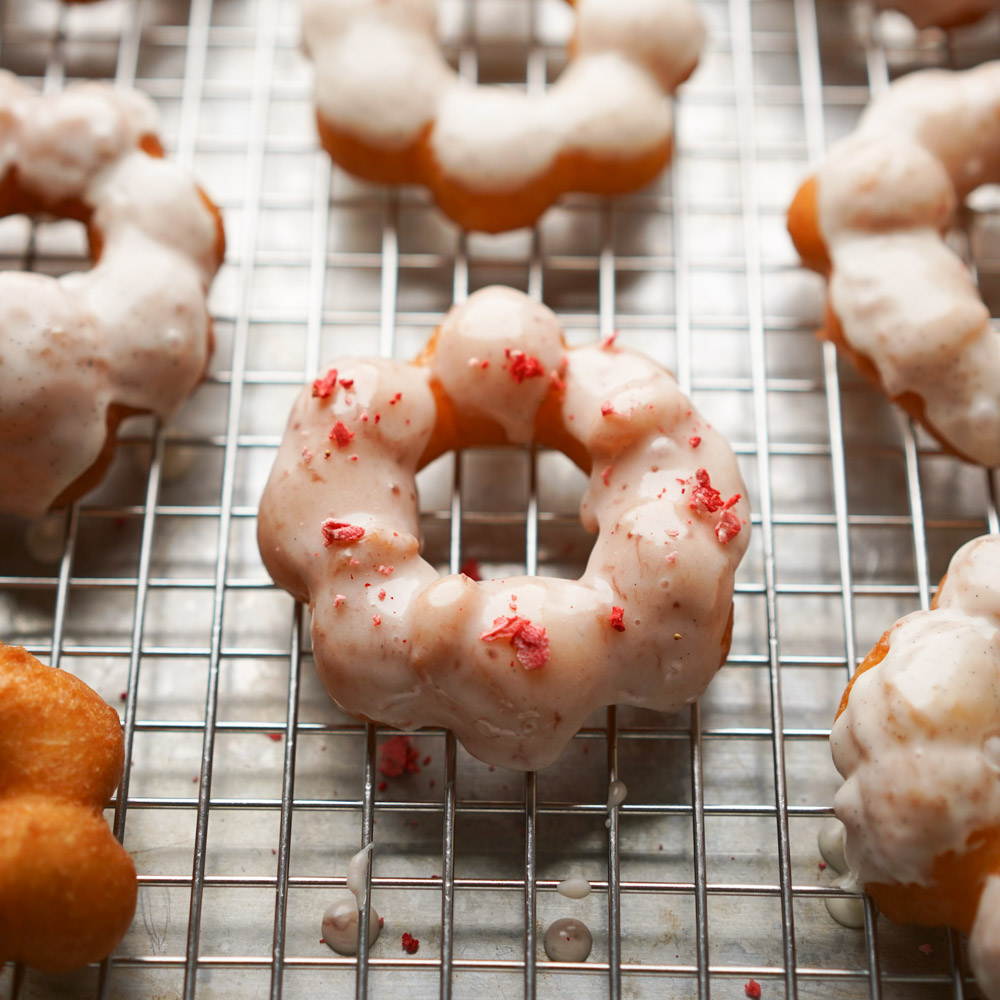
Japanese Mochi Donuts (Mochi Dango Donuts)
Delicious, chewy Japanese-inspired donuts made with mochi dough, glazed with sweet red bean paste or simple sugar syrup. Perfect for a sweet treat!
🥘Ingredients
- 1 cup glutinous rice flour (mochiko)
- 1/2 cup all-purpose flour
- 1/2 tsp salt
- 1/2 cup warm water
- 1 tbsp sugar
- 1/4 tsp baking powder
- 1 cup powdered sugar
- 2-3 tbsp milk or water
- Optional: 1 tbsp red bean paste (anko) for filling
👨🍳Directions
-
1
Preheat oven to 350°F (175°C). Line a baking sheet with parchment paper. -
2
In a bowl, mix glutinous rice flour, all-purpose flour, salt, sugar, and baking powder. Gradually add warm water while stirring until a dough forms. -
3
Transfer dough to a clean surface and knead for 5-7 minutes until smooth and elastic. Cover with a damp towel and rest for 15 minutes. -
4
Preheat a rolling pin or use a glass to roll the dough into a thin rectangle (about 1/8 inch thick). Cut into circles using a donut cutter or glass. -
5
Place circles on the prepared baking sheet. For filled donuts, cut a small circle from the center of each donut and fill with red bean paste. -
6
Bake for 15-18 minutes until lightly golden. Let cool for 5 minutes before glazing. -
7
Mix powdered sugar with milk/water until smooth. Brush over cooled donuts. For extra shine, brush again with a little more glaze.
🔧Equipment
- Mixing bowls
- Stand mixer or hand mixer
- Rolling pin (or clean glass)
- Donut pan or silicone molds
- Parchment paper
- Oven
- Pastry brush
📊Nutrition Facts (per serving)
📝Notes
Tips
- For extra chewiness, let the dough rest longer before rolling.
- Use a mix of rice flour and all-purpose flour for better texture.
- For a glaze alternative, use a simple syrup (equal parts sugar and water, boiled and cooled).
- Ensure your oven is well-heated for even baking.
Adaptations
- Substitute red bean paste with a glaze of melted butter and powdered sugar for a classic look.
- Add a sprinkle of matcha powder to the dough for a green tea flavor.
Watch Video Of How Japanese Mochi Donuts (Mochi Dango Donuts) Works
❓ Frequently Asked Questions About Japanese Mochi Donuts (Mochi Dango Donuts)
What is the key difference between traditional mochi and mochi donuts in terms of texture and ingredients?
The key difference lies in their texture and ingredients. Traditional mochi is made with glutinous rice flour (mochiko), which creates a chewy, elastic, and slightly sticky texture. Mochi donuts, however, are typically made with a mix of glutinous rice flour and wheat flour (or sometimes just wheat flour), giving them a softer, pillowy, and slightly crispier exterior. The dough is often more refined, sometimes including ingredients like sugar, egg, and butter for a sweeter, dough-like consistency rather than the dense, chewy nature of classic mochi.
—
Why does my mochi donut dough turn out gummy or dense instead of light and fluffy?
A gummy or dense mochi donut usually happens due to one of these common issues:
1. Overmixing or overworking the dough – Glutinous rice flour can develop too much gluten, making it tough. Mix just until combined.
2. Too much liquid – If the dough is too wet, it will be heavy. Use a precise ratio (typically 1 part mochiko flour to 1 part water, adjusted slightly for sweetness).
3. Underproofing or overproofing – If left too long, the dough can become overly soft. Proof in a warm place for 1–2 hours (or until slightly puffy but not sticky).
4. Not enough sugar or fat – Sugar helps tenderize the dough, while butter or oil prevents dryness. Add ½ cup sugar + 2 tbsp butter/oil to the mix.
5. Cold ingredients – Use warm water (not boiling) and slightly warm dough for better rise. Chilling the dough too long can kill yeast (if using) or make it stiff.
—
Can I substitute regular all-purpose flour for mochiko flour in mochi donuts, and if so, what adjustments would be needed?
No, you cannot reliably substitute all-purpose flour for mochiko flour in traditional mochi donuts because it lacks the amylopectin (a type of starch) that gives mochi its signature chewy texture. However, if you’re making a wheat-based mochi donut (like a Japanese-style mochi donut), you can try a mix:
– 70% all-purpose flour (or cake flour for tenderness)
– 30% mochiko flour (or 50% mochiko + 50% cornstarch for a softer texture)
If using all-purpose flour alone, expect a denser, less chewy result. Add 1 extra egg and ½ cup sugar to compensate for the lack of elasticity. For best results, stick to mochiko flour for authentic mochi donuts.
—
How do I prevent my mochi donuts from sticking to the pan or becoming too crispy on the outside?
To keep mochi donuts from sticking and achieve a tender texture:
1. Grease the pan well – Use neutral oil (like vegetable or canola) and lightly coat the pan, then chill it for 10 minutes before adding dough.
2. Use a nonstick spray – Lightly mist the pan with egg white or cornstarch slurry before baking for extra release.
3. Bake at the right temperature – 350°F (175°C) is ideal; too high makes them crispy. Bake for 12–15 minutes until golden but still soft inside.
4. Do not overbake – Check at 12 minutes—they’ll firm up as they cool. A toothpick should come out with moist crumbs, not dry batter.
5. Cool slowly – Let them sit in the pan for 5 minutes, then transfer to a wire rack. Avoid cutting them too soon—let them cool completely to maintain softness.
—
What are some creative ways to customize or flavor mochi donuts beyond the classic sweet version?
Mochi donuts are incredibly versatile! Here are some creative flavor ideas:
– Matcha Green Tea – Mix 1–2 tbsp matcha powder into the dough or dust with matcha glaze.
– Ube (Purple Yam) – Replace ½ the sugar with ½ cup ube puree or swirl in purple jam.
– Salted Caramel – Drizzle with salted caramel sauce after baking or mix ½ cup caramel syrup into the dough.
– Red Bean Paste – Fold in ½ cup adzuki bean paste (or substitute with sweetened red bean spread).
– Matcha White Chocolate – Swirl matcha-infused white chocolate into the dough or use as a glaze.
– Sesame & Honey – Mix 1 tbsp toasted sesame seeds and 1 tbsp honey into the dough.
– Coffee or Espresso – Add 1 tbsp instant coffee powder to the dough for a mocha twist.
– Cheese (for savory mochi donuts) – Use cheddar or mozzarella mixed into the dough (great for a Japanese-style kakiage-inspired version).
– Spiced Cinnamon – Add ½ tsp cinnamon + ½ tsp nutmeg for a warm, aromatic flavor.
– Lavender & Rose – Infuse rose water or lavender syrup into the dough for a floral touch.
For glazes, try matcha, black sesame, or fruit preserves (e.g., strawberry, mango, or passionfruit). The dough’s soft texture pairs beautifully with both sweet and savory fillings!

