
asian dinner recipe

The Best asian dinner recipe
I also love how adaptable this recipe is. You can tweak the ingredients based on what you have on hand—swap the proteins, adjust the veggies, or even play with the sauces. It’s not complicated, but it doesn’t feel like a chore either. And honestly, it’s one of those dishes that feels like a little treat, even though it’s healthy. The health benefits are real too—it’s packed with lean proteins, plenty of fiber from the veggies, and healthy fats from the nuts or seeds if you add them. It’s not just good for you, it’s delicious for you. My family and I have been eating it almost every week, and it’s the kind of meal that makes me feel good about what I’m putting on the table. Plus, it’s perfect for special occasions because it looks impressive but is still easy to serve. Whether it’s a simple family dinner or a dinner for guests, it always feels special.
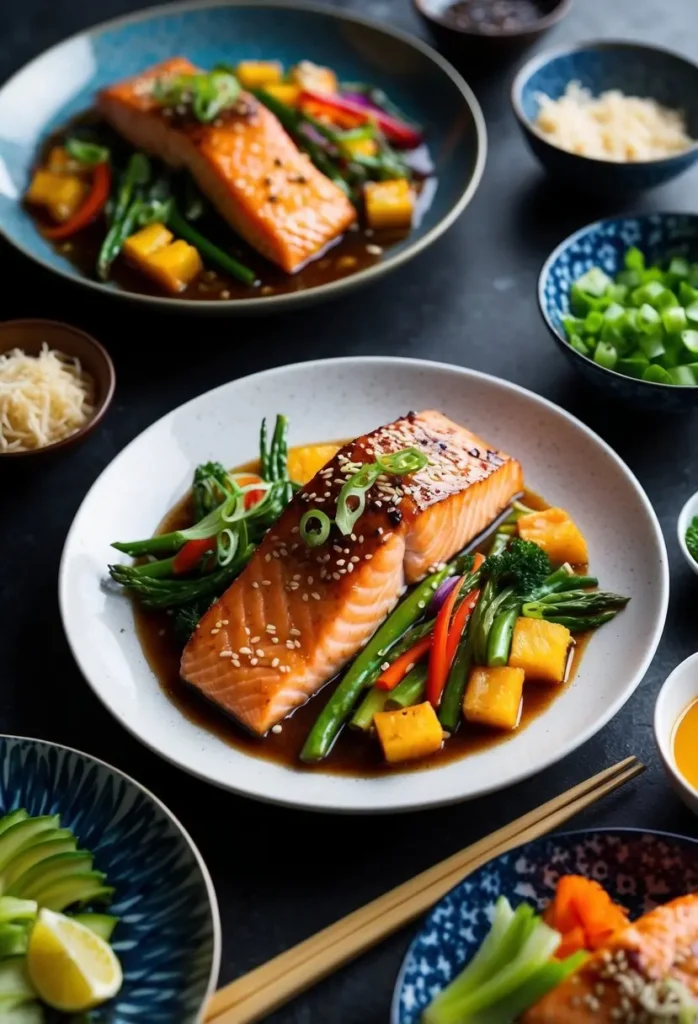
Japanese Teriyaki Chicken Stir-Fry with Rice
A flavorful and aromatic dish featuring tender chicken marinated in a sweet and savory teriyaki sauce, stir-fried with vibrant vegetables and served over steamed rice. Perfect for a quick yet satisfying Asian-inspired dinner.
🥘Ingredients
- 3 tbsp soy sauce
- 2 tbsp mirin
- 2 tbsp sake (or dry white wine)
- 2 tbsp honey or brown sugar
- 1 tbsp grated ginger
- 2 cloves garlic, minced
- 1 tbsp vegetable oil
- 4 boneless, skinless chicken thighs or breasts
- 1 tbsp cornstarch
- 1 tsp sesame oil
- 2 cups steamed white rice
- 2 bell peppers (any color), sliced
- 1 large onion, sliced
- 2 cups broccoli florets
- 1 carrot, julienned
- 2 cloves garlic, minced
- 1 tbsp vegetable oil
- 1 tsp red pepper flakes (optional)
👨🍳Directions
-
1
Prepare the teriyaki sauce: In a small bowl, whisk together soy sauce, mirin, sake, honey/brown sugar, grated ginger, minced garlic, and vegetable oil. Set aside. -
2
Marinate the chicken: In a bowl, mix chicken with cornstarch and sesame oil. Pour half of the teriyaki sauce over the chicken and let it marinate for at least 15 minutes (or up to 1 hour in the fridge). -
3
Cook the rice: Follow package instructions to prepare steamed white rice. -
4
Stir-fry vegetables: Heat 1 tbsp vegetable oil in a large pan or wok over medium-high heat. Add sliced bell peppers, onion, broccoli, and carrot. Stir-fry for 4-5 minutes until vegetables are tender-crisp. Add minced garlic and red pepper flakes (if using), stir for 30 seconds. -
5
Cook the chicken: Remove chicken from marinade, reserving the sauce. Heat another 1 tbsp vegetable oil in the same pan. Cook chicken for 5-6 minutes per side until fully cooked and golden. Pour the reserved teriyaki sauce over the chicken and stir to coat evenly. -
6
Combine: Transfer chicken and vegetables to the same pan, ensuring everything is well mixed. Cook for another 2-3 minutes until everything is heated through and sauce is glossy. -
7
Serve: Divide the steamed rice into bowls, top with the teriyaki chicken stir-fry, and garnish with extra sesame seeds or sliced green onions if desired.
🔧Equipment
- Large skillet
- Rice cooker or pot with lid
- Mixing bowls
- Cutting board
- Knife
📊Nutrition Facts (per serving)
📝Notes
Tips
- For extra flavor, add a dash of sriracha or chili garlic sauce to the teriyaki sauce.
- Use chicken breast instead of thighs for a leaner option.
- Substitute any vegetables based on preference or availability.
- Make ahead: The teriyaki sauce can be prepared a day in advance and stored in the fridge.
Variations
- Add tofu or shrimp for a vegetarian or seafood option.
- Include snap peas or mushrooms for additional texture.
Watch Video Of How Japanese Teriyaki Chicken Stir-Fry with Rice Works
❓ Frequently Asked Questions About Japanese Teriyaki Chicken Stir-Fry with Rice
What are the best ingredients to use for an authentic Asian-inspired dinner recipe?
For an authentic Asian-inspired dinner, start with high-quality ingredients like fresh, high-quality seafood (such as scallops, shrimp, or fish), high-quality proteins (like chicken thighs, pork belly, or tofu), and aromatic vegetables (bell peppers, mushrooms, carrots, and bok choy). Use premium-grade soy sauce, oyster sauce, and fish sauce for depth of flavor. Don’t forget essential aromatics like garlic, ginger, and fresh herbs like cilantro or Thai basil. For rice, use jasmine or basmati rice for a fragrant base. If you’re using sauces, consider homemade or high-quality store-bought options like teriyaki, hoisin, or peanut sauce.
—
How do I balance the flavors in an Asian-inspired dish to avoid overpowering sweetness or saltiness?
Balancing flavors in Asian cuisine is key to avoiding overpowering tastes. Start with a savory base (like soy sauce, oyster sauce, or a splash of vinegar) and gradually add sweetness (hoisin sauce, brown sugar, or honey) and acidity (lime juice, rice vinegar, or a dash of sriracha) to create harmony. Use umami-rich ingredients like mushrooms, miso paste, or fermented soybeans to deepen flavor without saltiness. Taste as you cook—adjust with small amounts of each component (e.g., a pinch of sugar or a squeeze of lime) to avoid overdoing it. Fresh herbs and aromatics (like cilantro or green onions) can also brighten the dish.
—
Can I substitute any ingredients in an Asian recipe if I don’t have them on hand?
Yes, many ingredients in Asian recipes can be substituted with alternatives while keeping the dish flavorful. For example:
– Soy sauce → Use tamari (gluten-free) or coconut aminos.
– Fish sauce → Use a mix of soy sauce + a splash of Worcestershire sauce (for umami).
– Fresh ginger → Use powdered ginger or substitute with garlic + a pinch of cinnamon.
– Jasmine rice → Use long-grain white rice or basmati as a close alternative.
– Fish fillet → Use chicken, tofu, or shrimp if needed.
– Oyster sauce → Make your own with soy sauce + a splash of hoisin + a pinch of sugar, or use hoisin sauce as a substitute.
Always adjust seasoning slightly when substituting, as the flavor profile may differ.
—
What’s the best way to prepare the rice for an Asian-inspired dinner?
For the best rice texture in Asian-inspired dishes, rinse white rice (like jasmine or basmati) thoroughly in a fine-mesh strainer until the water runs clear—this removes excess starch for fluffier grains. Use a 1:1 rice-to-water ratio (e.g., 1 cup rice to 1 cup water) for jasmine rice, but for slightly firmer rice, try a 1:1.1 ratio. Bring the water to a boil, then add rice, reduce heat to low, cover tightly with a lid (or a damp towel), and let it sit undisturbed for 15–20 minutes. Avoid peeking during cooking to prevent steam escape. Once done, fluff with a fork and let it rest for 5 minutes before serving—this ensures even cooking and a silky texture.
—
How do I handle the sauce or marinade for proteins like chicken or pork, so it stays moist and flavorful?
To keep proteins tender and flavorful when marinating or cooking in Asian-inspired sauces, follow these tips:
– Marinate overnight (at least 4 hours) for deeper flavor absorption, but avoid over-marinating (more than 24 hours) to prevent toughness.
– Use a balance of wet and dry marinades—wet marinades (like teriyaki or soy-ginger) keep moisture in, while dry rubs (like sesame or garlic powder) add crunch.
– Cook proteins to the right temperature—chicken (165°F/74°C), pork (145°F/63°C), and fish (145°F/63°C) should be fully cooked but not overcooked. Use a meat thermometer for accuracy.
– Baste or pan-sear—after marinating, sear proteins in a hot pan with oil to develop a flavorful crust, then finish with sauce in the pan (this adds moisture and caramelization).
– Rest before serving—let proteins rest for 5–10 minutes after cooking to redistribute juices.
For extra moisture, consider brining (soaking in salted water for 30–60 minutes) before marinating.

