
homemade bagels recipe

The Best homemade bagels recipe
I especially love this recipe for special occasions too. Whether it’s a weekend brunch with friends or a cozy family dinner, homemade bagels add a touch of homemade warmth that store-bought just can’t match. They’re also incredibly versatile—they can be toasted, served with cream cheese, or even used in sandwiches. And because we control the ingredients, we can make them healthier by using whole wheat flour or adding extra nutrients like flaxseed or seeds. It’s a recipe that’s as comforting as it is nutritious, and my family always seems to enjoy them more when they know they’re made with care. Plus, nothing beats the smell of freshly baked bagels filling the house.
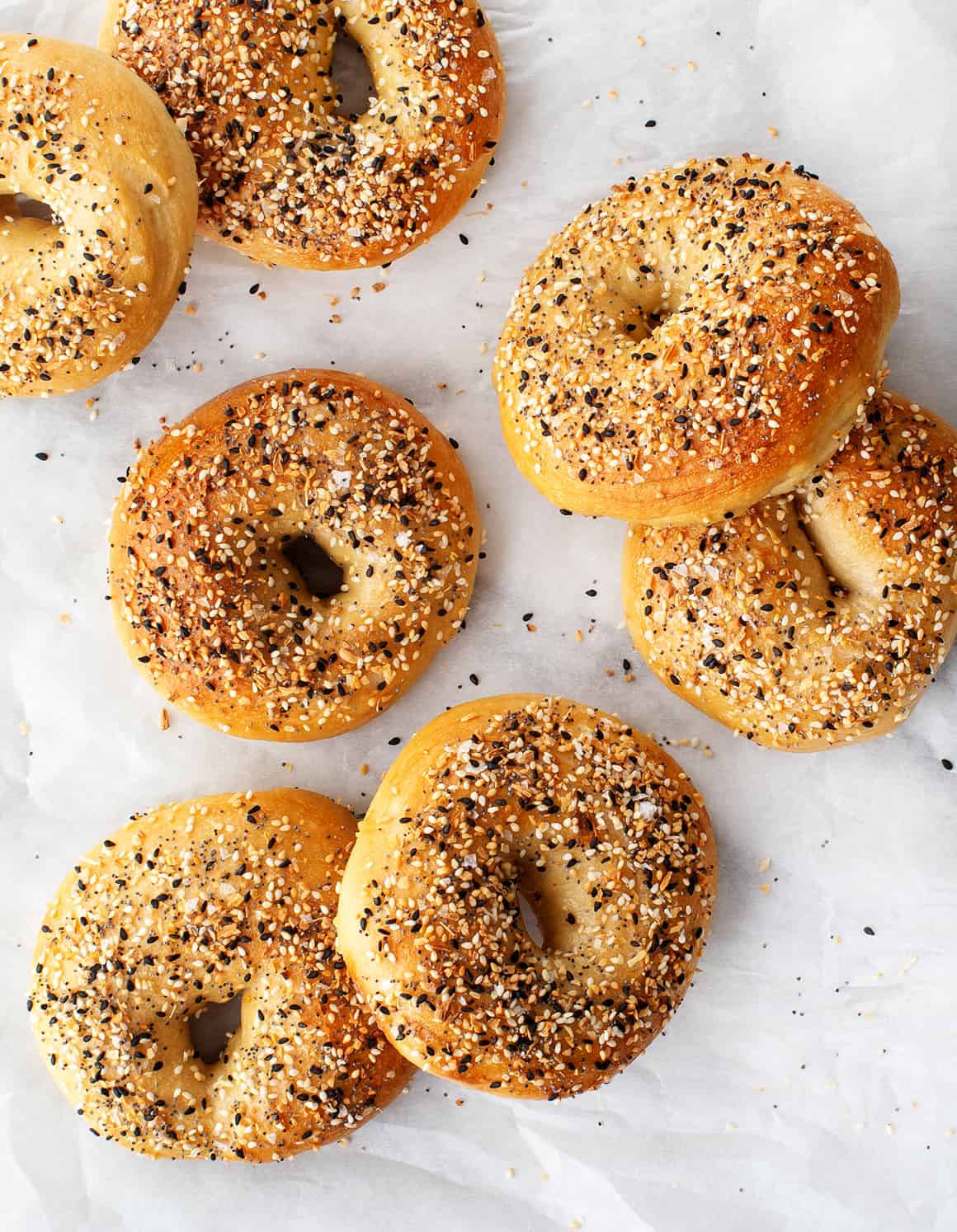
Classic Homemade Bagels
A traditional, chewy, and flavorful homemade bagel recipe that captures the perfect balance of texture and taste. This recipe is a must-try for any occasion.
🥘Ingredients
- 3 ½ cups (440g) all-purpose flour
- 1 packet (2 ¼ tsp) active dry yeast
- 1 ¼ cups (300ml) warm water (~110°F/43°C)
- 2 tbsp granulated sugar
- 2 tbsp unsalted butter, softened
- 1 tsp salt
- 1 tbsp poppy seeds
- 1 tbsp sesame seeds
- ½ tsp black sesame seeds (optional)
- 1 cup water
- ½ tsp salt
👨🍳Directions
-
1
In a large bowl, dissolve sugar in warm water. Sprinkle yeast over the sugar and let sit for 5–10 minutes until foamy. -
2
In a separate bowl, mix flour and salt. Gradually add the yeast mixture to the dry ingredients, stirring until a shaggy dough forms. -
3
Transfer dough to a lightly floured surface and knead for 8–10 minutes until smooth and elastic. If using a mixer, knead on low speed for 5–7 minutes. -
4
Place dough in a lightly oiled bowl, cover with a damp towel, and let rise in a warm place for 1–1.5 hours, or until doubled in size. -
5
Preheat oven to 425°F (220°C). Punch down the dough and divide into 8 equal pieces. Roll each piece into a 6-inch oval, tucking the ends to form a bagel shape. -
6
For sesame bagels: Mix poppy seeds, sesame seeds, and black sesame seeds (if using) in a small bowl. Sprinkle evenly over each bagel. -
7
For boiling (optional): Place bagels in a pot of boiling water with ½ tsp salt for 1 minute, then drain and transfer to a towel to dry. -
8
Place bagels seam-side down on a baking sheet lined with parchment paper. Bake for 25–30 minutes until golden brown.
🔧Equipment
- Large mixing bowl
- Stand mixer or heavy-duty kitchen spoon
- Clean kitchen towel or bagel pan
- Oven
- Bagel press or rolling pin
- Mixing spoon
- Measuring cups and spoons
📊Nutrition Facts (per serving)
📝Notes
Tips
- For extra chewiness, let the dough rest for 30 minutes after the first rise.
- Use a bagel press for even shaping, or roll dough by hand.
- Store baked bagels in an airtight container to maintain freshness.
Variations
- Add 1 tsp cinnamon to the dough for a sweet twist.
- Use whole wheat flour for a healthier, nuttier flavor.
Watch Video Of How Classic Homemade Bagels Works
❓ Frequently Asked Questions About Bagels
1. What is the secret to achieving a soft, chewy texture in homemade bagels?
The secret to a soft, chewy bagel lies in the proving process and boiling. Start with a well-hydrated dough (around 70-75% hydration) and let it rise for 1.5 to 2 hours at room temperature before boiling. The boiling step (in water with baking soda) creates steam that puffs the bagel, while the long rise develops a chewy, elastic gluten structure. Adding a pinch of salt to the boiling water also helps with browning.
—
2. Why does my bagel dough sometimes turn out dense or flat instead of puffy?
A dense or flat bagel usually means the dough wasn’t given enough time to prove (rise) properly. If the dough is too cold, it won’t rise well, leading to a flat shape. Ensure the dough is at room temperature before shaping, and let it rise until doubled in size (about 1.5–2 hours). Another common issue is overworking the dough—handle it gently when shaping to avoid compacting the gluten. If boiling isn’t done correctly (e.g., not enough water or baking soda), the steam won’t puff the bagel.
—
3. Can I use yeast instead of a bagel yeast blend for homemade bagels?
Yes, you can use active dry yeast (or fresh yeast) in a bagel recipe, but the results won’t be as authentic. Yeast alone won’t give the characteristic dense, chewy texture and puffy boil of traditional bagels. A bagel yeast blend (which often includes enzymes and malt) enhances browning, adds flavor, and helps with the boil step. If substituting yeast, you’ll need to adjust hydration, proof time, and possibly add extra water to compensate for the weaker gluten development.
—
4. How do I prevent my bagel from getting too dark or burnt during boiling?
To avoid over-browning, use less baking soda (start with ½ teaspoon per 2 cups water) and boil for only 1–2 minutes—longer boiling turns the bagel brown faster. If the water is too hot, the bagel will scorch on the outside before the inside cooks. After boiling, place the bagels on a wire rack instead of a tray to let them steam properly while cooling. For extra control, try boiling in water with a splash of vinegar or lemon juice, which can help lighten the color slightly.
—
5. What’s the best way to store leftover bagels to keep them fresh and chewy?
Store leftover bagels in an airtight container at room temperature for 1–2 days (they’ll stay soft). For longer storage (up to 3 days), refrigerate them in a bag or container (they’ll soften slightly but can be reheated). To revive them, toast in a toaster or oven at 350°F (175°C) for 5–10 minutes until crispy. If you want them chewy again, wrap them in a damp towel and let them sit at room temperature for a few hours before reheating. Avoid freezing unless you want them to become dry—if frozen, reheat in the oven with a little water spray to restore moisture.
