
italian bread recipe

- The Best italian bread recipe
- Panino al Formaggio e Pomodoro (Italian Sandwich Bread)
- 🥘Ingredients
- 👨🍳Directions
- 🔧Equipment
- 📊Nutrition Facts (per serving)
- 📝Notes
- Watch Video Of How Panino al Formaggio e Pomodoro (Italian Sandwich Bread) Works
- ❓ Frequently Asked Questions About Panino al Formaggio e Pomodoro (Italian Sandwich Bread)
The Best italian bread recipe
I love this recipe because it’s so versatile. You can slice it thin for sandwiches, use it for toast, or even tear it up for a quick snack. It’s got that chewy texture that holds up well, and because it’s made with whole wheat or a mix of flours, it’s actually pretty good for you—more fiber than white bread, and no weird preservatives. My husband says it’s his go-to when he’s hungry between meals, and my kids swear by it for their lunches. Plus, it’s easy to make in big batches, so you’ve got plenty for the week. It’s not just about the taste; it’s about the way it makes things feel better, like a little comfort in every bite. And honestly, there’s something so satisfying about kneading the dough yourself—it’s like giving yourself a little treat.
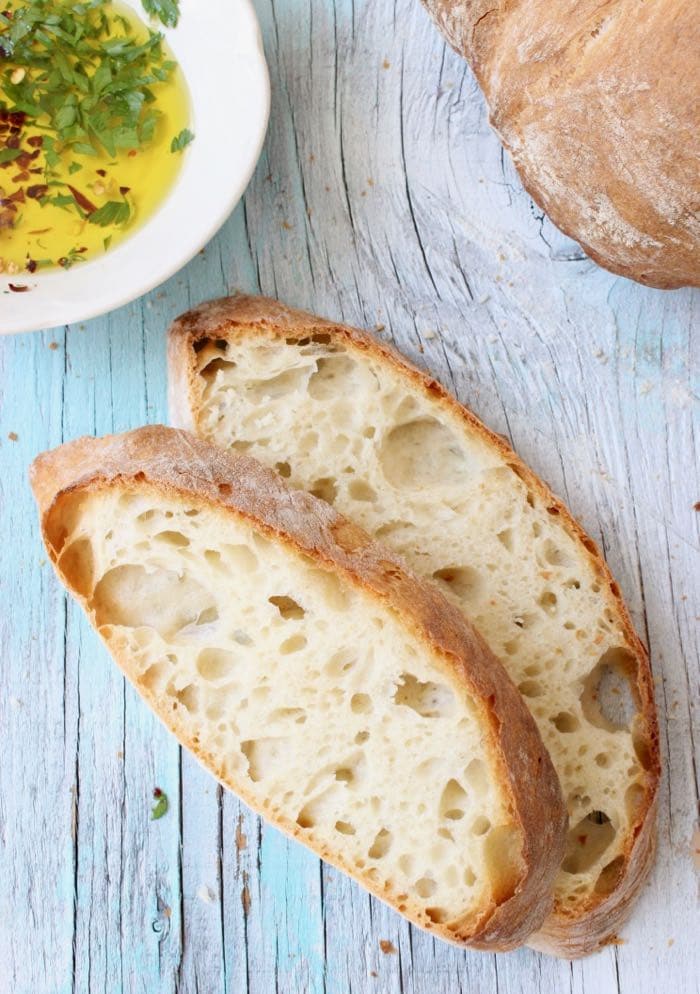
Panino al Formaggio e Pomodoro (Italian Sandwich Bread)
A classic Italian sandwich bread recipe featuring a soft, slightly chewy crust and a flavorful dough infused with garlic and herbs. Perfect for making delicious panini or sandwiches.
🥘Ingredients
- 3 cups (360g) all-purpose flour
- 1 packet (7g) active dry yeast
- 1 cup (240ml) warm water (~105°F/40°C)
- 2 tbsp olive oil
- 1 tbsp sugar
- 1 tsp salt
- 2 cloves garlic, minced
- 1 tbsp fresh rosemary, chopped
- 1 tbsp fresh parsley, chopped
- 2 tbsp olive oil
- 1 clove garlic, minced
👨🍳Directions
-
1
In a warm bowl, dissolve yeast and sugar in the warm water. Let it sit for 5–10 minutes until foamy. -
2
In a large bowl, combine flour, salt, minced garlic, rosemary, and parsley. Make a well in the center and pour in the yeast mixture and olive oil. Mix until a shaggy dough forms. -
3
Knead the dough on a floured surface for about 8–10 minutes, or use a dough hook for 5–7 minutes, until smooth and elastic. Place dough in a lightly oiled bowl, cover with a damp towel, and let rise in a warm place for 1 hour or until doubled in size. -
4
Preheat oven to 375°F (190°C). Mix olive oil and minced garlic to make the garlic oil. Brush the risen dough with the garlic oil. -
5
Shape the dough into a rectangle or round loaf. Place on a parchment-lined baking sheet. Let it rise for another 30–45 minutes. -
6
Bake for 25–30 minutes until golden brown. Let cool before slicing.
🔧Equipment
- Mixing bowl
- Kitchen scale (optional but recommended)
- Dough hook or wooden spoon
- Clean kitchen towel or baking sheet
- Oven
- Parchment paper
📊Nutrition Facts (per serving)
📝Notes
Tips
- For extra flavor, add 1 tsp dried oregano to the dough.
- Ensure yeast is fresh and dissolved properly in warm water to avoid issues.
- Use a pizza stone or steel for a crispier crust if preferred.
- Store sliced bread in an airtight container for up to 3 days or freeze for longer storage.
Variations
- Add 1 cup of whole wheat flour for a healthier twist.
- Mix in 1/2 cup grated Parmesan cheese into the dough for a cheesy version.
Watch Video Of How Panino al Formaggio e Pomodoro (Italian Sandwich Bread) Works
❓ Frequently Asked Questions About Panino al Formaggio e Pomodoro (Italian Sandwich Bread)
What is the best way to store homemade Italian bread to keep it fresh longer?
Homemade Italian bread can be stored in an airtight container at room temperature for up to 2 days. For longer storage, wrap slices individually in plastic wrap or place them in a freezer bag, then freeze for up to 3 months. To reheat, toast slices directly from the freezer or thaw overnight in the fridge before toasting.
—
Why does my Italian bread turn out dense or dry instead of light and airy?
Several factors can cause dense or dry bread:
– Underproofing or overproofing – Let the dough rise until it nearly doubles in size but doesn’t collapse when pressed.
– Too much flour – Measure flour by weight (grams) rather than volume for accuracy; Italian bread often uses less flour than French bread.
– Not enough hydration – Italian bread typically has a higher water content (60-70%) than traditional sourdough. Adjust based on your flour’s absorption.
– Overmixing – Stop kneading once the dough is smooth and slightly tacky; overmixing develops gluten too much.
– Poor oven temperature – Use a preheated Dutch oven (or heavy pot) for a hot oven (425–475°F/220–245°C) to create steam for a crisp crust.
—
How can I make my Italian bread crust extra crispy?
For a golden, crisp crust:
1. Preheat the oven to its highest setting (475°F/245°C or higher) and use a Dutch oven or heavy pot for steam retention.
2. Score the dough with a sharp knife or razor before baking to allow steam to escape and prevent bursting.
3. Add a splash of water to the Dutch oven lid or place a baking tray filled with water inside the oven to create steam for the first 20–30 minutes.
4. Bake until deep golden brown—check after 20 minutes and rotate the loaf halfway through if needed.
5. Cool in the Dutch oven for 10–15 minutes before removing to prevent a soggy crust.
—
What are the key differences between Italian bread and other types of bread?
Italian bread often differs from Western or Eastern breads in several ways:
– Flour choice: Uses 00 flour (fine, low-protein) or a mix of durum wheat (for focaccia) or whole wheat, whereas French bread relies on high-protein bread flour.
– Hydration: Typically 60–70% water content, making it softer and more tender than sourdough or baguettes.
– Kneading: Often less kneaded (lower gluten development) to preserve a softer texture, unlike dense Italian breads like ciabatta.
– Proofing: Usually longer proofing times (1–2 hours) for a lighter, airier crumb, while baguettes proof quickly.
– Crust: Italian breads often have a thinner, softer crust (e.g., ciabatta) or a rustic, uneven crust (e.g., focaccia), whereas French breads aim for a crispy crust.
– Shape: Italian breads are round, oval, or irregular (e.g., ciabatta, focaccia), while baguettes are long and narrow.
—
Can I substitute ingredients in an Italian bread recipe, and what are the few key adjustments needed?
Yes, but some substitutions require careful adjustments:
– Flour: Italian bread traditionally uses 00 flour (Italian semolina flour) or all-purpose flour (for rustic bread). If using all-purpose, reduce hydration slightly (5–10%) to avoid a gummy dough. For whole wheat, increase kneading time and hydration.
– Yeast: Standard active dry yeast works, but some Italian recipes use instant yeast or natural leavening (like sourdough starter). If using sourdough, adjust hydration and proofing time.
– Salt: Italian bread often uses fine sea salt (½–1 tsp per 4 cups flour). Too much salt can inhibit fermentation; taste as you go.
– Oil or water: For a softer texture, replace 10% of the water with olive oil (e.g., 1 tbsp oil per cup water). Avoid adding oil directly to the dough—it disrupts gluten formation.
– Seeds or herbs: Add rosemary, oregano, or sesame seeds (e.g., 1 tbsp per loaf) during the last 10 minutes of kneading or on top before baking.
– Dough temperature: Italian doughs are often warmer (80–85°F/27–29°C) to speed up fermentation. If using cold water, warm it slightly before mixing.


