
puttanesca sauce recipe

The Best puttanesca sauce recipe
I love this sauce because it’s so versatile—you can make it for a quick weeknight meal or throw it together for a special occasion. My husband swears by it when we’re hosting guests because it’s got that restaurant-quality flavor without needing fancy ingredients. And the health perks? Well, it’s packed with good fats from the olive oil, which helps with heart health, and the tomatoes are loaded with lycopene, which is great for your skin and immune system. Plus, the anchovies add a ton of flavor without a ton of calories, and the capers give it that tangy zing that keeps things interesting. My kids don’t even realize they’re getting their veggies in there—it’s just delicious. Plus, it’s got that Mediterranean vibe that’s so satisfying, and honestly, it’s one of those recipes that makes you feel like you’re doing something good for your body while still indulging. It’s the kind of dish that makes you want to keep the jar of anchovies and capers on hand all the time.
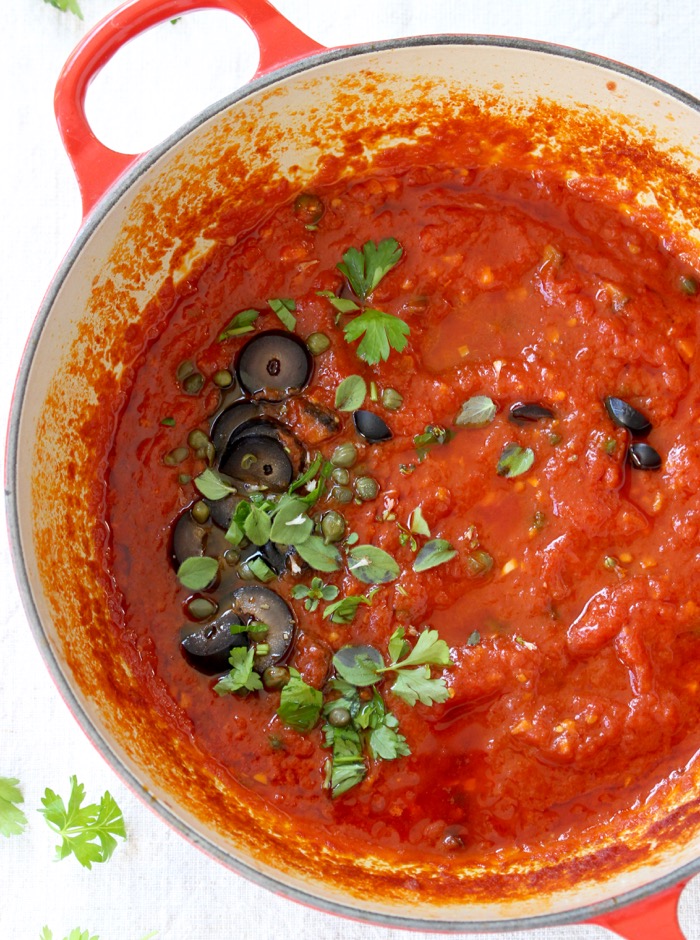
Puttanesca Sauce Recipe
A bold and tangy Italian sauce made with tomatoes, olives, capers, and anchovies, perfect for tossing with pasta. This recipe is a must-try for any occasion.
🥘Ingredients
- 1 lb (450g) whole tomatoes or 2 (14 oz) cans crushed tomatoes
- 1/2 cup (120ml) dry white wine
- 1/4 cup (60ml) extra-virgin olive oil
- 1/4 cup (30g) Kalamata olives, pitted and chopped
- 1/4 cup (30g) green olives, pitted and chopped
- 1/4 cup (30g) capers, rinsed and drained
- 4 anchovy fillets (or 2 tbsp anchovy paste)
- 4 cloves garlic, minced
- 1 tsp red pepper flakes (optional)
- 1 bay leaf
- Salt and freshly ground black pepper to taste
- 8 oz (225g) spaghetti or another long pasta shape
- 1/4 cup (15g) grated Parmesan cheese (plus extra for serving)
👨🍳Directions
-
1
In a large saucepan, combine tomatoes, wine, olive oil, olives, capers, anchovies, garlic, red pepper flakes, and bay leaf. Bring to a simmer and cook for 15-20 minutes, stirring occasionally, until the sauce thickens. -
2
While the sauce simmers, cook the pasta according to package instructions until al dente. Reserve 1/2 cup of pasta water before draining. -
3
Strain the sauce through a fine-mesh strainer to remove large bits, then return it to the saucepan. Stir in the Parmesan cheese and adjust seasoning with salt and pepper if needed. -
4
Toss the cooked pasta with the puttanesca sauce, adding a splash of reserved pasta water to loosen the sauce if necessary. Serve immediately with extra Parmesan cheese.
🔧Equipment
- Large saucepan
- Wooden spoon or spatula
- Fine-mesh strainer
- Bowl
- Knife and cutting board
- Pasta cooker or large pot
- Measuring cups and spoons
📊Nutrition Facts (per serving)
📝Notes
Tips
- For extra depth, add a splash of pasta water while tossing to emulsify the sauce.
- Use a mix of olives and capers for a balanced flavor profile.
- If using anchovy paste, reduce it to 1 tbsp to avoid overpowering the dish.
Variations
- Add a handful of fresh basil or parsley for brightness.
- Include a pinch of oregano or thyme for additional herbs.
Watch Video Of How Puttanesca Sauce Recipe Works
❓ Frequently Asked Questions About Puttanesca Sauce
What is the traditional origin of Puttanesca sauce, and why is it called that?
Puttanesca sauce originated in Naples, Italy, and the name comes from the Italian word “puttana” (meaning “whore”), reflecting its bold, garlicky, and slightly briny flavor profile that some compare to the taste of a salty, spicy street food. The dish likely gained its name because it was traditionally served at brothels or as a quick, flavorful meal for working-class people.
—
How do I choose the best ingredients for an authentic Puttanesca sauce?
For an authentic version, use:
– Olive oil (extra virgin, preferably Neapolitan)
– Anchovies (fresh or high-quality dried, like briciole or sciacca)
– Garlic (fresh, 4–5 cloves, minced—don’t skip it!)
– Tomatoes (fresh San Marzano or high-quality canned, peeled)
– Capers (fresh or dried, preferably from Naples)
– Red pepper flakes (for heat, optional but traditional)
– Red wine (a dry, full-bodied one like Aglianico or Barbera)
– Pepperoncini or hot peppers (for extra kick)
– Fresh parsley (for garnish)
Avoid pre-made mixes—the key is fresh, high-quality ingredients.
—
Can I make Puttanesca sauce without anchovies, and if so, what’s the best substitute?
While anchovies are essential for authentic flavor, you can substitute them with:
– A splash of fish sauce (1–2 tsp) for umami depth
– A small amount of soy sauce or Worcestershire sauce (½ tsp) for saltiness
– A mix of capers and olives (for brininess)
However, the dish will lack its signature depth. If possible, try using fresh anchovies (like sarde in saor anchovies) for the closest taste.
—
How long should I simmer the sauce, and what’s the ideal temperature?
Simmer the sauce low and slow for 15–20 minutes to let flavors meld. Avoid boiling vigorously—this can make the tomatoes turn mushy or bitterness develop. If using canned tomatoes, reduce them first to concentrate their sweetness. The ideal temp is a gentle medium-low heat, stirring occasionally to prevent sticking.
—
What’s the best way to cook the pasta for Puttanesca sauce, and what pasta shapes work best?
Cook the pasta al dente (firm to the bite) in well-salted boiling water (about 1.5–2 teaspoons of salt per liter). The best shapes are:
– Penne rigate (grooved penne for sauce absorption)
– Spaghetti or linguine (thin strands hold up well)
– Farfalle (bowtie) or rigatoni (if you prefer a chunkier texture)
Avoid overcooking—reserve ½ cup pasta water before adding the sauce to help emulsify it.
