
eggs in purgatory recipe


- The Best eggs in purgatory recipe
- Eggs in Purgatory (Spanish Omelette with Chorizo)
- 🥘Ingredients
- 👨🍳Directions
- 🔧Equipment
- 📊Nutrition Facts (per serving)
- 📝Notes
- Watch Video Of How Eggs in Purgatory (Spanish Omelette with Chorizo) Works
- ❓ Frequently Asked Questions About Eggs in Purgatory (Spanish Omelette with Chorizo)
The Best eggs in purgatory recipe
I love this recipe for occasions too—whether it’s a weekend brunch with the family, a quick lunch for a busy weeknight, or even a make-ahead dish that tastes even better the next day. It’s that kind of meal that doesn’t require a lot of effort but leaves everyone satisfied. And the health benefits? Well, eggs are packed with protein and vitamins, and the bacon—when eaten in moderation—adds a nice dose of iron and flavor. It’s not a super low-fat dish, but it’s not the worst thing you can eat either. My husband always says it’s the kind of food that makes him feel like he’s eating something real, not something processed, and honestly, that’s why I keep making it. It’s that reliable, comforting, and easy to love. Plus, it’s something my kids will actually eat, even if they’re picky. That’s half the battle, right?
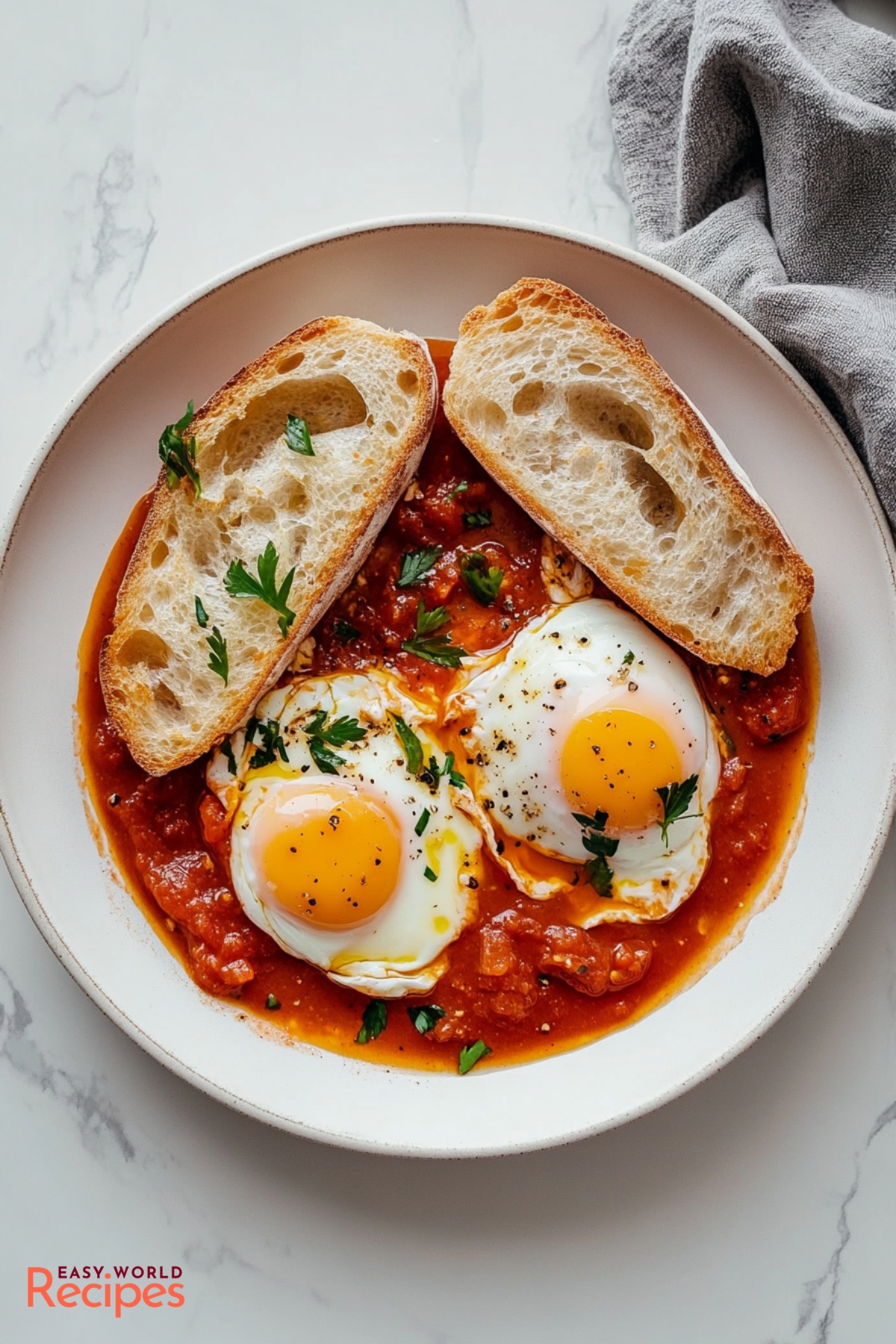
Eggs in Purgatory (Spanish Omelette with Chorizo)
A rich, savory Spanish omelette featuring eggs cooked in a creamy tomato sauce with spicy chorizo. Perfect for a hearty breakfast or brunch.
🥘Ingredients
- 6 large eggs
- 1/2 cup milk
- 1/2 tsp salt
- 1/4 tsp black pepper
- 4 oz chorizo (sliced)
- 1 small onion (diced)
- 2 cloves garlic (minced)
- 1/2 cup tomato sauce
- 1 tbsp olive oil
- 1/2 tsp smoked paprika
👨🍳Directions
-
1
In a bowl, whisk eggs with milk, salt, and pepper until well combined. -
2
In another bowl, sauté diced onion and minced garlic in olive oil over medium heat for 3-4 minutes until soft. -
3
Add sliced chorizo to the pan and cook until crispy (about 2 minutes). Stir in tomato sauce and smoked paprika, then simmer for 2 minutes. -
4
Pour the egg mixture into the skillet with the chorizo filling. Let it cook undisturbed for 2-3 minutes until the edges set. -
5
Gently fold the omelette in half and cook for another 1-2 minutes until the top is lightly golden. -
6
Slide the omelette onto a plate, slice, and serve hot.
🔧Equipment
- Non-stick skillet (8-inch)
- Mixing bowls
- Knife and cutting board
- Measuring cups and spoons
📊Nutrition Facts (per serving)
📝Notes
Tips
- For extra flavor, add a pinch of cayenne pepper to the chorizo mixture.
- Use fresh chorizo if available for the best taste.
- Make ahead: Assemble the omelette filling, refrigerate, and cook fresh before serving.
Substitutions
- Omit chorizo for a vegetarian version using mushrooms and spinach.
Watch Video Of How Eggs in Purgatory (Spanish Omelette with Chorizo) Works
❓ Frequently Asked Questions About Eggs in Purgatory (Spanish Omelette with Chorizo)
1. What is the “Purgatory” in the Eggs in Purgatory recipe, and why is it called that?
The “purgatory” refers to the layer of egg whites that form a thin, translucent barrier between the runny yolk and the fully cooked egg whites. It’s called that because it acts like a “purgatory” or a transitional space—neither fully cooked nor raw—before the whites set completely. The technique relies on the whites being slightly undercooked at first, then gently reheated to firm up while keeping the yolk liquid.
—
2. How do I know when the egg whites are in the “purgatory” stage?
The whites are in purgatory when they’re just starting to thicken slightly but still hold a slight sheen and don’t look fully opaque yet. They should be slightly translucent in the center, with a glossy, almost “wet” appearance. Pressing gently with a fork or spoon should make them slightly give, but they shouldn’t collapse completely. If they’re fully opaque, they’ve moved past purgatory and are ready for the final reheat.
—
3. Can I use room-temperature eggs for this recipe?
Yes, using room-temperature eggs works perfectly for Eggs in Purgatory. Cold eggs can be harder to whip and may not achieve the same smooth, glossy texture. Allowing them to sit at room temperature for about 30–60 minutes before whipping helps them incorporate air more easily, leading to a lighter, fluffier result.
—
4. What if my egg whites don’t hold the shape when they’re in purgatory?
If your whites are too fragile and collapse before reaching purgatory, it could be due to overwhipping, using eggs that are too old, or not using enough salt or acid (like lemon juice or vinegar). To fix this:
– Whip the whites on medium speed first, then gradually increase to high.
– Add a pinch of salt and a splash of lemon juice (or vinegar) to help stabilize them.
– Use fresh eggs (within 1–2 weeks of being laid).
– If the whites are still too weak, try adding a small amount of cold water (1–2 tbsp) to help them hold structure.
—
5. Why does the recipe call for a double boiler, and can I use another method?
A double boiler is ideal because it provides gentle, even heat, which is crucial for the delicate process of reheating the whites without overcooking them or causing them to curl. If you don’t have one, you can use a saucepan with a heatproof silicone or metal insert (like a “double boiler” substitute) placed over simmering water. Alternatively, you can gently warm the whites in a bowl over a very low flame (with caution) or in a microwave on low power (30-second bursts). Avoid direct heat, as it can cause uneven cooking or browning.
