
apple cider and apple juice recipe


The Best apple cider and apple juice recipe
I started making apple cider at home because the jugs at the store tasted thin to me and the ingredient list was longer than I wanted it to be. This recipe is simple. Whole apples, a little sugar, cinnamon, cloves, and water.
It simmers on the stove for about an hour and you end up with something that tastes like actual fruit instead of sweetened water. The same pot turns into apple juice if you leave the spices out and strain it through a fine mesh sieve. My kids drink it warm in mugs after school and cold from the fridge the next morning, and they have no idea how little work goes into it.
I make a big batch on Sunday and it usually carries us through most of the week. It also earns a spot on the table at Thanksgiving and at our family gatherings in December. This is one of the few things in my house that everybody agrees on, and it works just as well on a plain Tuesday as it does for a holiday.
You are working with real apples here, so you get the vitamin C that comes with them and some fiber from the fruit itself. You also control the sugar, which matters to me more than it used to. I usually drop it to half a cup and let the apples carry the rest of the sweetness, then taste at the end and add a little more while the pot is still hot if it needs it.
No preservatives, no additives, and nothing in it that I cannot name.
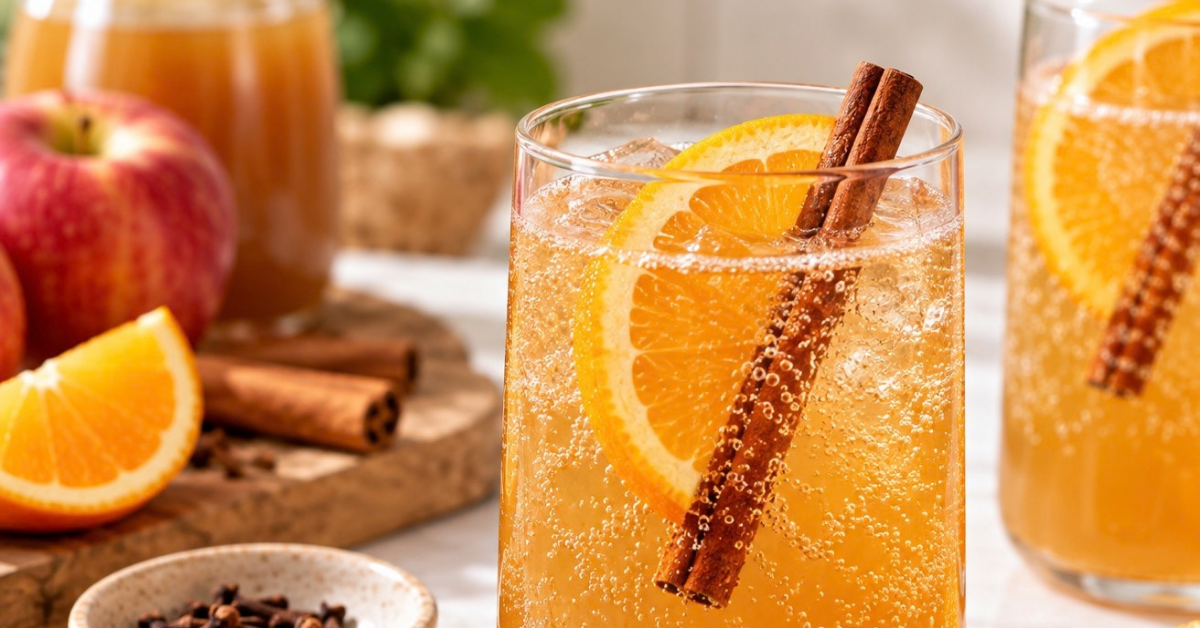
Homemade Apple Cider and Apple Juice
A pot of whole apples, an orange, and warm spices simmers down into a fragrant cider that is sweet enough to sip by the mug. Strain it twice through cheesecloth and chill it, and the same batch becomes a clear, bright apple juice.
🥘Ingredients
For the Cider
For the Apple Juice
👨🍳Directions
🔧Equipment
📊Nutrition Facts (per serving)
📝Notes
Watch Video Of How Homemade Apple Cider and Apple Juice Works
I keep this recipe on hand because it fits any occasion, from a quiet weeknight to a full holiday table, and it never feels like too much work.
It makes a big batch easily, so it works well when family gathers and everyone wants a second glass.
Simple ingredients, one pot, and a drink that pleases kids and adults alike.
❓ Frequently Asked Questions About Apple Cider and Apple Juice
1. What is the difference between apple cider and apple juice?
Apple cider is typically unfiltered and unpasteurized, pressed from whole apples, which gives it a cloudy look, a deeper apple flavor, and a bit of natural sediment. Apple juice is filtered and usually pasteurized, so it pours clear and tastes lighter and sweeter. Both work in this recipe, but cider brings more body and tartness to the finished drink.
2. Can I substitute store-bought apple juice for fresh cider?
Yes. If cider isn’t in season or your market doesn’t carry it, use a good-quality unfiltered apple juice and the recipe will still turn out well. Look for a juice with no added sugar or corn syrup, since the sweetness concentrates as the liquid simmers. You may want to start with slightly less sweetener and taste before adding more.
3. How long does homemade apple cider keep in the refrigerator?
Stored in a sealed container in the fridge, it holds for about five to seven days. Let it cool completely before refrigerating so condensation doesn’t water it down. If you plan to keep it longer, pour it into freezer-safe jars, leave an inch of headspace, and freeze for up to three months.
4. Which apples make the best cider or juice?
A blend gives the most interesting flavor: one or two sweet varieties for body and one tart variety for brightness. Gala, Fuji, and Honeycrisp bring sweetness, while Granny Smith and Braeburn add acidity. Avoid anything mealy or overripe, and skip waxed fruit if you can—a quick scrub under cool water is enough for the rest.
5. Can I make this on the stovetop instead of in a slow cooker?
Absolutely. Combine everything in a heavy pot, bring it just to a bare simmer, then drop the heat to low and let it steep for 30 to 45 minutes. Keep the lid partially on so the liquid reduces slowly rather than evaporating, and never let it boil hard—that muddies the apple flavor. Stir in the spices at the end and taste for sweetness before serving.
