
apple jelly recipe

The Best apple jelly recipe
I also love that it’s packed with health benefits, even when we indulge a little. Apples are naturally rich in fiber, vitamin C, and antioxidants, and this jelly keeps all those nutrients intact while making them easy to enjoy. No refined sugars or artificial junk—just real fruit and a touch of honey or sugar if needed. It’s a great way to use up apples that might otherwise go to waste, and it’s so easy to make that I always have a jar on hand for when we’re hosting a dinner party or just need something quick for the kids. My family’s favorite part? How it makes everything taste better, whether it’s a simple breakfast or a fancy dessert. It’s that kind of recipe that feels like a little extra love, and honestly, that’s what I love most about it.
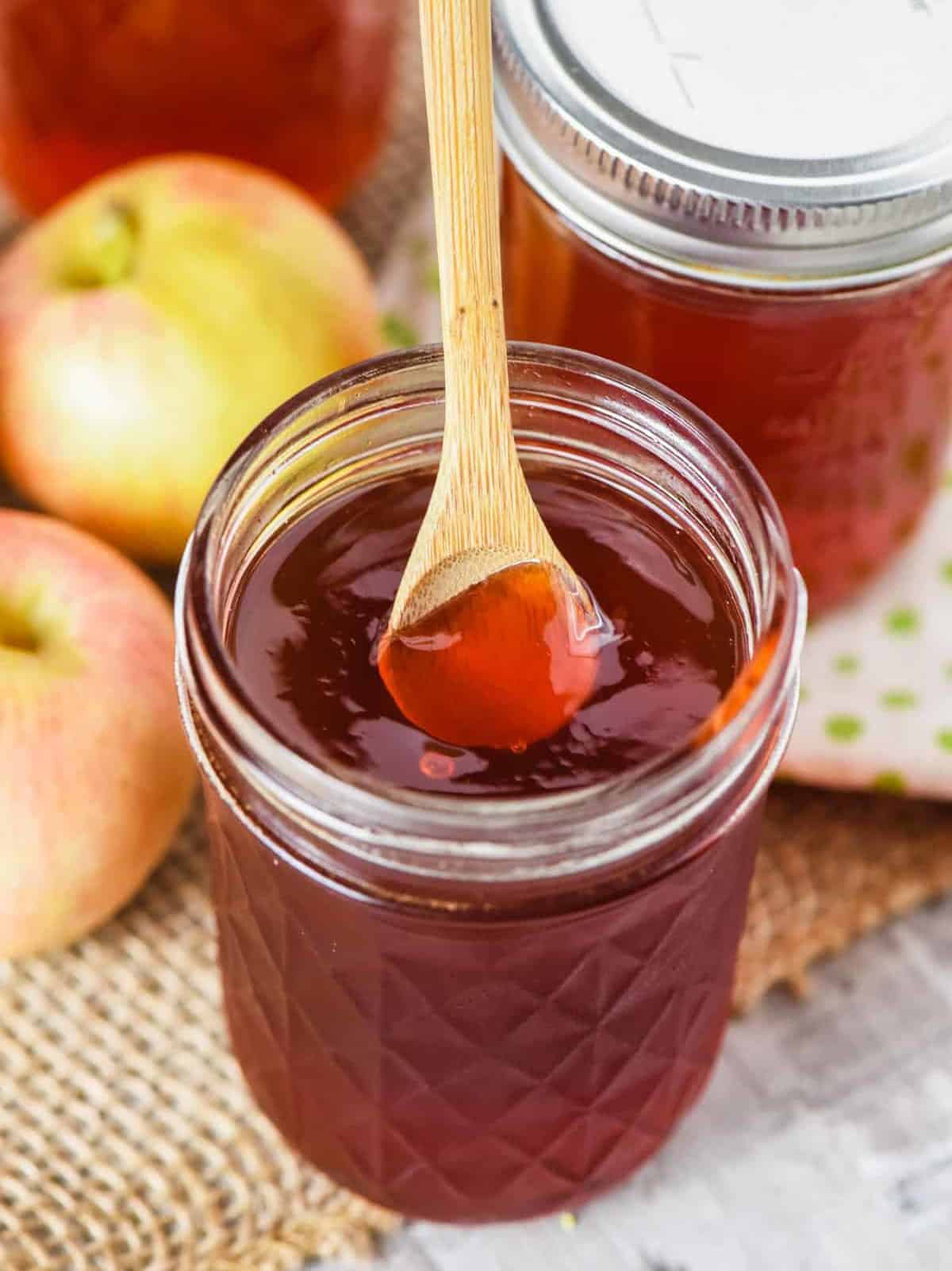
Classic Apple Jelly Recipe
A simple and delicious homemade apple jelly that captures the natural sweetness and tang of fresh apples. Perfect for spreading on toast, pairing with cheese, or enjoying as a sweet treat.
🥘Ingredients
- 6 cups sliced apples (about 4 large apples)
- 4 cups water
- 4 cups granulated sugar
- 1 cinnamon stick
- 4 cloves
- 1 tbsp lemon juice
👨🍳Directions
-
1
Wash and slice the apples into thin slices. Place them in a large pot and cover with water. Add cinnamon stick and cloves. Bring to a boil, then reduce heat and simmer for 15 minutes until apples are very soft. -
2
Strain the apple mixture through a fine-mesh strainer into a clean pot, pressing down on the apples to extract all the juice. Discard the solids. -
3
Return the strained juice to the pot. Add granulated sugar and lemon juice. Stir well until sugar is completely dissolved. Bring the mixture to a full rolling boil, then boil for 5 minutes. -
4
Remove the cinnamon stick and cloves. Pour the hot jelly into clean, sterilized jars, leaving about ¼ inch of headspace. Seal the jars tightly and wipe the rims clean. -
5
Place jars on a baking sheet and store in an oven preheated to 240°F (115°C). Bake for 1 hour to sterilize the jars. Let jars cool completely before storing in a cool, dark place.
🔧Equipment
- Large pot
- Fine-mesh strainer
- Clean jars with lids
- Jar lifter
- Baking sheet
- Oven
📊Nutrition Facts (per serving)
📝Notes
- Ensure all jars and lids are clean and dry before filling to prevent leaks.
- For a lighter jelly, reduce the sugar to 3 cups.
- Store jelly in a cool, dark place for up to 1 year.
- You can add a pinch of pectin if you prefer a thicker consistency.
Watch Video Of How Classic Apple Jelly Recipe Works
❓ Frequently Asked Questions About Apple Jelly
1. What ingredients do I need to make homemade apple jelly?
To make classic apple jelly, you’ll need fresh or frozen apples (about 4-5 lbs), granulated sugar (about 3-4 cups), water (about 1 cup), lemon juice (about 2 tablespoons), and pectin (about 1 packet or 1/4 teaspoon for low-sugar versions). Optional additions like cinnamon or vanilla can enhance flavor.
2. How do I choose the right apples for apple jelly?
For the best jelly, use a mix of sweet and tart apples. Popular choices include Granny Smith (for tartness), Fuji, Gala, or McIntosh. Avoid overly mushy or seed-heavy varieties like Red Delicious. Fresh apples work best, but frozen ones can be used if thawed and drained of excess water.
3. Why is it important to use pectin in apple jelly?
Pectin is a natural thickening agent found in apples that helps create a firm, set jelly. Without it, the jelly may remain liquid or be too soft. Low-sugar versions often use liquid or powdered pectin to reduce sugar content while maintaining a good texture.
4. How long does it take to make apple jelly?
The process takes about 3–4 hours total, including prep and cooking time. Here’s a rough breakdown:
– Prep (30 min): Peel, core, and chop apples; cook with water and sugar.
– Cooking (1–1.5 hours): Simmer until thickened, then add lemon juice and pectin.
– Setting (10–30 min): Let it cool and set before refrigerating.
5. Can I make apple jelly without a candy thermometer?
Yes! Apple jelly sets when it reaches a 210°F (99°C) boil, but you can check doneness by:
– Testing with a spoon: The mixture should feel thick like pudding.
– Adding a drop to cold water—if it forms a clear bead, it’s ready.
– Using the “sugar test”: Drop a spoonful on a cold plate; if it cracks like hard candy, it’s set.
