
asian salmon recipe

The Best asian salmon recipe
I’ve got to say, this salmon tastes even better than the fancy restaurants serve it, and that’s saying something. My husband loves it because it’s lean but still rich, and my kids swear by it because it’s not greasy or heavy—just clean, bright flavors that make them want to eat their veggies too. It’s the kind of dish that feels special enough for a holiday but also so natural that it’s just as good for a regular weeknight. And the health benefits? Well, salmon is one of those foods that’s basically a superfood—it’s got protein to keep them full, healthy fats for their skin and brain, and all the vitamins they need without any of the junk. It’s like giving them a little gift every time they sit down to eat. Plus, the way it glistens under the pan and smells so good? There’s just no better way to start a meal.
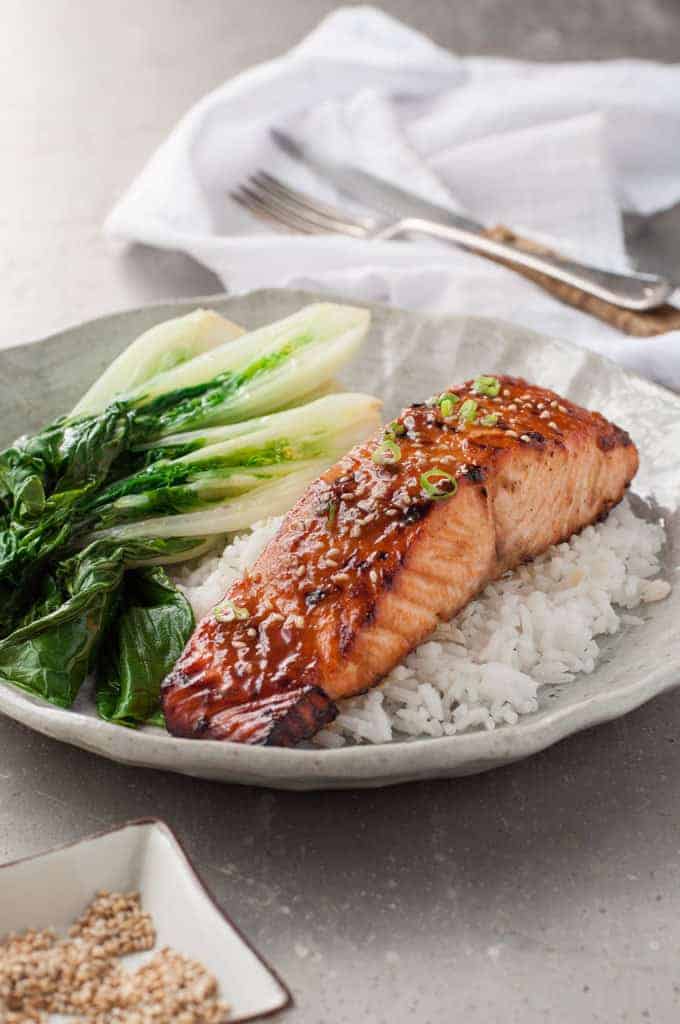
Garlic Butter Asian Salmon with Sesame Glaze
A flavorful dish featuring tender salmon glazed with a sweet and savory sesame sauce, paired with a crispy sesame-dusted rice cake. This recipe is a must-try for any occasion.
🥘Ingredients
- 4 salmon fillets (6 oz each)
- 2 tbsp olive oil
- 1 tbsp soy sauce
- 1 tbsp honey
- 1 tsp grated ginger
- 2 cloves garlic, minced
- 1 tsp sesame oil
- 2 tbsp soy sauce
- 1 tbsp rice vinegar
- 1 tbsp honey
- 1 tbsp sesame oil
- 1 tsp grated ginger
- 1 clove garlic, minced
- 1 tsp red pepper flakes (optional)
- 1 tbsp chopped green onions
- 4 rice cakes
- 1 tbsp sesame seeds
- 1 tbsp vegetable oil
👨🍳Directions
-
1
Preheat oven to 400°F (200°C). Line a baking sheet with parchment paper. -
2
In a small bowl, mix soy sauce, honey, grated ginger, minced garlic, and sesame oil to make the glaze. Set aside. -
3
Place rice cakes on a plate, lightly brush with vegetable oil, and sprinkle with sesame seeds. Set aside. -
4
In a bowl, toss salmon fillets with olive oil, soy sauce, and half of the sesame glaze mixture. Let marinate for 10 minutes. -
5
Arrange salmon fillets on the prepared baking sheet. Bake for 12-15 minutes or until salmon is cooked through and glaze is slightly caramelized. -
6
While salmon bakes, heat a small saucepan with a little oil over medium heat. Add remaining sesame glaze, green onions, and red pepper flakes (if using). Simmer for 2-3 minutes until slightly thickened. -
7
Serve salmon with rice cakes and drizzle with the sesame glaze sauce.
🔧Equipment
- Mixing bowls
- Cutting board
- Knife
- Salad spinner or colander
- Baking sheet
- Oven
- Small saucepan
- Wooden spoon
- Tongs
📊Nutrition Facts (per serving)
📝Notes
Tips
- For extra flavor, add a dash of sriracha or a pinch of black pepper to the glaze.
- Ensure salmon is cooked to an internal temperature of 145°F (63°C) for safety.
- You can substitute regular rice cakes with steamed jasmine rice for a different texture.
Watch Video Of How Garlic Butter Asian Salmon with Sesame Glaze Works
❓ Frequently Asked Questions About Garlic Butter Asian Salmon with Sesame Glaze
What is the difference between Asian salmon and regular salmon?
Asian salmon, often called salmon trota or salmon de río, is typically a farmed Atlantic salmon that has been bred to have a firmer texture and a slightly sweeter, more delicate flavor compared to wild-caught Pacific salmon. It’s often marinated or seasoned differently to suit Asian culinary techniques, such as using soy sauce, ginger, garlic, and sometimes citrus. Regular salmon, especially wild-caught, tends to have a richer, more robust flavor and a slightly softer texture.
—
How long does it take to prepare Asian salmon for cooking?
Preparing Asian salmon typically takes around 15–25 minutes, depending on the method. This includes marinating (if using) for 10–20 minutes, then cooking—whether it’s grilling, pan-searing, or baking—usually taking 8–12 minutes for medium doneness. If you’re using a marinade, the salmon can also be cooked directly in the marinade for a quicker, flavorful result.
—
What are the key ingredients in a classic Asian salmon recipe?
A classic Asian salmon dish often includes:
– Salmon fillets (fresh or frozen, thawed if needed)
– Soy sauce (or tamari for gluten-free)
– Ginger (fresh or powdered)
– Garlic (minced or crushed)
– Sesame oil (for richness)
– Lemon or lime juice (brightens flavor)
– Honey or brown sugar (balances saltiness)
– Green onions or cilantro (for garnish)
– Optional: Rice vinegar, chili flakes, or a touch of fish sauce for depth
Some variations may also include toasted sesame seeds or a drizzle of hoisin sauce for extra umami.
—
Can I use frozen salmon for this recipe, and how do I thaw it properly?
Yes, you can use frozen salmon! To thaw it safely:
1. Refrigerate overnight (best method—place in a sealed container on the coldest part of the fridge).
2. Cold water bath (submerge in cold water, changing it every 30 minutes until thawed).
3. Microwave on defrost setting (quickest but may slightly cook the outside).
Avoid thawing at room temperature to prevent bacterial growth. Once thawed, pat the salmon dry before marinating or cooking to ensure better searing.
—
What are some common mistakes to avoid when cooking Asian salmon?
1. Overcooking – Salmon cooks quickly (especially thin fillets). Use a meat thermometer (145°F/63°C for medium) or check with a knife (flakes easily when done).
2. Skipping the patting dry – Wet salmon steams instead of sears, leading to a less flavorful crust.
3. Using too much marinade – While marinating helps, excessive liquid can dilute flavors. Pat excess off before cooking.
4. Ignoring the heat source – For grilling, ensure the pan/grate is very hot before adding salmon to prevent sticking. For baking, preheat oven to 400°F (200°C).
5. Not balancing flavors – Too much soy sauce can make the salmon taste salty. Taste and adjust with honey, citrus, or a pinch of sugar.
