
boudin balls recipe

The Best boudin balls recipe
I love this recipe because it’s something that feels like a little tradition. It’s not fancy, but it’s comforting, and it brings people together. Whether it’s a Sunday dinner or a quick meal when you’re running late, boudin balls are that kind of dish that doesn’t demand much but leaves you feeling satisfied. My husband and I used to make them for holidays, and now my kids ask for them every time we cook, even if it’s just for breakfast or lunch. Plus, there’s something about the health benefits that makes it even better—leaner than regular sausage, packed with protein, and usually made with whole grains or legumes, depending on the recipe. It’s not just food; it’s a little slice of Southern comfort that’s easy on the wallet and the conscience. And let’s be honest, nothing beats the smell of them frying up in the pan—it’s like a warm, cozy hug for your whole family.
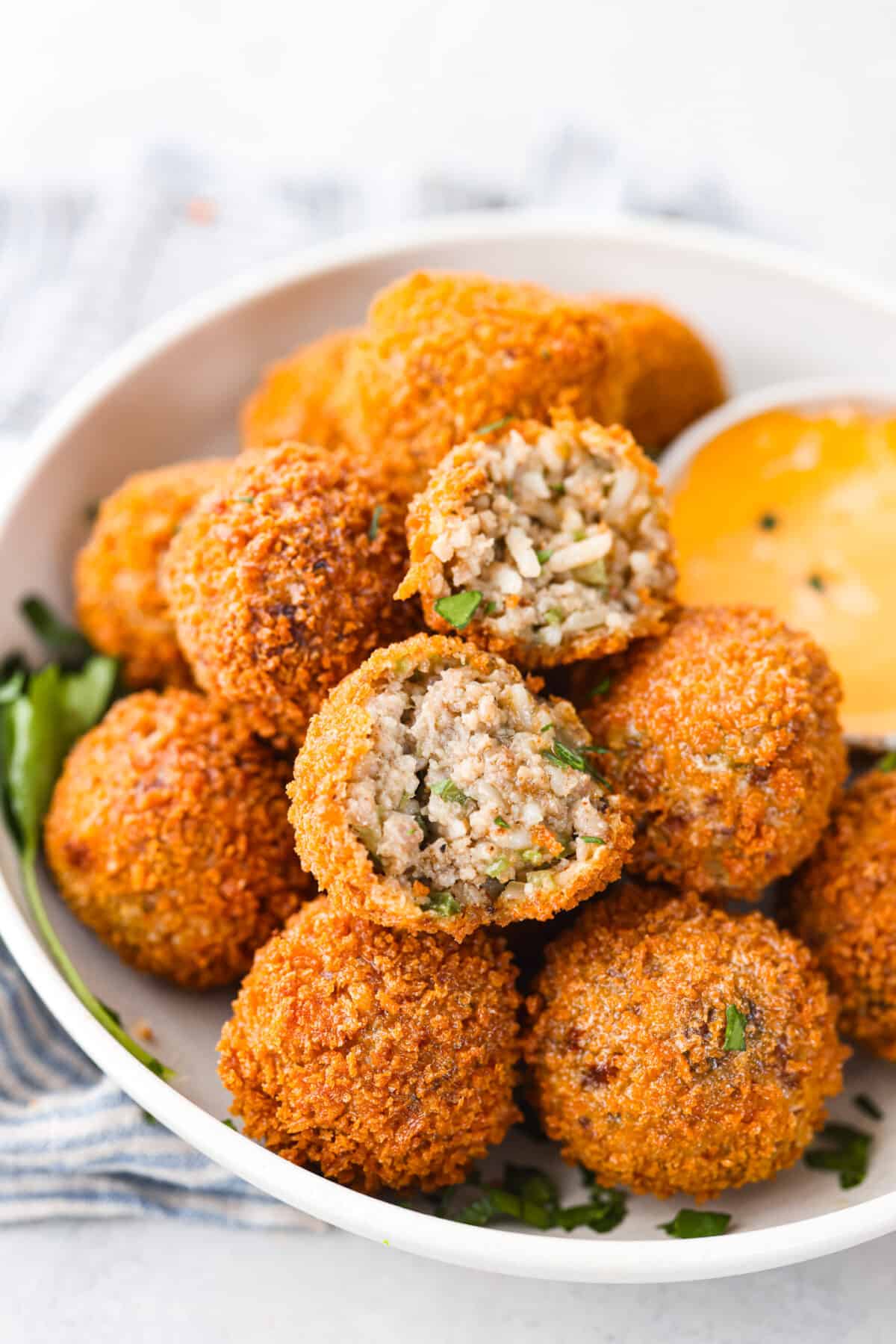
Classic Boudin Balls (French Sausage Balls)
Delicious, bite-sized French sausage balls made with a simple dough and savory tomato sauce. Perfect for appetizers or a quick snack.
🥘Ingredients
- 1 cup all-purpose flour
- ½ cup breadcrumbs
- 1 large egg
- 1 tbsp melted butter
- ½ tsp salt
- ¼ tsp black pepper
- 1 lb French sausage (andouille or smoked sausage)
- 1 small onion, finely diced
- 2 cloves garlic, minced
- 1 cup tomato sauce
- 1 tbsp fresh parsley, chopped
- 1 tsp dried thyme
- ½ tsp smoked paprika
👨🍳Directions
-
1
Preheat oven to 375°F (190°C). In a bowl, mix flour, breadcrumbs, egg, melted butter, salt, and pepper until a dough forms. Knead lightly and let rest for 10 minutes. -
2
In a separate bowl, cook sausage until browned. Drain excess fat. In a pan, sauté onion and garlic until soft. Add tomato sauce, parsley, thyme, and paprika; simmer for 5 minutes. Cool and mix with sausage. -
3
Roll dough into small balls (about 1-inch diameter). Flatten slightly with your palm. Spoon about 1 tsp of sausage mixture into each ball, then seal by pressing gently. Place on a baking sheet. -
4
Bake for 18–20 minutes until golden brown. Let cool before serving.
🔧Equipment
- Mixing bowls
- Food processor or rolling pin
- Baking sheet
- Oven
- Measuring cups and spoons
📊Nutrition Facts (per serving)
📝Notes
Tips
- For extra flavor, add a pinch of cayenne pepper to the filling.
- Use a rolling pin to flatten the dough balls evenly.
- Store leftovers in the fridge for up to 3 days.
Substitutions
- Replace breadcrumbs with crushed crackers for a different texture.
- Substitute tomato sauce with a mix of crushed tomatoes and a splash of heavy cream for a creamier filling.
Watch Video Of How Classic Boudin Balls (French Sausage Balls) Works
❓ Frequently Asked Questions About Boudin Balls (French Sausage Balls)
What is the difference between traditional boudin blanc and boudin noir?
—
Why does my boudin balls sometimes turn out rubbery or dry?
Rubbery or dry boudin balls usually happen due to overcooking, improper fat content, or incorrect texture balance. If the mixture feels too dry, add a little more fat (like pork lard or rendered pork fat) or a splash of beef broth. If it’s too sticky, ensure the meat is finely minced and mixed well with the fat. Also, avoid overmixing—stop when the fat is evenly distributed. For best results, cook them gently in a broth or pan until tender, not crispy.
—
Can I substitute any ingredients in the traditional boudin blanc recipe?
Yes, but some adjustments may affect flavor or texture. Common swaps include:
– Fat: Rendered pork fat or duck fat works well, but avoid excessive vegetable oil (it can make the boudin too dry).
– Meat: Chicken or turkey can replace pork, but some recipes may need extra fat to compensate.
– Vegetables: If using potatoes, ensure they’re cooked and mashed finely—too much volume can make the balls heavy. Bell peppers or onions can also be added for extra flavor.
– Blood (for boudin noir): If avoiding blood, some recipes suggest using a small amount of beef or pork blood substitute (like a mix of beef broth and a little red wine), but traditionalists prefer the real thing for authentic taste.
—
How do I ensure my boudin balls stay moist and flavorful during cooking?
Moisture and flavor come from proper preparation and cooking techniques:
1. Fat is key: Use enough fat (pork fat, lard, or rendered pork fat) to coat the meat finely—this prevents dryness.
2. Cook gently: Simmer the boudin balls in a flavorful liquid (like beef broth, pork broth, or even a mix of both) rather than boiling hard. This keeps them tender.
3. Season well: Salt the meat mixture generously before shaping, and add aromatics like garlic, onions, or herbs (like thyme or bay leaves) to infuse flavor.
4. Rest before serving: Let the balls sit in the liquid for a few minutes before serving to let flavors meld.
5. Avoid overcrowding: Cook in batches if needed to prevent steaming, which can make them soggy.
—
How long should I cook boudin balls, and what’s the best way to test doneness?
Boudin balls typically take 15–20 minutes to cook, depending on size and fat content. Here’s how to check:
– Simmering in broth: Cook on low heat until they float to the top (they’ll naturally rise as they cook). They’re done when they’re opaque and slightly firm to the touch.
– Pan-frying: Cook over medium heat until golden brown on the outside (about 5–7 minutes per side) and tender inside. Use a meat thermometer—internal temp should reach 145°F (63°C).
– Testing doneness: Press gently with a fork—they should yield slightly but not fall apart. If they’re still rubbery, they need more time.
For best results, avoid overcooking, as fat can render out quickly, making them dry.


