
bread recipe without yeast

- The Best bread recipe without yeast
- No-Yeast Quick Bread with Sweet Potato and Almond Flour
- 🥘Ingredients
- 👨🍳Directions
- 🔧Equipment
- 📊Nutrition Facts (per serving)
- 📝Notes
- Watch Video Of How No-Yeast Quick Bread with Sweet Potato and Almond Flour Works
- ❓ Frequently Asked Questions About No-Yeast Quick Bread with Sweet Potato and Almond Flour
The Best bread recipe without yeast
My family also loves how this bread is great for special occasions too. It’s sturdy enough to hold a big sandwich or a hearty filling, but it’s also light enough to pair with soups or salads. I’ve made it for school lunches, dinner parties, and even just a quick weeknight meal. The health benefits make it even better—it’s lower in carbs than traditional bread because we use a blend of whole wheat and almond flour, and it’s packed with protein and fiber. Plus, it’s gluten-free if you swap in the right flours, which is great for anyone with sensitivities. My husband says it’s the kind of bread that makes him feel like he’s eating something wholesome, and my kids keep asking for it again and again. It’s that kind of bread.
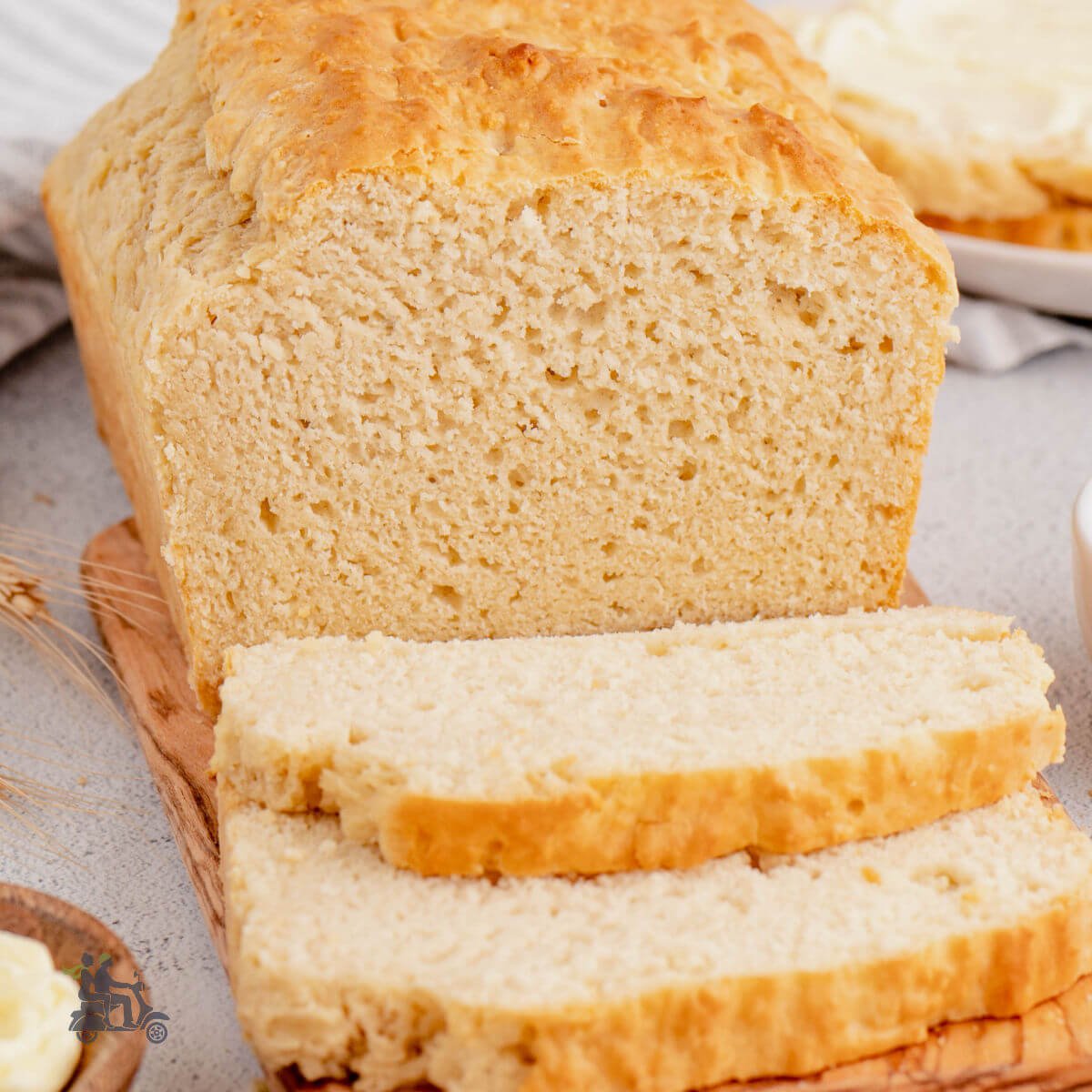
No-Yeast Quick Bread with Sweet Potato and Almond Flour
A fluffy, moist bread made without yeast using sweet potato and almond flour for a nutty, naturally sweet flavor. Perfect for breakfast or sandwiches.
🥘Ingredients
- 1 cup almond flour
- 1 cup whole wheat flour
- 1 cup mashed sweet potato (about 1 medium)
- 1 large egg
- 1 tbsp honey or maple syrup
- 1 tsp baking soda
- ½ tsp salt
- ½ tsp cinnamon
- ¼ cup melted coconut oil
- 1 tbsp melted butter
- 1 tbsp powdered sugar
- 1 tsp vanilla extract
👨🍳Directions
-
1
Preheat oven to 375°F (190°C). Grease an 8×8-inch baking dish. -
2
In a large bowl, mix almond flour, whole wheat flour, baking soda, salt, and cinnamon. -
3
Add mashed sweet potato, egg, honey/maple syrup, and melted coconut oil. Stir until a thick batter forms. -
4
Pour batter into the prepared baking dish. Bake for 45–50 minutes, or until a toothpick inserted comes out clean. -
5
While the bread cools slightly, mix melted butter, powdered sugar, and vanilla extract in a small bowl. -
6
Once the bread is cool enough to handle, drizzle the topping mixture evenly over the top.
🔧Equipment
- Mixing bowls
- Whisk or fork
- Measuring cups and spoons
- Baking dish (8×8-inch)
- Oven
📊Nutrition Facts (per serving)
📝Notes
Tips
- For extra moisture, add ¼ cup Greek yogurt or applesauce to the batter.
- Substitute sweet potato with grated zucchini or pumpkin for a different flavor profile.
- Let the bread cool completely before slicing to prevent crumbs from falling.
Storage: Store in an airtight container at room temperature for up to 3 days or freeze for up to 3 months.
Watch Video Of How No-Yeast Quick Bread with Sweet Potato and Almond Flour Works
❓ Frequently Asked Questions About No-Yeast Quick Bread with Sweet Potato and Almond Flour
What is the best method for activating the gluten in a no-yeast bread recipe?
In a no-yeast bread recipe, you can activate gluten by using a combination of wet ingredients like milk, yogurt, or buttermilk, which create a sticky, elastic dough. Another method is incorporating vital wheat gluten (if using whole wheat flour) or adding a small amount of psyllium husk, which helps bind the dough. Kneading the dough thoroughly, either by hand or with a stand mixer on medium-high speed, also enhances gluten development.
—
How long should I let the dough rest before baking?
For no-yeast bread, allowing the dough to rest (also called autolyse) is crucial. Typically, this means letting the wet ingredients sit for 15–30 minutes before adding dry ingredients. This step improves gluten development and hydration. If you’re using a longer fermentation method (like cold proofing overnight), the resting time can extend to 6–12 hours, but the core principle remains the same—giving the dough time to relax and hydrate properly.
—
Can I substitute any of the flour in a no-yeast bread recipe?
Yes, you can! Common substitutions include:
– Whole wheat flour (for added fiber and nutrients) or almond flour (for a nutty flavor and lower carb content).
– Oat flour or chickpea flour (for gluten-free options, though texture may vary).
– Mixing flours (e.g., 50% whole wheat + 50% all-purpose) can balance nutrition and texture.
Just ensure the total flour weight remains consistent and adjust liquid or binding agents (like psyllium or vital wheat gluten) as needed to maintain dough structure.
—
Why does my no-yeast bread turn out dense or crumbly?
Dense or crumbly texture in no-yeast bread often stems from:
1. Underdeveloped gluten (not kneaded or rested enough).
2. Incorrect hydration (too dry or too wet—check consistency like wet sand).
3. Poor mixing technique (not enough time or energy to create a cohesive dough).
4. Using a low-protein flour (e.g., cake flour) without vital wheat gluten or psyllium.
5. Overproofing (if using fermentation, let it rise too long).
To fix: Increase kneading time, adjust flour-to-liquid ratio, or add a binding agent (like psyllium husk or xanthan gum). For dense bread, try adding a bit of baking soda or cream of tartar to help lift.
—
What are the best ingredients to add for extra flavor in a no-yeast bread?
To enhance flavor without yeast, consider these additions:
– Herbs & spices: Fresh rosemary, thyme, garlic powder, or nutmeg.
– Seeds: Sesame, poppy, or flaxseeds (toasted for better flavor).
– Dairy: Butter, sour cream, or cream cheese (adds richness).
– Nuts: Chopped walnuts, pecans, or almonds (for texture and crunch).
– Sweetness: Honey, maple syrup, or a pinch of sugar (for loaf breads).
– Acidity: A splash of vinegar or lemon juice (boosts flavor and tenderizes gluten).
– Cheese: Grated Parmesan or sharp cheddar (great for savory loaves).
Balance additions to avoid overpowering the dough’s natural taste.
