
cornish hen recipe

The Best cornish hen recipe
I love this recipe because it’s versatile—you can serve it with everything from roasted potatoes to a simple green salad, or even just a fresh herb butter for something lighter. It’s also a great way to use up extra herbs and spices from the pantry, and the fact that it’s one of those dishes that tastes even better the next day makes it a no-brainer for meal prep. My family always says it’s the kind of dish that feels like a little treat, but it’s also so healthy in a way that feels indulgent. The lean protein, the fiber from the herbs, and the way it keeps everything moist without needing extra butter or oil makes it a winner for anyone watching their intake but still craving something tasty. Plus, it’s a showstopper—no fancy plating required, just a simple but elegant presentation that makes everyone feel like they’re dining at a restaurant. It’s that kind of dish that feels like a little effort, but the payoff is always worth it.
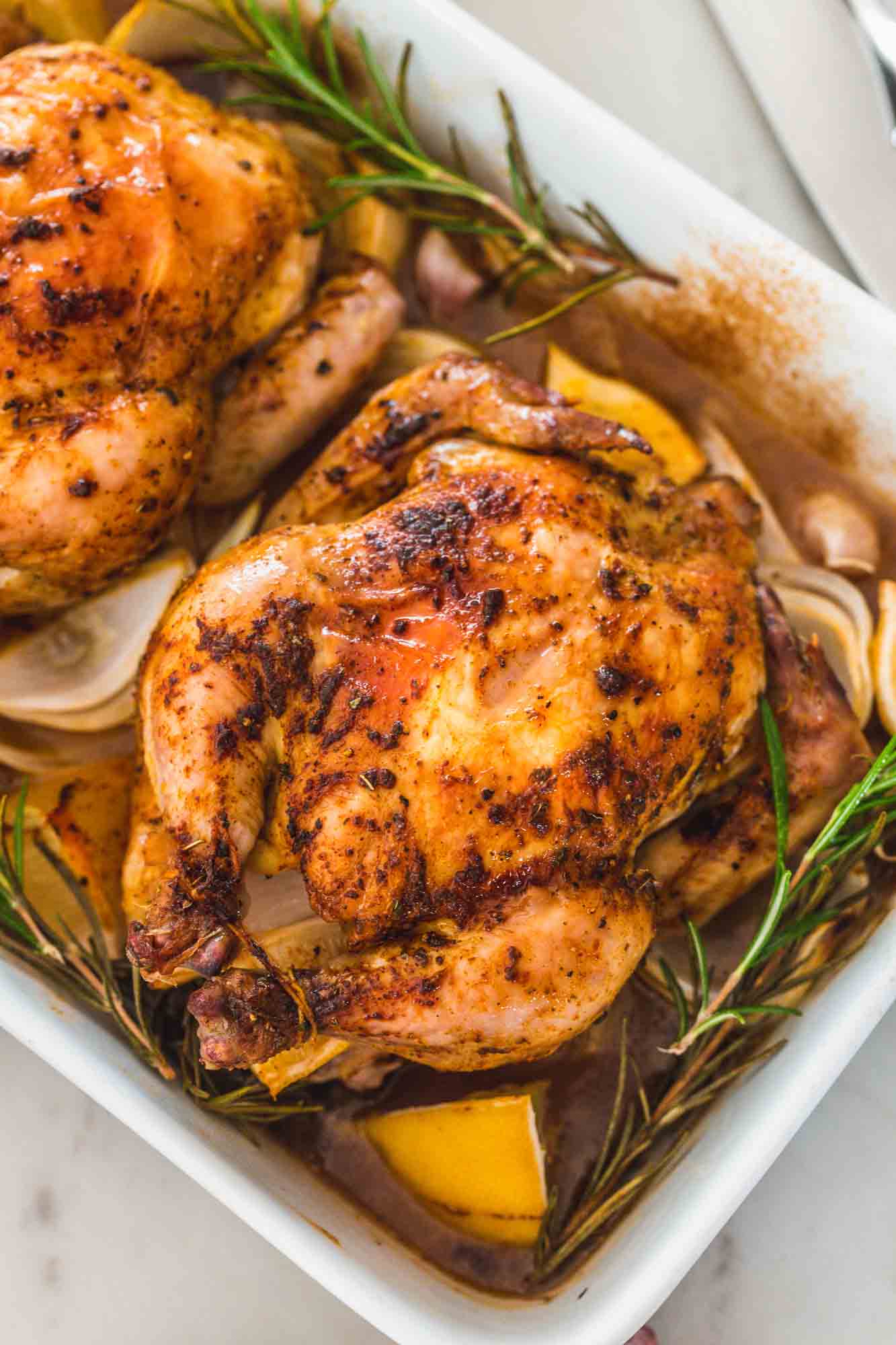
Classic Cornish Hen with Herb Butter
A tender, juicy Cornish hen baked with a crispy golden crust and flavored with fresh herbs and butter. Perfect for a festive meal!
🥘Ingredients
- 4 Cornish hens (about 1 lb each)
- 1 cup all-purpose flour
- 1 tsp salt
- 1 tsp black pepper
- 1 tsp paprika
- 1 tsp dried thyme
- 1 tsp dried rosemary
- 1 cup unsalted butter, melted
- ½ cup unsalted butter, softened
- 2 cloves garlic, minced
- 2 tbsp fresh parsley, chopped
- 1 tbsp fresh thyme leaves
- 1 tbsp fresh rosemary, chopped
- Salt and pepper to taste
- 1 cup heavy cream
- 1 cup chicken broth
- 1 tbsp Dijon mustard
- 1 tbsp lemon juice
- 1 tsp garlic powder
👨🍳Directions
-
1
Preheat oven to 425°F (220°C). Line a baking sheet with parchment paper. -
2
In a small bowl, mix flour, salt, pepper, paprika, thyme, and rosemary. -
3
Pat each Cornish hen dry with paper towels. Dredge each hen in the flour mixture, shaking off excess. Place hens on the baking sheet, breast-side up. -
4
Melt butter in a small bowl. Mix in minced garlic, parsley, thyme, rosemary, salt, and pepper to make the herb butter. Spread evenly over the hens. -
5
Bake for 30 minutes. Remove hens from oven, baste with remaining herb butter, then return to oven for another 15 minutes until golden and cooked through (165°F internal temperature). -
6
While hens bake, heat heavy cream, chicken broth, Dijon mustard, lemon juice, and garlic powder in a saucepan until simmering. Reduce heat and let it thicken slightly. -
7
Once hens are done, pour the sauce over them and let it warm through. Serve hot with crusty bread or roasted vegetables.
🔧Equipment
- Mixing bowls
- Baking sheet
- Oven
- Knife and cutting board
- Mixing spoon
- Measuring cups and spoons
- Parchment paper
📊Nutrition Facts (per serving)
📝Notes
Tips
- For extra crispiness, brush the hens with a little oil before dredging.
- Substitute chicken broth with vegetable broth for a vegetarian option.
- Make ahead: Prepare the dough and sauce up to 2 days in advance and store in the fridge.
Variations
- Add a pinch of cayenne for a spicy kick.
- Use lemon zest instead of lemon juice for a brighter flavor.
Watch Video Of How Classic Cornish Hen with Herb Butter Works
❓ Frequently Asked Questions About Cornish Hen with Herb Butter
1. What is the traditional preparation method for a Cornish hen, and why does it involve soaking the hens in milk?
A Cornish hen is traditionally prepared by soaking the whole young chicken (often called a Cornish game hen) in milk for several hours or overnight. This process helps tenderize the meat, adds flavor, and enhances the overall taste. The milk also helps to keep the hen moist during roasting, making it more succulent and juicy.
2. How long should I marinate the Cornish hen in milk, and what other ingredients can I add for extra flavor?
For best results, soak the Cornish hen in milk for at least 4 to 6 hours, or ideally overnight. You can enhance the flavor by adding ingredients like garlic, lemon juice, fresh herbs (such as rosemary or thyme), salt, pepper, and even a splash of white wine or brandy. Some recipes also include a touch of butter or olive oil for richness.
3. What is the ideal roasting temperature and time for a Cornish hen?
Cornish hens should be roasted at 375°F (190°C) for about 25 to 30 minutes per pound. This ensures they cook evenly while keeping the meat moist. Since they’re small, they cook quickly, so it’s best to check for doneness with a meat thermometer (165°F/74°C internal temperature) rather than relying solely on time.
4. How do I know when a Cornish hen is fully cooked, and should I remove the skin before roasting?
A Cornish hen is fully cooked when the internal temperature reaches 165°F (74°C) and the juices run clear. While some recipes recommend removing the skin before roasting for easier eating, others leave it on for crispiness. If keeping the skin on, you can crisp it up by brushing with melted butter or oil before serving.
5. Can I substitute a regular chicken for a Cornish hen in this recipe, and what adjustments would I need to make?
While Cornish hens are specifically small (usually 1–2 lbs), you can use a whole young chicken (around 3–4 lbs) by adjusting the cooking time proportionally. Reduce the roasting temperature slightly (to 350°F/175°C) to prevent overcooking, and roast for about 40–50 minutes. Since they’re larger, check for doneness with a thermometer to avoid drying out.


