
fish and chips recipe

The Best fish and chips recipe
What I appreciate most about this recipe is how balanced it is. Yes, it’s fried, but using fresh cod or haddock keeps it light and packed with protein, and baking the fries instead of deep-frying them cuts down on the grease without sacrificing that crunch. Plus, it’s a great way to get my picky eaters to actually eat fish—once it’s coated in that crispy batter, they don’t even question it. We usually serve it with a side of tartar sauce or a simple green salad, and suddenly, a meal that feels indulgent is also pretty wholesome.
This dish is perfect for Fridays when we want something easy but still feel like we’re having a little celebration. It’s also a lifesaver on busy nights when I need to get dinner on the table fast without sacrificing flavor. And let’s be honest, leftovers (if there are any) make the best next-day lunch. There’s nothing like biting into that cold, leftover fish straight from the fridge—it’s weirdly satisfying. If you haven’t tried making fish and chips at home, you’re missing out. It’s one of those recipes that’s way easier than it looks and always delivers.
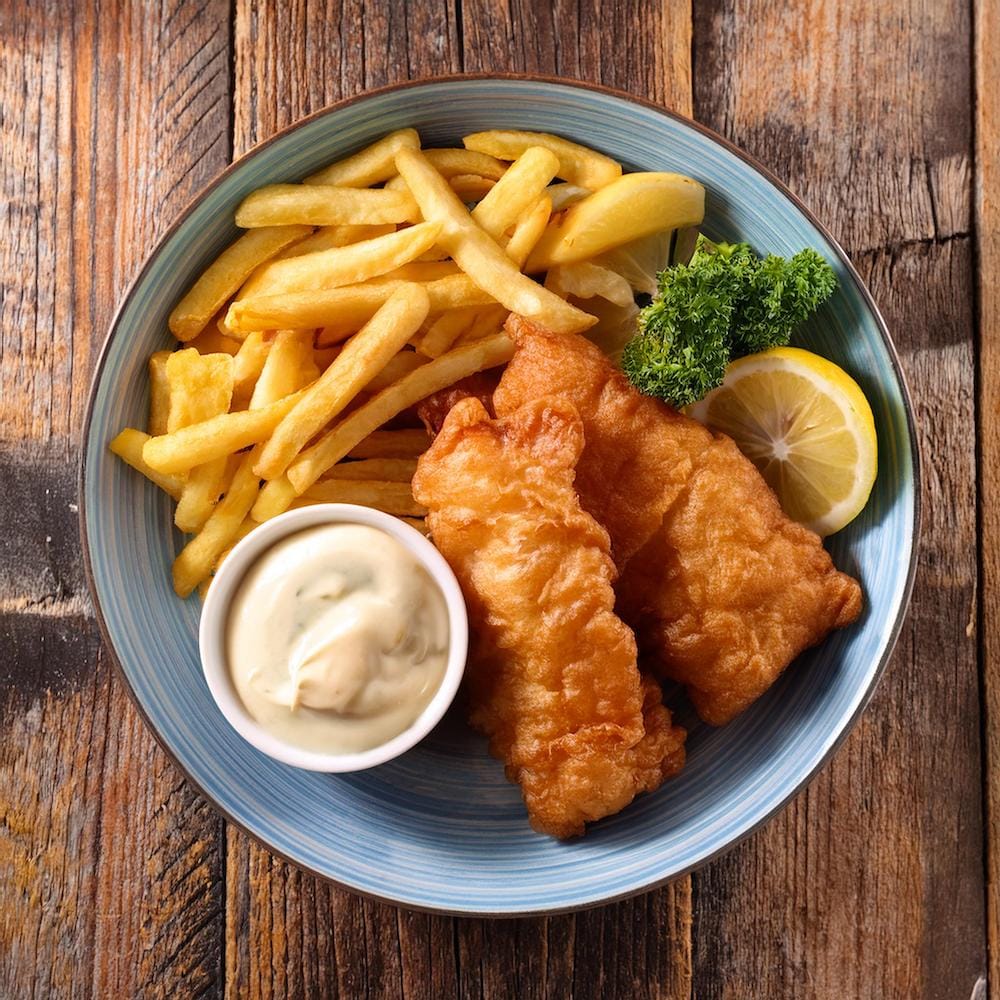
Classic British Fish and Chips
A beloved British classic featuring crispy beer-battered cod served with golden fries. This dish is perfect for a hearty meal, offering a satisfying crunch and flaky fish inside.
🥘Ingredients
- 4 cod fillets (about 6 oz each)
- 1 cup all-purpose flour (plus extra for dredging)
- 1 tsp baking powder
- 1 tsp salt
- 1/2 tsp black pepper
- 1 cup cold beer (or sparkling water for a non-alcoholic version)
- 1 large egg (optional, for extra crispiness)
- 4 large russet potatoes (peeled and cut into 1/2-inch sticks)
- 2 tbsp white vinegar (for soaking)
- Vegetable oil (for frying)
- Salt (to taste)
- Lemon wedges
- Tartar sauce or malt vinegar
- Fresh parsley (chopped, for garnish)
👨🍳Directions
-
1
Prepare the chips: Soak the potato sticks in cold water with 2 tbsp of vinegar for 30 minutes to remove excess starch. Drain and pat dry thoroughly with paper towels. -
2
Heat oil in a deep fryer or large pot to 325°F (160°C). Fry the potato sticks in batches for 5-6 minutes until soft but not browned. Remove with a slotted spoon and drain on paper towels. Increase oil temperature to 375°F (190°C). -
3
While the oil heats, prepare the batter: In a large bowl, whisk together 1 cup flour, baking powder, salt, and pepper. Gradually whisk in the cold beer (and egg, if using) until smooth. The batter should be the consistency of heavy cream. -
4
Dredge each cod fillet in flour, shaking off any excess. Dip into the batter, allowing any excess to drip off, then carefully lower into the hot oil. Fry in batches for 4-5 minutes until golden and crispy. Drain on paper towels. -
5
Return the chips to the hot oil and fry for 2-3 minutes until golden and crispy. Drain on paper towels and season with salt. -
6
Serve the fish and chips immediately with lemon wedges, tartar sauce, or malt vinegar. Garnish with chopped parsley if desired.
🔧Equipment
- Large mixing bowl
- Whisk
- Deep fryer or large heavy-bottomed pot
- Slotted spoon or spider strainer
- Paper towels
- Baking sheet
- Tongs
- Thermometer (optional, for oil temperature)
📊Nutrition Facts (per serving)
📝Notes
Watch Video Of How Classic British Fish and Chips Works
❓ Frequently Asked Questions About British Fish and Chips
1. What type of fish is best for fish and chips?
The best fish for fish and chips is a firm, white fish with a mild flavor. Cod and haddock are the most traditional choices, but pollock, halibut, or even tilapia can work well. Cod is especially popular for its flaky texture and slightly sweet taste, while haddock has a firmer bite.
2. How do I make the batter extra crispy?
For an extra crispy batter, use very cold sparkling water or beer (lager works best) to create bubbles that make the batter light and crunchy. Adding a bit of cornstarch or rice flour to the batter mix can also help. Make sure the oil is hot enough (around 350–375°F or 175–190°C) before frying, and avoid overcrowding the fryer to prevent the temperature from dropping.
3. Can I bake fish and chips instead of frying?
Yes, you can bake fish and chips for a healthier option, though the texture won’t be exactly the same. For the fish, coat it in batter or breadcrumbs and bake at 425°F (220°C) on a wire rack over a baking sheet to allow air circulation. For the chips, toss potato wedges in oil, salt, and a bit of cornstarch, then bake at 400°F (200°C) until crispy, flipping halfway through.
4. What’s the best oil for frying fish and chips?
The best oils for frying are those with a high smoke point and neutral flavor, such as vegetable oil, peanut oil, or sunflower oil. Beef tallow or lard can also be used for a richer, traditional flavor, but they have a lower smoke point. Avoid olive oil, as it has a lower smoke point and can impart a strong taste.
5. How do I keep the chips (fries) crispy after frying?
To keep chips crispy, fry them in two stages: first at a lower temperature (around 300°F or 150°C) to cook them through, then at a higher temperature (375°F or 190°C) to crisp them up. After frying, drain them on a wire rack (not paper towels) to allow air circulation and prevent steam from making them soggy. Sprinkle with a little salt while still hot. If serving later, keep them in a warm oven (200°F or 95°C) until ready to eat.

