
israeli couscous recipe

The Best israeli couscous recipe
I love how this couscous recipe works for both casual dinners and bigger gatherings. On a busy weeknight, it’s a no-fuss meal that feels like a treat, and my kids will eat it straight from the bowl without complaining about leftovers. But when we’re hosting, it’s the kind of dish that feels celebratory without being overwhelming—people always ask for seconds, and it’s that kind of dish that makes you feel like you’ve put in effort without it being a chore. And let’s be honest, the health benefits are pretty solid, too. It’s packed with fiber from the couscous and veggies, and the spices like cumin and paprika add flavor without the heavy calories. My kids don’t even realize how good it is for them, and neither do I. It’s that kind of dish that’s simple, nutritious, and just makes everything taste better.
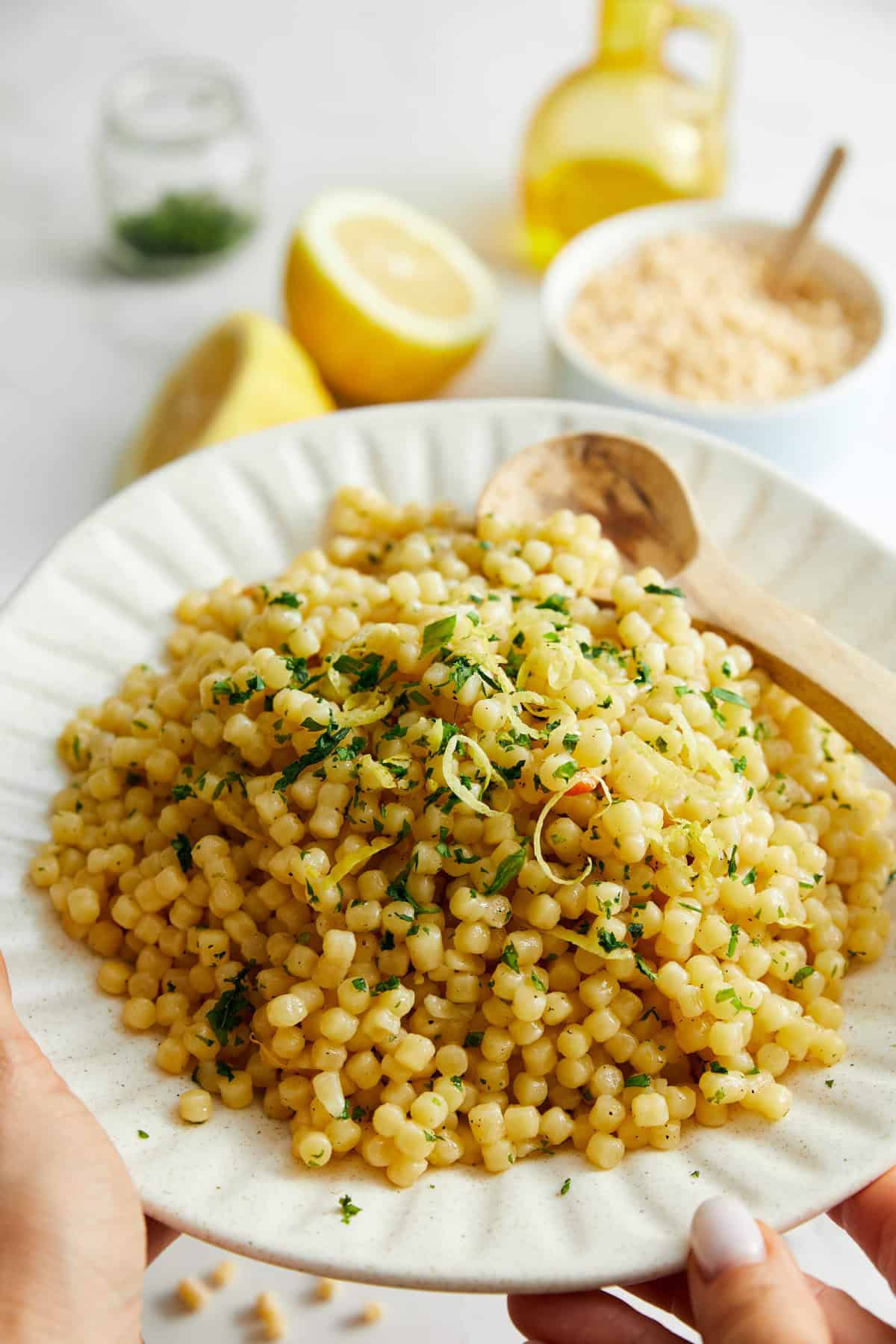
Israeli Couscous with Vegetables and Lemon
A flavorful and traditional Israeli dish featuring steamed couscous mixed with tender vegetables, herbs, and a tangy lemon dressing. Perfect for a light yet satisfying meal.
🥘Ingredients
- 1 cup couscous (about 300g)
- 2 cups boiling water or vegetable broth
- 1 tbsp olive oil
- 1 medium zucchini, diced
- 1 medium eggplant, diced
- 1 red bell pepper, diced
- 1 small onion, finely chopped
- 2 cloves garlic, minced
- 1 tbsp fresh parsley, chopped
- 1 tsp fresh mint, chopped
- 2 tbsp olive oil
- 1 tbsp lemon juice
- 1 tsp lemon zest
- ½ tsp cumin
- ½ tsp paprika
- Salt and pepper to taste
👨🍳Directions
-
1
Preheat oven to 375°F (190°C). If using a baking dish, lightly grease it. -
2
In a small saucepan, combine couscous, boiling water/broth, and olive oil. Cover and let sit for 5 minutes, then fluff with a fork. -
3
While couscous steams, heat olive oil in a large pan over medium heat. Sauté onion until translucent, then add garlic, zucchini, eggplant, and bell pepper. Cook for 8-10 minutes until vegetables are tender. -
4
In a separate bowl, whisk together olive oil, lemon juice, lemon zest, cumin, paprika, salt, and pepper. -
5
Once couscous is fluffy, transfer it to a serving dish. Spread the sautéed vegetables evenly over the couscous. Drizzle with the dressing and sprinkle with parsley and mint.
🔧Equipment
- Mixing bowls
- Steamer basket or pot with lid
- Knife and cutting board
- Fork or spoon for steaming
- Small saucepan
- Whisk
- Serving platter
📊Nutrition Facts (per serving)
📝Notes
Tips
- For extra flavor, add a pinch of sumac or za’atar to the dressing.
- Substitute couscous with bulgur wheat for a variation.
- Garnish with toasted pine nuts or sesame seeds for crunch.
Variations
- Add grilled chicken or shrimp for a protein boost.
- Include chickpeas or fava beans for a vegetarian twist.
Watch Video Of How Israeli Couscous with Vegetables and Lemon Works
❓ Frequently Asked Questions About Israeli Couscous with Vegetables and Lemon
1. What is the traditional method for cooking couscous in Israel, and why is it different from other versions?
In Israel, couscous is typically cooked using a special method called “shokh” (steaming) rather than boiling. Unlike Western-style couscous, which is often boiled in broth, Israeli couscous is steamed with warm water or broth in a shallow pan over low heat. This method helps retain the grains’ natural texture and prevents them from becoming mushy. The key difference lies in the use of a “couscous pan” (often made of copper or stainless steel) that holds the grains in place while allowing steam to circulate evenly. This technique also incorporates a touch of harissa or sumac in the cooking water to enhance flavor.
—
2. What are the essential ingredients for authentic Israeli couscous, and can I substitute any of them?
The classic Israeli couscous dish, “Couscous Harissa,” includes:
– Couscous (preferably Israeli or Moroccan-style, fine and fluffy).
– Harissa (a spicy Moroccan chili paste, essential for flavor—substitutes like sriracha or gochujang can be used, but harissa adds depth).
– Lemon juice (brightens the dish; fresh is best).
– Garlic (minced or crushed, adds aromatic warmth).
– Onions (finely chopped, caramelized for sweetness).
– Olive oil (used for sautéing and cooking).
– Broth (chicken or vegetable, reduced to a light sauce).
– Fresh herbs (parsley, cilantro, or mint for garnish).
– Spices (cumin, paprika, or a pinch of saffron for color—optional but traditional).
Substitutions:
– Harissa can be replaced with smoked paprika + cayenne for heat, but authentic taste is best kept.
– Lemon juice can be omitted but will dull the dish.
– Olive oil can be swapped for neutral oil if needed.
—
3. How do I ensure my couscous turns out perfectly fluffy and not mushy?
The secret to Israeli couscous lies in steaming properly and resting the grains. Here’s how to avoid mushiness:
1. Use the right technique: Cook couscous in a steamer basket (or a fine-mesh sieve) over boiling water, not in a pot. This prevents direct contact with water, which can make grains soggy.
2. Soak the couscous first: Rinse couscous under cold water, then let it soak in warm broth or water for 5–10 minutes before steaming. This softens it slightly, making it easier to fluff.
3. Steam for the right time: Cook couscous for 4–5 minutes (start timing when water boils), then remove from heat. Cover with a towel and let it rest for 5 minutes—this helps the grains absorb moisture evenly.
4. Fluff gently: Use a fork or spoon to break up clumps, but avoid overmixing, which can make couscous dense.
5. Add liquid gradually: If using broth, stir it in slowly during the last minute of cooking to avoid over-soaking.
Pro tip: If couscous sticks to the pan, use a couscous pan (like a copper or stainless-steel bowl) with a tight lid to trap steam.
—
4. Can I make Israeli couscous in an air fryer or Instant Pot, and what adjustments would I need to make?
Yes, you can adapt couscous for these appliances, but the texture will differ slightly:
– Air Fryer:
– Preheat to 200°C (390°F).
– Lightly spray couscous with oil, then air-fry in batches for 10–12 minutes, shaking halfway.
– Add harissa, lemon juice, and herbs after cooking to avoid sogginess.
– Note: Air-fried couscous will be slightly firmer and less fluffy than steamed.
– Instant Pot:
– Rinse couscous, then add 2 cups broth (or water + harissa) and 1 tsp oil.
– Seal the lid, set to High Pressure for 2 minutes, then quick-release.
– Fluff with a fork and mix in harissa, lemon, and herbs after cooking.
– Note: Instant Pot couscous will be softer and more absorptive of flavors.
For best results, steaming remains the gold standard for traditional texture.
—
5. What traditional sides or toppings pair well with Israeli couscous, and how do they complement the dish?
Israeli couscous is often served with simple, fresh, and flavorful sides that balance its spicy-sour profile. Classic pairings include:
– Salad: A chilled cucumber-tomato salad with lemon, mint, and olive oil (lightens the dish).
– Meat: Grilled chicken shawarma (marinated in yogurt, garlic, and spices) or slow-cooked lamb shawarma (richness contrasts the couscous’s acidity).
– Vegetables: Pickled turnips or radishes (tangy crunch) or grilled eggplant (smoky depth).
– Dips: Hummus or baba ganoush (creamy textures) for scooping.
– Bread: Warm pita or flatbread to soak up the broth.
– Extras: A sprinkle of sumac (tart, citrusy) or fresh parsley enhances the dish’s brightness.
Avoid heavy sauces (like heavy cream-based dishes) to keep the couscous light and fresh. The key is freshness, acidity, and texture contrast.


