
italian pizza crust dough recipe

- The Best italian pizza crust dough recipe
- Classic Neapolitan-Style Pizza Crust Dough Recipe
- 🥘Ingredients
- 👨🍳Directions
- 🔧Equipment
- 📊Nutrition Facts (per serving)
- 📝Notes
- Watch Video Of How Classic Neapolitan-Style Pizza Crust Dough Recipe Works
- ❓ Frequently Asked Questions About Neapolitan-Style Pizza Crust Dough
The Best italian pizza crust dough recipe
I love this recipe because it’s also surprisingly healthy for what it is. The key is balancing the ingredients—just the right amount of flour to give it structure without making it dense, a little yeast to make it rise just enough, and a touch of olive oil to keep it moist and flavorful. No weird additives, no mystery ingredients. My kids eat it every day, and it’s never made them feel guilty—it’s the kind of dough that’s satisfying without being heavy. Plus, the olive oil and whole wheat flour option (if you want to tweak it) gives you extra nutrients without sacrificing taste. It’s the kind of recipe that’s easy to double if you’re feeding a crowd, or you can make a big batch to freeze for later. And honestly? There’s nothing better than pulling out a frozen pizza dough on a busy night and just letting it come to life in the oven. It’s the kind of thing that makes cooking feel like a chore you don’t mind doing.
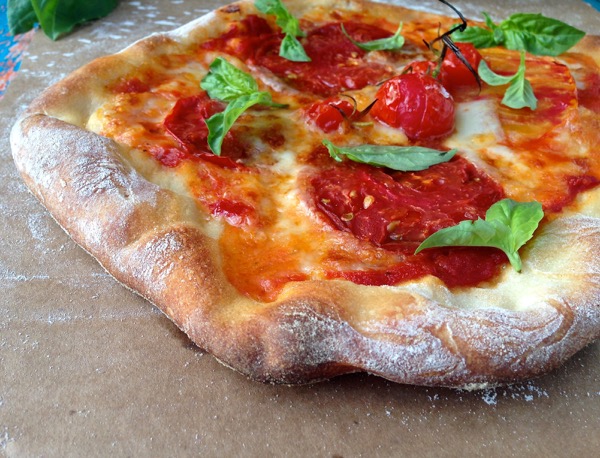
Classic Neapolitan-Style Pizza Crust Dough Recipe
A simple yet authentic Italian pizza dough recipe that yields a soft, airy, and slightly chewy crust perfect for classic Neapolitan-style pizzas. This recipe is a must-try for any occasion.
🥘Ingredients
- 3 cups (360g) all-purpose flour
- 1 tsp (5g) fine sea salt
- 1 tsp (5g) active dry yeast
- 1 cup (240ml) warm water (110°F/43°C)
- 1 tbsp (15ml) olive oil
- 1 tsp (5g) sugar (for yeast activation)
- 1 tbsp (15g) grated Parmesan cheese (for flavor)
👨🍳Directions
-
1
In a bowl, dissolve sugar in warm water. Sprinkle yeast over the sugar and let sit for 5 minutes until foamy. -
2
In a separate bowl, combine flour and salt. Gradually add the yeast mixture and olive oil, mixing until a shaggy dough forms. -
3
Transfer dough to a lightly floured surface and knead for 8–10 minutes until smooth and elastic. If using a mixer, knead on low speed for 5–7 minutes. -
4
Place dough in a lightly oiled bowl, cover with a damp towel, and let rise in a warm place for 1–1.5 hours, or until doubled in size. -
5
Preheat oven to 475°F (245°C) with a pizza stone or steel inside for at least 30 minutes. Punch down the dough and divide into 6 equal portions. Roll each portion into a thin circle (about 12 inches / 30 cm diameter). -
6
Transfer rolled dough onto a parchment-lined baking sheet or pizza peel. Add toppings (tomato sauce, cheese, etc.) and bake for 10–15 minutes until the crust is golden and crispy.
🔧Equipment
- Mixing bowl
- Kneading surface or stand mixer with dough hook
- Clean kitchen towel or pizza peel
- Rolling pin
- Oven with pizza stone or steel
📊Nutrition Facts (per serving)
📝Notes
Tips
- For a healthier twist, replace 20% of the flour with whole wheat flour.
- Ensure yeast is fresh by checking its foaming time—it should activate within 5 minutes.
- Let the dough rest at room temperature for 30 minutes before rolling for easier handling.
- Use a pizza peel dusted with semolina or flour to prevent sticking.
- For extra flavor, add a pinch of nutmeg or a splash of red wine to the dough.
Storage
- Unused dough can be refrigerated for up to 2 days and revived by letting it sit at room temperature for 30 minutes before rising again.
Watch Video Of How Classic Neapolitan-Style Pizza Crust Dough Recipe Works
❓ Frequently Asked Questions About Neapolitan-Style Pizza Crust Dough
What is the ideal temperature for kneading the pizza dough to achieve the best texture?
The ideal temperature for kneading pizza dough is typically between 70–80°F (21–27°C). If the dough is too cold, it will be stiff and difficult to stretch; if it’s too warm, it may become overly sticky. For best results, let the dough sit at room temperature for 30–60 minutes before kneading, then knead by hand for 8–10 minutes until smooth and elastic. Alternatively, use a stand mixer on low speed for the same duration.
—
Why does my pizza dough sometimes turn out gummy or dense instead of airy and crispy?
A gummy or dense crust often happens due to overproofing, insufficient hydration, or incorrect gluten development. If the dough is too proofed (soft and overly stretchy), it won’t hold shape well. Ensure your dough has the correct hydration (typically 60–65% water for classic Neapolitan-style). For crispiness, bake at a high temperature (475–500°F/245–260°C) with a wood-fired oven or preheat a pizza stone/steel for 30+ minutes. Also, avoid over-stretching the dough, as this weakens the gluten structure. If using a mix, check the recipe for gluten-free substitutes if needed.
—
Can I use a mix instead of making dough from scratch, and what’s the best store-bought option for a good pizza crust?
Yes, you can use a mix, but the best results come from a high-quality, all-purpose flour-based mix with added yeast and olive oil. Some top-tier options include:
– Pizza dough mixes by Baker’s Dozen or King Arthur (premium, with olive oil and yeast).
– Store-brand “pizza dough” mixes (e.g., Pillsbury or McCormick) work but may lack flavor and texture.
For a Neapolitan-style crust, avoid pre-made doughs—they’re often too soft. If you must use a mix, follow the instructions closely, and adjust hydration by adding 1–2 tbsp extra water if needed. For a crispier crust, bake at a higher temperature and use a pizza stone.
—
How long should I let the dough rise, and what are the signs of overproofing?
For a classic pizza dough, let it rise at room temperature for 1–2 hours (or up to 3 hours for a slower fermentation). The ideal rise temperature is 70–75°F (21–24°C). Signs of proper proofing include:
– Doubled in size (if folded back, it should look puffy).
– Slightly domed when resting.
– Soft but still slightly firm when touched (not overly soft or collapsing).
Overproofing signs (dough becomes too soft and loses structure):
– Collapses when touched or doesn’t bounce back.
– Excessively sticky or slimy texture.
– Flat or deflated shape after rising.
If overproofed, let it rest for 15–20 minutes before shaping, or use it immediately for a thinner crust. For longer fermentation (24+ hours), refrigerate the dough to slow yeast activity.
—
What’s the best way to shape the pizza dough for an even, professional-looking crust?
Shaping pizza dough properly ensures an even thickness and structural integrity. Here’s how to do it:
1. Prep the surface: Work on a lightly floured surface (or a pizza peel dusted with semolina/flour).
2. Divide the dough: Roll out into a large circle (~12–14 inches for a personal pizza) or a rectangular sheet (~12×16 inches for a classic pizza).
3. Stretch gently: Use your fingers to pull and stretch the dough in a circular motion, avoiding tearing. Keep tension even—thicker edges will stretch more than the center.
4. Create a well: Press your thumb into the center to form a well (for sauce and toppings). Avoid pressing too hard to prevent a flat crust.
5. Transfer carefully: Slide the pizza onto a peel dusted with semolina or place it directly on a preheated pizza stone/steel (for wood-fired ovens, use a pizza peel).
6. For a Neapolitan-style: Shape into a thin, round ball (no stretching) and place directly on the stone for a wood-fired bake (no peel needed).
Pro tip: If the dough is too sticky, chill it for 10 minutes before shaping again. Over-stretching weakens the gluten, so work quickly to maintain elasticity.


