
lamb stew crock pot recipe


The Best lamb stew crock pot recipe
I started making this lamb stew in the crock pot years ago when I needed something I could get going in the morning and not think about again until dinner. Lamb shoulder is an affordable cut and the slow cooker does the work of breaking it down, so I get tender meat and a rich broth without standing over the stove. All I do is brown the lamb, load up the pot with onions, carrots, celery, and potatoes, add stock and a little tomato paste, and walk away.
My kids eat this without a fight, which is saying something in my house. They scoop it up over mashed potatoes or egg noodles and ask for the leftovers the next day. I make it on regular weeknights when our schedule is packed and it works just as well for a Sunday dinner with my parents or a holiday table when I need something hearty that feeds a crowd. It is the kind of meal that works whether you are cooking for picky kids or guests.
Lamb is a good source of protein and iron, and this stew is mostly real, whole ingredients, so it fills everyone up without being heavy or greasy. The vegetables cook down into the broth and the lamb stays lean when you trim it, which makes it a solid option for everyday eating. It is warm and filling and gets better the next day, so I usually make a full pot and plan on leftovers.
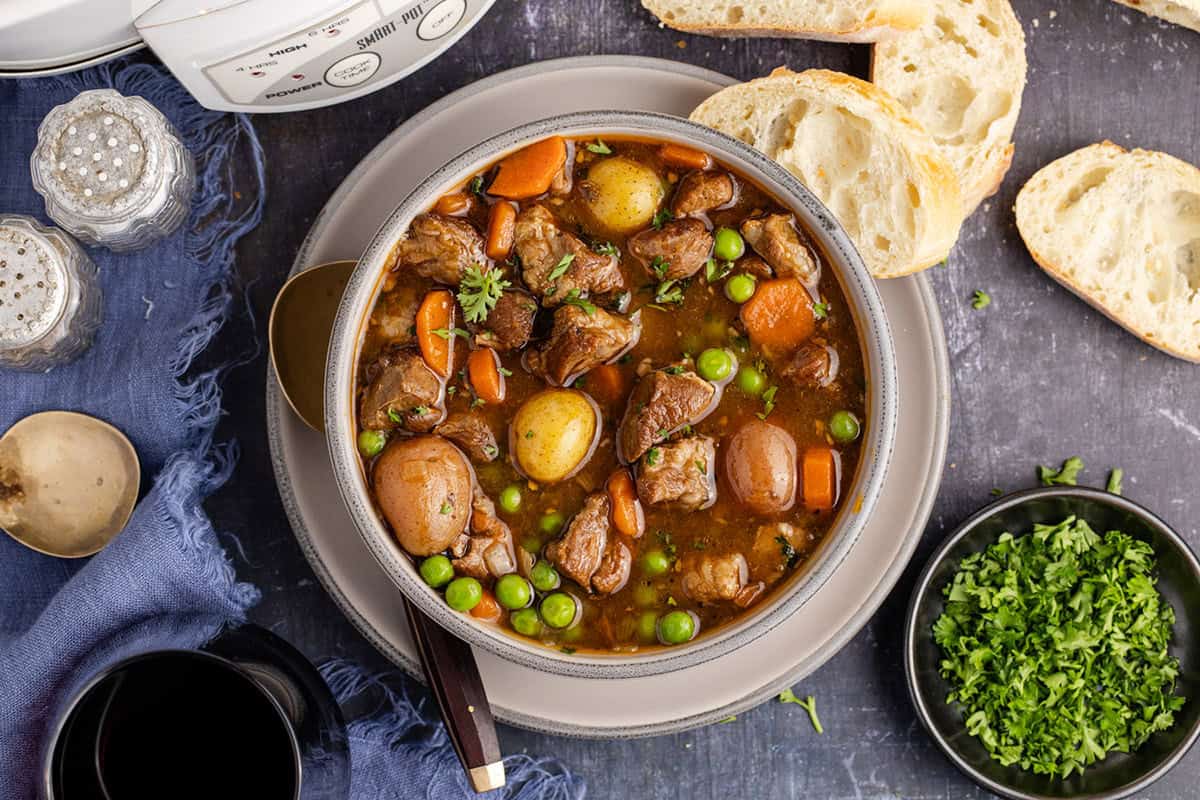
Slow Cooker Lamb Stew
Tender chunks of lamb shoulder simmer all day with potatoes, carrots, and celery in a savory red wine and herb broth. A quick stovetop browning step builds deep flavor before everything goes into the crock pot.
🥘Ingredients
For the Stew
For Finishing
👨🍳Directions
🔧Equipment
📊Nutrition Facts (per serving)
📝Notes
Watch Video Of How Slow Cooker Lamb Stew Works
This slow cooker lamb stew is the kind of meal I keep coming back to because it handles the cooking while I handle everything else, and it feeds a crowd without me standing over the stove. I make it for Sunday dinners, holiday get togethers, and casual potlucks where everyone shows up hungry, because it scales easily and tastes just as good after sitting a few hours. If you want a dish that makes a family gathering feel easy and generous, this is the one I reach for.
❓ Frequently Asked Questions About Slow Cooker Lamb Stew
1. Can I use lamb shoulder instead of stew meat?
Yes. Shoulder is actually one of the best choices for a slow cooker because its connective tissue breaks down into gelatin, giving you tender meat and a naturally thick sauce. Ask your butcher to cut it into 1½- to 2-inch chunks and trim any large pockets of fat. Lamb neck and shank work too, but they need a bit longer in the pot, so plan on the upper end of the cook time.
2. How long should lamb stew cook in a crock pot?
Plan on 7 to 8 hours on low or 4 to 5 hours on high. Lamb needs time for the collagen to soften, so low and slow gives the best texture. If your crock pot runs hot, check at the 6½-hour mark on low. The stew is done when a chunk of lamb shreds easily under a fork and the vegetables are fully tender.
3. Why did my lamb stew turn out tough?
Toughness almost always comes down to cut or time. Lean cuts like leg or loin dry out in a slow cooker—stick with shoulder or neck. Undercooking is the other culprit; lamb can look cooked through while the connective tissue is still firm. Give it another hour on low. Also avoid lifting the lid repeatedly, since each peek drops the internal temperature and stretches the cook time.
4. Do I need to brown the lamb before adding it to the slow cooker?
It is not required, but it does add depth. Searing the cubes in a hot skillet for 2 to 3 minutes per side builds browning that the moist slow-cooker environment cannot create on its own. If you skip it, add a tablespoon of tomato paste and a splash of Worcestershire or soy sauce to the pot to replace some of that savory base. Either way, pat the meat dry and season it well first.
5. Can I add potatoes and other vegetables at the start?
Yes, with one adjustment. Root vegetables like potatoes, carrots, and parsnips hold up well over a long cook, so cut them into even 1-inch pieces and layer them at the bottom of the pot where they get the most heat. Quicker vegetables such as peas, green beans, or chopped zucchini should go in during the last 20 to 30 minutes so they keep their color and bite.
