
maple fudge recipe

The Best maple fudge recipe
What I love most about this recipe is how it’s foolproof once you get the hang of it, but still feels special enough to impress. It’s that kind of treat you can make ahead and keep for weeks without it going bad, which is perfect for hosting or stocking up for the winter. My husband always says it’s the kind of dessert that feels like a little gift to yourself—like the way a good cup of coffee does for me in the morning. And honestly, it’s not just for special occasions. We make it for breakfast with pancakes or as a snack with a cup of tea. The kids think it’s like candy, but it’s actually something you can enjoy in moderation and still feel good about. Plus, the way the fudge pulls apart when you cut it is just the best part—it’s like eating a little piece of heaven every time. It’s the kind of recipe that makes you feel like you’re doing something good for your family, even if you’re treating yourself a little too.
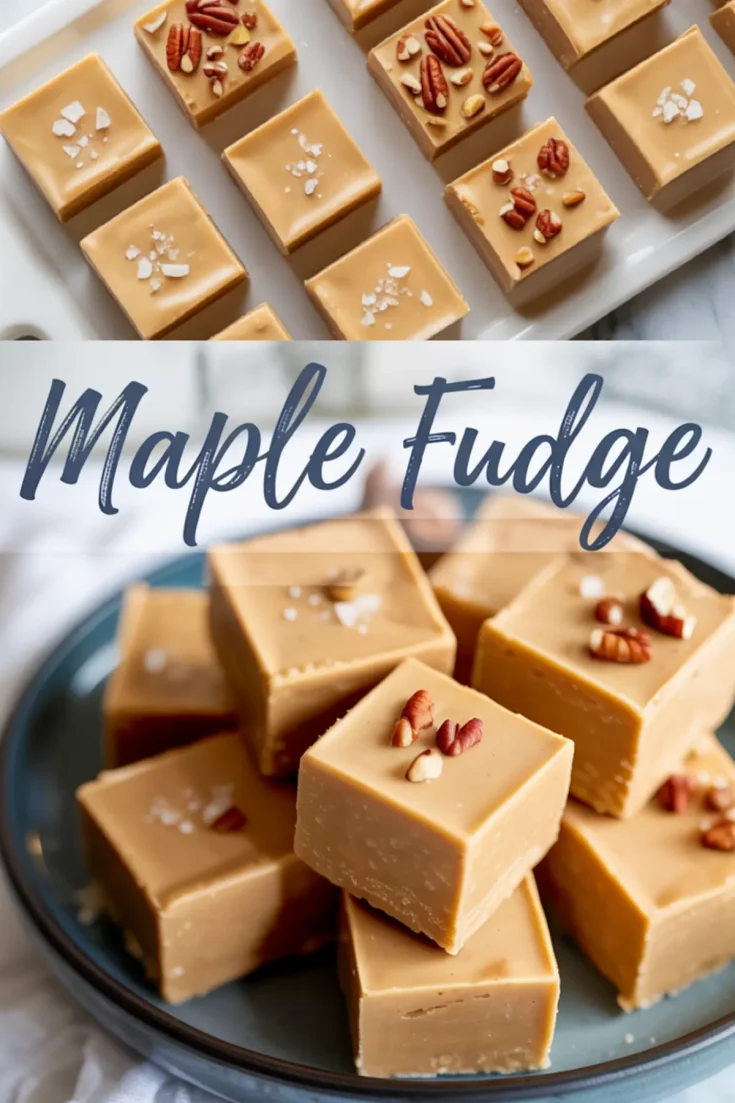
Classic Maple Fudge Recipe
A rich, creamy fudge made with pure maple syrup, butter, and condensed milk, perfect for satisfying sweet cravings. This recipe is a must-try for any occasion.
🥘Ingredients
- 1 cup unsalted butter, melted
- 1 cup pure maple syrup
- 1 cup heavy cream
- 1 cup powdered sugar
- 1 tsp vanilla extract
- ½ cup unsweetened cocoa powder
- ½ cup chopped walnuts (optional)
👨🍳Directions
-
1
In a heavy saucepan, combine melted butter, maple syrup, and heavy cream. Heat over medium heat until the mixture begins to simmer. -
2
Whisk in powdered sugar, vanilla extract, and cocoa powder until smooth. If using, fold in chopped walnuts. -
3
Pour the mixture into a greased loaf pan or candy mold. Smooth the top with a spatula. -
4
Refrigerate for at least 4 hours or until firm. Cut into squares before serving.
🔧Equipment
- Mixing bowls
- Whisk
- Double boiler (or heavy saucepan)
- Loaf pan or candy mold
📊Nutrition Facts (per serving)
📝Notes
- Ensure your maple syrup is of high quality for the best flavor.
- For extra richness, add a pinch of sea salt to the fudge mixture.
- Store in an airtight container in the refrigerator for up to 2 weeks.
Watch Video Of How Classic Maple Fudge Recipe Works
❓ Frequently Asked Questions About Maple Fudge
What is the best way to ensure my maple fudge sets properly and doesn’t get too soft?
To ensure your maple fudge sets correctly, maintain the right temperature during cooking—aim for a sugar syrup temperature of 235–240°F (113–116°C) for a classic fudge texture. Stirring constantly until the mixture reaches 260°F (127°C) (or until it’s “hot but not boiling”) helps prevent crystallization. Once cooled slightly (around 220°F/104°C), pour into molds and let it set in the fridge for 2–4 hours for a firmer texture. Avoid rushing it—patience is key!
Can I substitute regular maple syrup for pure maple syrup in this recipe?
No, you should never substitute regular syrup for pure maple syrup in maple fudge. Pure maple syrup contains 60% sugar and 40% water, which gives it the right balance for caramelization and proper setting. Regular syrup (like corn syrup or high-fructose corn syrup) lacks the complex flavors and natural sweetness of maple, leading to an off flavor and inconsistent texture. Stick to 100% pure maple syrup for authentic taste and structure.
How do I avoid a gummy or sticky texture in my maple fudge?
A gummy or sticky texture often happens when the sugar syrup isn’t cooked long enough or isn’t stirred properly. To fix it:
1. Overcook the syrup to 260°F (127°C) before adding butter/milk—this ensures full crystallization.
2. Stir vigorously until the mixture is clear and glossy (not just thick) before adding the wet ingredients.
3. Use the right ratio of butter/milk—too much can make it sticky; too little can leave it crumbly. A good rule is 1/4 cup butter per 2 cups sugar and 1–2 tbsp milk/cream (adjust to taste).
4. Cool slowly—pour into molds and let it set at room temp for 1 hour before refrigerating to prevent premature crystallization.
What’s the difference between maple fudge and maple caramel?
Maple fudge and maple caramel share a similar base but differ in key steps:
– Fudge uses a sugar syrup cooked to 260°F (127°C), then cooled slightly before adding butter/milk and stirring until it’s thick and glossy (like a thick caramel). It’s crispy on the outside and creamy inside, with a smooth texture.
– Maple caramel is cooked to a higher temperature (275–280°F/135–138°C) and stirred until it’s dark, syrupy, and almost boiling. It’s sticky, gooey, and liquid-like when poured, often used for drizzling or filling. Fudge is firmer, while caramel is softer and more spreadable.
Why does my maple fudge have small white crystals after it cools?
White crystals in maple fudge are usually sugar crystals forming due to undercooking or improper cooling. Here’s how to prevent it:
– Cook the syrup to at least 260°F (127°C) before adding butter/milk—this ensures all sugar dissolves.
– Stir constantly until the mixture is clear and glossy (not just thick) to prevent premature crystallization.
– Cool slowly—pour into molds and let it sit at room temp for 1 hour before refrigerating. Rapid cooling can trigger sugar separation.
– Use fresh ingredients—old butter or milk can introduce moisture that affects texture.
– Adjust humidity—high humidity can cause crystals. If needed, refrigerate in a sealed container to slow moisture loss.


