
pear tart recipe

The Best pear tart recipe
I love this recipe because it’s foolproof. No fancy ingredients, no complicated steps—just good, simple ingredients that come together beautifully. The tart crust is crisp and holds up to the juicy pear slices, and the filling is light enough that it doesn’t weigh you down, but still rich enough to make you feel like you’ve earned a little something sweet. My family always says it’s the kind of dessert that feels like home, whether we’re having it for breakfast with yogurt or as a late-night snack. And the health benefits? Well, pears are packed with fiber and vitamin C, so it’s a dessert that actually does something good for you, even if it’s still a treat. Plus, the natural sweetness of the pears means you don’t need a ton of sugar, which is always a win in my book. It’s the kind of recipe that’s easy to make ahead, too—perfect for meal prep or when you just don’t have time to fuss. It’s that kind of simple, satisfying dessert that makes everything feel just a little bit better.
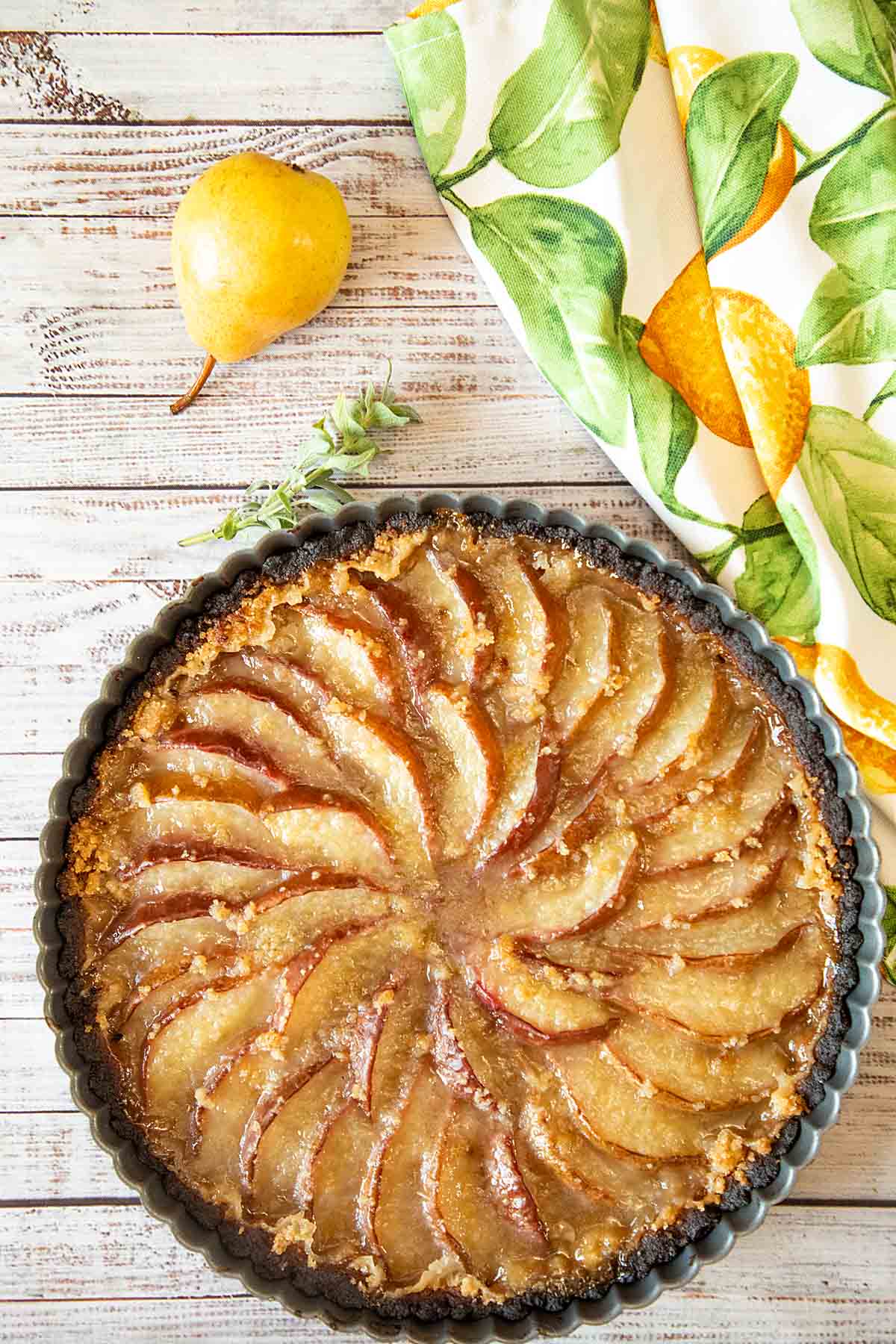
Classic Pear Tart
A delightful tart featuring a buttery crust filled with spiced pears and a creamy béchamel sauce. This recipe is a must-try for any occasion.
🥘Ingredients
- 2 1/2 cups all-purpose flour
- 1 tsp salt
- 1/2 cup cold unsalted butter, cubed
- 6-8 tbsp ice water
- 6 ripe pears, peeled and sliced
- 1/2 cup granulated sugar
- 1 tbsp lemon juice
- 1 tsp ground cinnamon
- 1/2 tsp ground nutmeg
- 1/4 tsp ground cloves
- 1 tbsp all-purpose flour
- 1/2 cup unsalted butter
- 1/2 cup all-purpose flour
- 2 cups whole milk
- 1/2 tsp salt
- 1/4 tsp nutmeg
- 1 egg yolk
👨🍳Directions
-
1
Preheat oven to 375°F (190°C). Combine flour and salt in a bowl. Cut in cold butter until mixture resembles coarse crumbs. Add ice water, one tablespoon at a time, mixing until dough just comes together. Chill for 30 minutes. -
2
Roll dough to 1/4-inch thickness and fit into a 9-inch tart pan. Prick bottom and sides with a fork. Chill while preparing filling. -
3
In a bowl, toss pears with sugar, lemon juice, cinnamon, nutmeg, cloves, and flour. Spread evenly over chilled dough. -
4
Make béchamel sauce by melting butter in a saucepan over medium heat. Whisk in flour to form a roux. Gradually whisk in milk, salt, and nutmeg until smooth. Remove from heat, stir in egg yolk until combined. -
5
Pour béchamel over pears. Bake for 30 minutes. Let cool 10 minutes before serving.
🔧Equipment
- Mixing bowls
- Food processor or rolling pin
- Pastry brush
- Baking sheet
- Oven
- Whisk
- Fine-mesh sieve
📊Nutrition Facts (per serving)
📝Notes
- For a gluten-free option, use gluten-free flour in the crust.
- Add a sprinkle of powdered sugar or a drizzle of caramel on top for extra sweetness.
- Substitute fresh pears with canned pears in syrup (drained) if short on time.
Watch Video Of How Classic Pear Tart Works
❓ Frequently Asked Questions About Pear Tart
What is the best way to prepare the pear tart before baking?
To prepare the pear tart before baking, start by slicing the pears into thin rounds or wedges. Remove any seeds or large pits. Lightly brush the pears with a little lemon juice to prevent browning. Place them in a tart pan lined with parchment paper or a tart shell, ensuring they fit snugly without overcrowding. You can also gently press them into the crust for a more uniform shape.
—
How do I ensure the filling stays moist and doesn’t dry out during baking?
To keep the pear filling moist, use a combination of methods. First, make sure your pears are well-seasoned with lemon juice, sugar, and a touch of cornstarch or flour to help thicken the filling. You can also add a splash of water or apple cider while baking to prevent drying out. For extra moisture, lightly brush the pears with a little water or milk before placing them in the tart pan. Lastly, baking at a slightly lower temperature (around 350°F/175°C) for a bit longer can help retain juices.
—
Can I use fresh pears instead of canned pears for this recipe?
Yes, you can absolutely use fresh pears! Fresh pears work wonderfully in this recipe, but they may require some adjustments. First, ensure the pears are ripe but firm—ripe pears will soften more during baking. You can also slightly undercook them to prevent them from becoming mushy. If using fresh pears, reduce the sugar slightly (about 1–2 tablespoons less) since they naturally contain more sweetness. Additionally, you may need to add a little extra liquid (like water or broth) to help with moisture.
—
What are some good variations or substitutions for the classic pear tart?
There are plenty of delicious variations you can try! For a fruity twist, swap pears for quince (use a little more sugar and cook longer) or apples (like Granny Smith for tartness). For a savory option, use figs or peaches with a hint of balsamic glaze. If you prefer a creamier filling, try passion fruit or mango with coconut milk. For a nutty flavor, add a sprinkle of toasted almonds or walnuts on top. You can also experiment with different crusts—like a shortbread or sweet potato crust for a unique texture.
—
How do I know when the pear tart is done baking?
The pear tart is done when the crust is golden brown and the filling is set but still slightly soft in the center. To check, gently press on the filling—it should hold its shape but not be rock-hard. If the top looks too brown, cover it loosely with foil or a pie dome to prevent over-browning. The tart is ready when the internal temperature reaches around 190–200°F (88–93°C) in the center of the filling (use a meat thermometer if available). Let it cool slightly before slicing to avoid a soggy texture.


