
ravioli dough recipe

The Best ravioli dough recipe
This recipe is perfect for so many reasons. It’s not just about the taste—it’s about the way it brings people together. Whether it’s a cozy family meal on a cold night or a dish to impress guests at a casual gathering, ravioli never fails to make the table feel warm and inviting. My kids used to think it was a game to see who could make the ravioli the most interesting shape, and now they’ll even help me roll it out and cut it into fun little shapes for the holidays. And the health benefits? Well, whole wheat flour gives it a little extra fiber and nutrients, and the olive oil keeps it rich without being heavy. It’s not a low-carb or anything extreme, but it’s not the kind of pasta that’ll leave you feeling sluggish afterward. Plus, you can make extra dough and freeze it for later—no one will ever guess it’s not fresh from the oven. It’s that kind of reliable, comforting dish that’s always ready to step in when you need it.
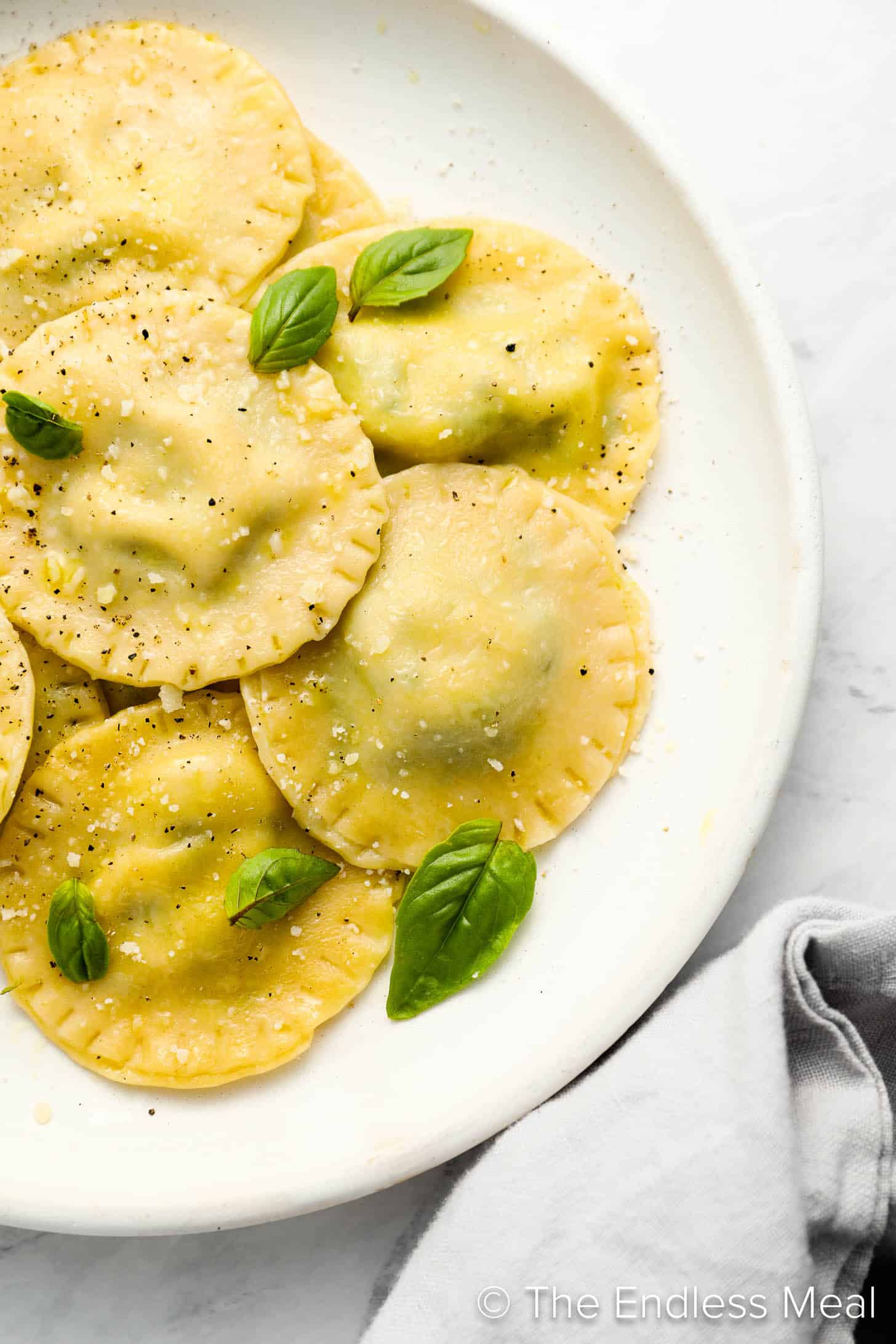
Classic Homemade Ravioli Dough Recipe
A simple and versatile recipe for homemade ravioli dough that can be filled with your choice of ingredients and cooked in various ways. This recipe is a must-try for any occasion.
🥘Ingredients
- 2 cups (250g) all-purpose flour
- 1/4 cup (60ml) cold water
- 1 large egg
- 1 tsp salt
- 1/2 tsp sugar (optional, for tender dough)
- 1 cup ricotta cheese
- 1 egg yolk
- 1/2 cup grated Parmesan cheese
- Salt and pepper to taste
👨🍳Directions
-
1
In a large mixing bowl, combine flour, salt, and sugar (if using). Make a well in the center. -
2
Crack the egg into the well and add cold water. Mix gently with a fork until a shaggy dough forms. -
3
Transfer dough to a lightly floured surface and knead for about 8-10 minutes until smooth and elastic. If too sticky, add a bit more flour. -
4
Cover the dough with a damp towel and let it rest for 30 minutes at room temperature. -
5
Preheat oven to 375°F (190°C). Prepare filling by mixing ricotta, egg yolk, Parmesan, salt, and pepper. -
6
Divide the dough into 4 parts. Roll each part into a thin sheet (about 1/8 inch thick) using a rolling pin. -
7
Place a small spoonful of filling in the center of each sheet and fold the edges over to enclose the filling, creating ravioli shapes. -
8
Place ravioli on a baking sheet lined with parchment paper. Brush lightly with egg wash if desired. -
9
Bake for 15-20 minutes until golden brown. Allow ravioli to cool before serving.
🔧Equipment
- Stand mixer or large mixing bowl
- Rolling pin
- Cutting board
- Ravioli cutter or sharp knife
- Baking sheet
- Oven
📊Nutrition Facts (per serving)
📝Notes
- For extra tender ravioli, ensure your dough is well rested before rolling.
- You can use a ravioli mold for uniform shapes if preferred.
- Store homemade ravioli in an airtight container in the fridge for up to 3 days or freeze for longer storage.
Watch Video Of How Classic Homemade Ravioli Dough Recipe Works
❓ Frequently Asked Questions About Ravioli Dough
1. What is the ideal temperature for kneading ravioli dough, and how long should it be kneaded for optimal texture?
The ideal temperature for kneading ravioli dough is room temperature (around 70–75°F or 21–24°C). Kneading should be done for about 8–10 minutes until the dough is smooth, elastic, and slightly tacky to the touch. Over-kneading can make the dough tough, so stop when it holds its shape when poked.
2. Can I use a food processor instead of a stand mixer for making ravioli dough, and if so, what settings should I use?
Yes, you can use a food processor for ravioli dough, but it requires careful handling. Pulse the dry ingredients (flour, salt) in short bursts until combined, then add the cold water gradually while scraping down the sides. Process on medium-low speed for 2–3 minutes until the dough forms a shaggy mass. Transfer to a lightly floured surface, knead by hand for another 5–7 minutes until smooth.
3. Why does my ravioli dough crack or tear when rolling it out thinly, and how can I prevent this?
Ravioli dough cracks or tears due to dryness, uneven hydration, or over-stretching. To prevent this:
– Ensure the dough is properly hydrated—it should be soft but not sticky when rolled.
– Use a lightly floured surface and rolling pin to avoid friction.
– Roll in thin, even layers, pressing gently to avoid stretching.
– If the dough is too dry, add a tiny bit of water (1 tsp at a time) while kneading.
– Store rolled dough in the fridge wrapped tightly if not using immediately.
4. How should I store homemade ravioli dough to maintain freshness, and how long can it rest before rolling?
Store homemade ravioli dough in the refrigerator for up to 2 days wrapped tightly in plastic wrap or aluminum foil to prevent drying. If resting before rolling, let it sit at room temperature for 1–2 hours (or up to 4 hours in warm conditions) to soften slightly, but avoid leaving it out overnight. Chilling before rolling can make it harder to handle.
5. Can I substitute all-purpose flour with another type (like whole wheat or almond flour) in ravioli dough, and what adjustments would be needed?
No, ravioli dough traditionally uses all-purpose flour (or bread flour for extra elasticity) because it provides the right balance of gluten development for thin, even sheets. Substitutions like whole wheat or almond flour would alter texture significantly:
– Whole wheat flour will make dough denser and less stretchy; add 1–2 tbsp vital wheat gluten to improve elasticity.
– Almond flour would create a gummy, cake-like consistency—best used in fillings or as a coating, not for traditional ravioli dough.
– For a gluten-free version, blend rice flour + tapioca starch + xanthan gum (1:1:0.25 ratio) and adjust water gradually.


