
recipe containing pesto

- The Best recipe containing pesto
- Garlic Butter Pesto Pasta with Grilled Chicken
- 🥘Ingredients
- 👨🍳Directions
- 🔧Equipment
- 📊Nutrition Facts (per serving)
- 📝Notes
- Watch Video Of How Garlic Butter Pesto Pasta with Grilled Chicken Works
- ❓ Frequently Asked Questions About Garlic Butter Pesto Pasta with Grilled Chicken
The Best recipe containing pesto
This recipe is perfect for all kinds of occasions—quick weeknight dinners, lazy Sunday lunches, or even when you’re hosting guests. It’s versatile enough to work in so many ways, and it’s not one of those recipes that gets boring after a few tries. Plus, it’s something you can make ahead and store in the fridge for days, so you’re always ready with a fresh, flavorful boost. My family loves it because it’s healthy—packed with antioxidants from the basil, healthy fats from the olive oil, and protein from the cheese and nuts. It’s not just tasty; it’s good for you too, which makes it a win-win. And honestly, there’s nothing like the satisfaction of knowing you’re feeding your family something that’s both delicious and nourishing.
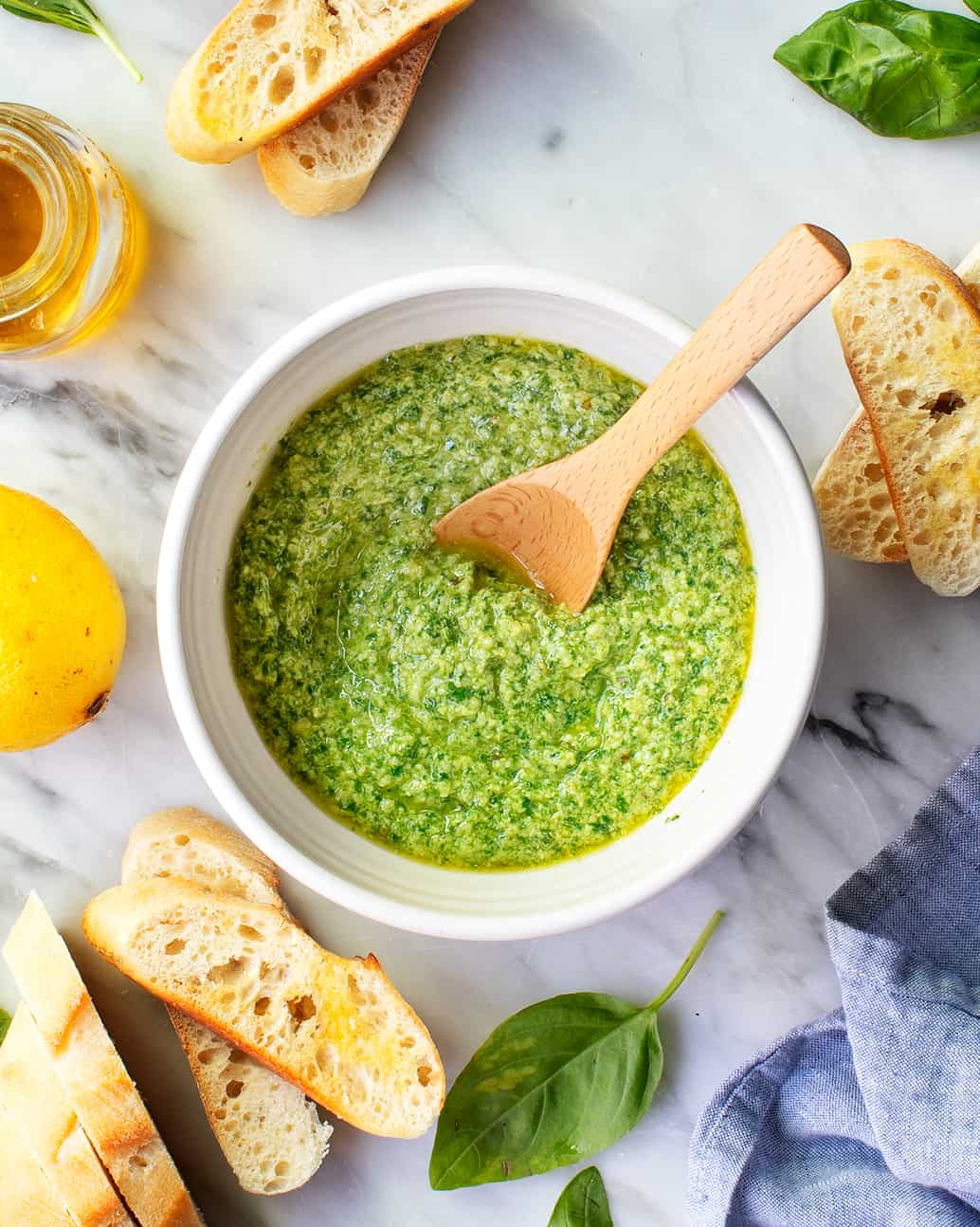
Garlic Butter Pesto Pasta with Grilled Chicken
A flavorful pasta dish featuring homemade pesto, grilled chicken, and a creamy garlic butter sauce. Perfect for a quick yet satisfying meal.
🥘Ingredients
- 1 cup fresh basil leaves
- 3 cloves garlic
- 1/2 cup pine nuts
- 1/2 cup grated Parmesan cheese
- 3 tbsp extra virgin olive oil
- 1 tbsp lemon juice
- Salt and pepper to taste
- 8 oz spaghetti or linguine
- 2 tbsp olive oil
- 2 tbsp butter
- 4 cloves garlic, minced
- 1/2 tsp red pepper flakes (optional)
- Salt to taste
- 4 boneless, skinless chicken breasts
- 2 tbsp olive oil
- 1 tsp dried oregano
- 1 tsp garlic powder
- Salt and pepper to taste
- Extra fresh basil leaves
- Additional grated Parmesan cheese
- Toasted pine nuts
👨🍳Directions
-
1
Preheat your oven to 400°F (200°C). Prepare the chicken by cutting the breasts into bite-sized pieces. Mix olive oil, oregano, garlic powder, salt, and pepper in a bowl. Coat the chicken evenly with the mixture and set aside. -
2
Grill the chicken over medium-high heat for about 6-7 minutes per side until fully cooked (internal temperature should reach 165°F/74°C). Transfer to a plate and let it rest for 5 minutes. -
3
While the chicken is grilling, cook the pasta according to package instructions until al dente. Drain and set aside. -
4
In a food processor, combine basil leaves, garlic, pine nuts, Parmesan cheese, olive oil, lemon juice, salt, and pepper. Pulse until the mixture is finely chopped but still has some texture. Set aside the pesto. -
5
In a large skillet, heat olive oil over medium heat. Add minced garlic and red pepper flakes (if using), sautéing for about 30 seconds until fragrant. Add butter and cook for another 30 seconds. Pour in the cooked pasta and toss to coat evenly with the garlic butter sauce. -
6
Once the chicken is ready, slice it into strips. Add the sliced chicken to the pasta in the skillet and mix well to combine. Remove from heat and stir in the pesto sauce until fully incorporated. -
7
Divide the pasta mixture among plates. Garnish each serving with fresh basil leaves, additional grated Parmesan cheese, and toasted pine nuts.
🔧Equipment
- Mixing bowls
- Food processor or blender
- Large skillet
- Grill or grill pan
- Cooking pot
- Knife and cutting board
- Measuring cups and spoons
📊Nutrition Facts (per serving)
📝Notes
- For a lighter version, use chicken breast that is baked instead of grilled.
- Adjust the amount of garlic and red pepper flakes to suit your spice preference.
- Store leftovers in an airtight container in the refrigerator for up to 4 days. Reheat gently in a skillet over medium heat.
- Substitute pine nuts with walnuts or almonds if you prefer.
Watch Video Of How Garlic Butter Pesto Pasta with Grilled Chicken Works
❓ Frequently Asked Questions About Garlic Butter Pesto Pasta with Grilled Chicken
What is the best way to store homemade pesto to keep it fresh longer?
Homemade pesto can be stored in the fridge for up to 5 days in an airtight container. For longer storage, freeze it in ice cube trays or small containers—each cube holds about 1 tablespoon. Once frozen, transfer the pesto to a labeled freezer bag, squeezing out excess air before sealing. Thaw in the fridge overnight and use within 3 months.
—
Can I make pesto without a food processor, and if so, how?
Yes! You can blend pesto by hand using a mortar and pestle. Pulse the basil, garlic, nuts, and olive oil in the mortar, then grind until finely chopped. Add the grated Parmesan and pine nuts (if using), then mix with a fork or spoon until combined. For a smoother texture, pulse in a blender or food processor briefly before adding the cheese.
—
What are the best substitutes for fresh basil if I don’t have any?
If fresh basil isn’t available, try these substitutes:
– Dried basil (use 1 tbsp dried per 1 cup fresh, but adjust to taste—it’s stronger).
– Spinach or arugula (add finely chopped greens along with nuts and cheese for a leafy twist).
– Herbes de Provence (mix with garlic, nuts, and olive oil for a savory flavor).
– Cilantro or parsley (works in a pinch, though the flavor will differ).
—
How can I make pesto extra creamy without adding extra oil?
To enhance creaminess without excess oil:
1. Use more nuts (add 1–2 tbsp extra pine nuts, walnuts, or cashews).
2. Add avocado or olive oil paste (blend ½ ripe avocado with 1 tbsp olive oil for a rich base).
3. Increase cheese slightly (add 1 tbsp grated aged cheese like Pecorino or aged Parmesan).
4. Slow blending (let the food processor blend for 2–3 minutes to emulsify naturally).
5. Add a splash of cream or yogurt (½ cup heavy cream or Greek yogurt thickens it while keeping it lighter).
—
Why does my pesto taste bitter or overly garlicky?
Bitterness or garlic intensity often come from:
– Overripe basil (choose firm, vibrant leaves; discard wilted or yellowing ones).
– Raw garlic (if you’re sensitive, roast the garlic cloves first, then blend—this mellows the flavor).
– Too much garlic (reduce to 1–2 cloves; start with 1 and adjust).
– Old or tough nuts (use freshly toasted nuts; store nuts in the fridge to prevent rancidity).
Fix: Adjust with a pinch of sugar, lemon zest, or a splash of milk/cream to balance flavors.
