
rosemary bread recipe

The Best rosemary bread recipe
What I love most about this bread is how versatile it is. It’s not just for holidays—it’s perfect for everyday eating, whether it’s a quick snack, a side dish, or even a dessert if you add a little honey or jam. My family loves it because it’s moist and flavorful, with that nice crisp crust that makes it satisfying to bite into. It’s also a great way to use up fresh rosemary, which is something I always try to incorporate into meals. The health benefits are pretty solid too—it’s packed with fiber, and the rosemary adds antioxidants and anti-inflammatory properties. Plus, it’s easy to customize with other herbs or seeds if you want to swap things out. It’s a recipe that’s simple enough to make on a busy day but still feels like something you’d make for a special occasion. My kids and I always feel good about eating it because it’s wholesome and delicious.
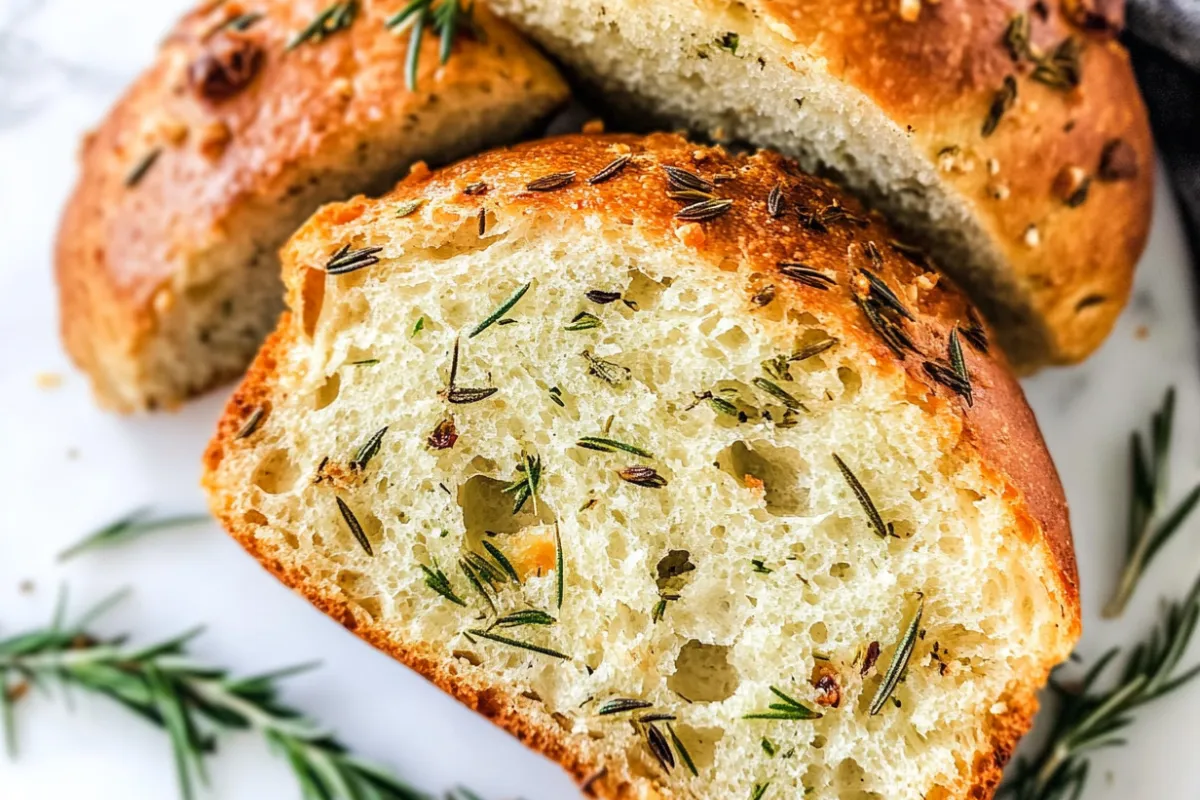
Rosemary Garlic Bread
A fragrant and flavorful bread infused with fresh rosemary and garlic, perfect for dipping in soups or enjoying as a side dish. This recipe is a must-try for any occasion.
🥘Ingredients
- 3 cups all-purpose flour
- 1 tsp salt
- 1 tsp sugar
- 1 packet (2 1/4 tsp) active dry yeast
- 1 1/2 cups warm milk
- 3 large eggs
- 4 tbsp unsalted butter, melted
- 4 cloves garlic, minced
- 2 tbsp fresh rosemary, finely chopped
- 4 tbsp unsalted butter, softened
- 2 cloves garlic, minced
- 1 tbsp fresh rosemary, finely chopped
👨🍳Directions
-
1
In a mixing bowl, dissolve yeast in warm milk with a pinch of sugar. Let it sit for 5 minutes until foamy. -
2
In another bowl, whisk together flour, salt, and eggs. Gradually add the yeast mixture and melted butter. Mix until a dough forms. -
3
Knead the dough on a lightly floured surface for about 8-10 minutes until smooth and elastic. Add minced garlic and rosemary, then knead again for 2 minutes. -
4
Place dough in a lightly oiled bowl, cover with a damp towel, and let rise in a warm place for 1 hour or until doubled in size. -
5
Preheat oven to 375°F (190°C). Punch down the dough and shape it into a loaf or rolls. Place on a baking sheet. -
6
Preheat butter with minced garlic and rosemary until melted. Brush over the shaped dough. -
7
Bake for 25-30 minutes until golden brown and the internal temperature reaches 190°F (88°C).
🔧Equipment
- Mixing bowls
- Kitchen scale (optional)
- Whisk
- Large mixing bowl
- Oven
- Baking sheet
- Pastry brush
📊Nutrition Facts (per serving)
📝Notes
Tips
- For extra flavor, add a pinch of red pepper flakes or a dash of lemon zest.
- You can refrigerate the dough for up to 24 hours before baking.
- Substitute olive oil for butter in the topping for a lighter option.
Variations
- Add 1 cup of grated Parmesan cheese to the dough for a cheesy twist.
- Mix in 1/2 cup of chopped sun-dried tomatoes for a Mediterranean flavor.
Watch Video Of How Rosemary Garlic Bread Works
❓ Frequently Asked Questions About Rosemary Garlic Bread
1. What is the primary ingredient that gives rosemary bread its distinct flavor?
Rosemary bread gets its signature flavor primarily from fresh rosemary, which is finely chopped and mixed into the dough. The aromatic, pine-like notes of rosemary complement the bread’s crust and enhance its overall taste, making it a beloved addition in Mediterranean and European-style baking.
—
2. Can I substitute dried rosemary for fresh in this recipe, and if so, what’s the best ratio?
Yes, you can use dried rosemary, but the flavor will be more concentrated. For every 1 tablespoon of fresh rosemary, use 1 teaspoon of dried rosemary. However, for best results, fresh rosemary is recommended—its aroma is more vibrant and less bitter. If using dried, lightly toast it before grinding to intensify the flavor.
—
3. How do I ensure the rosemary bread has a crispy crust while keeping the inside soft and airy?
For a crispy crust with a soft interior, follow these key steps:
– Preheat the oven to at least 425°F (220°C)—high heat helps create a golden, crispy crust quickly.
– Use a mix of warm water and milk (or buttermilk) in the dough to promote browning and structure.
– Bake on a parchment-lined tray to prevent sticking, and brush the top with melted butter or olive oil before baking for extra crispiness.
– Let the bread cool slightly before slicing to avoid a gummy texture.
—
4. Can I add other herbs or spices besides rosemary to this recipe, and what would work well?
Absolutely! You can enhance rosemary bread by mixing in complementary herbs and spices:
– Thyme, sage, or oregano (for a Mediterranean twist).
– Garlic powder or fresh garlic (for depth).
– A pinch of black pepper or smoked paprika (to add warmth).
– A splash of lemon zest (brightens the flavor).
Avoid overpowering the rosemary—keep additions subtle to let its natural aroma shine. For example, a 1:1 ratio of fresh rosemary to thyme works beautifully.
—
5. What’s the best way to store rosemary bread to keep it fresh longer?
To prolong freshness, store rosemary bread properly:
– Room temperature: Wrap tightly in plastic wrap or aluminum foil and store in an airtight container for 2–3 days. Slice only when needed to prevent drying.
– Fridge: If storing longer (up to 5 days), wrap in foil and place in the fridge, then toast slices as needed.
– Freezer: For longer storage (up to 3 months), freeze in a freezer bag or container. Toast from frozen by adding 1–2 extra minutes to the baking time.
– Toasting tip: Warm slices in a toaster or oven (350°F/175°C for 3–5 minutes) to revive freshness. Avoid reheating in the microwave to prevent sogginess.


