
sesame noodles recipe

The Best sesame noodles recipe
What I love most about sesame noodles is how adaptable they are. You can tweak the ingredients to suit whatever’s in the fridge—maybe swap in some shredded chicken or tofu for extra protein, or add a handful of peas or carrots for a little extra color and nutrients. It’s that kind of dish that feels like a blank canvas, and I love that my family can join me in making it their own. And let’s be honest, it’s not just a meal—it’s a health boost. The noodles themselves are usually made from whole wheat or brown rice, which gives them more fiber and nutrients than white pasta. The sesame oil isn’t just flavorful; it’s packed with healthy fats that help with heart health, and the garlic and ginger add antioxidants and anti-inflammatory benefits. It’s one of those dishes that makes me feel good about what I’m feeding my kids without having to feel guilty about it. Plus, it’s so versatile that it’s perfect for any occasion—whether you’re hosting a dinner party and want something that feels fancy but isn’t, or you’re just grabbing a quick lunch for the family. It’s that kind of recipe that makes me smile every time I serve it.
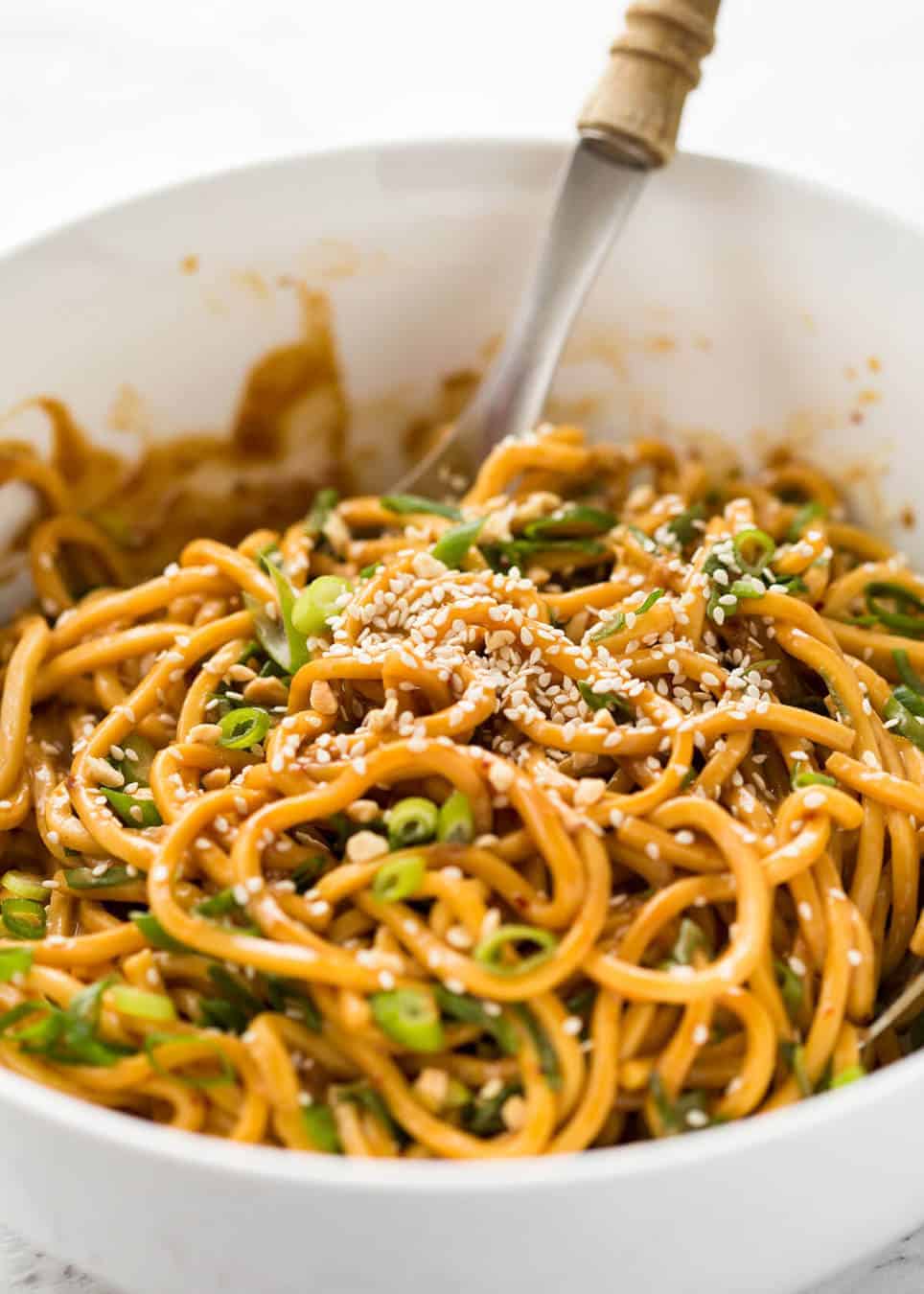
Sesame Noodles with Peanut Sauce
A flavorful and nutritious dish featuring fresh sesame noodles tossed in a rich peanut sauce, packed with protein and healthy fats. This recipe is a must-try for any occasion.
🥘Ingredients
- 200g dried sesame noodles
- 2 tbsp sesame oil
- 1 tbsp soy sauce
- 1 tsp sugar
- 1 clove garlic, minced
- 1 tsp grated ginger
- 1 cup water
- ½ cup smooth peanut butter
- 3 tbsp soy sauce
- 2 tbsp rice vinegar
- 1 tbsp honey or brown sugar
- 1 tbsp sesame oil
- 1 clove garlic, minced
- 1 tsp grated ginger
- 1 tsp red pepper flakes (optional)
- 1 cup hot water
- 1 green onion, sliced
- 1 tbsp chopped peanuts
- 1 tbsp chopped cilantro
- 1 tsp toasted sesame seeds
👨🍳Directions
-
1
Cook the sesame noodles: Boil water in a large pot. Add dried sesame noodles and cook according to package instructions (usually 3-5 mins). Drain and rinse with cold water to stop cooking. -
2
Prepare the peanut sauce: In a saucepan, combine peanut butter, soy sauce, rice vinegar, honey, sesame oil, garlic, ginger, and red pepper flakes. Stir well. Gradually add hot water while stirring until smooth and creamy. Set aside. -
3
Combine noodles and sauce: In a large bowl, toss the cooked sesame noodles with sesame oil, soy sauce, and sugar. Add the peanut sauce and mix well to coat evenly. -
4
Garnish and serve: Divide the noodles among plates. Top with sliced green onions, chopped peanuts, cilantro, and toasted sesame seeds. -
undefined
undefined -
undefined
undefined -
undefined
undefined -
undefined
undefined
🔧Equipment
- Large pot
- Medium saucepan
- Mixing bowls
- Wooden spoon
- Knife and cutting board
- Measuring cups and spoons
- Food processor (optional)
📊Nutrition Facts (per serving)
📝Notes
- For extra crunch, lightly toast sesame seeds before adding.
- Substitute peanut butter with almond butter for a different flavor profile.
- Ensure noodles are al dente for the best texture.
Watch Video Of How Sesame Noodles with Peanut Sauce Works
❓ Frequently Asked Questions About Sesame Noodles with Peanut Sauce
1. What is the secret to achieving the perfect texture in sesame noodles?
The key to perfect sesame noodles lies in balancing the right amount of oil and sesame paste. Use high-quality sesame oil (toasted sesame oil is ideal) and adjust the sesame paste gradually—too much can make the noodles clump, while too little won’t give the authentic flavor. Stirring constantly while cooking ensures even distribution and prevents sticking. Additionally, using fresh, high-quality noodles (like wheat or rice noodles) and cooking them al dente (slightly firm) helps maintain their chewiness.
2. Can I substitute regular sesame oil with another type of oil in this recipe?
While you can substitute another oil, it won’t yield the same rich, nutty flavor. For best results, use toasted sesame oil—it’s specifically designed for this purpose. If you must use a different oil, consider light sesame oil (less toasted) or even a mix of sesame oil with a neutral oil like vegetable or peanut oil, but expect a slight loss in authentic taste. Avoid high-heat oils like peanut or sunflower oil in large quantities, as they won’t complement the sesame flavor as well.
3. How do I know when sesame noodles are done cooking?
Sesame noodles should be cooked until they reach an al dente consistency—firm but tender. Overcooking can make them mushy, while undercooking leaves them chewy. Check by biting into one: it should yield slightly but still have a slight bite. Typically, wheat noodles take 3–5 minutes in boiling water, while rice noodles may take 2–3 minutes. Remove them just before they turn limp to preserve texture.
4. Why do my sesame noodles turn out sticky or gluey?
Sticky or gluey sesame noodles usually happen due to one of these reasons:
– Too much sesame paste/oil – The paste can break down into a sticky residue if overused. Reduce the amount slightly or stir more frequently.
– Improper cooking method – Stirring too little or not enough oil can cause sticking. Use enough oil to coat the noodles evenly and stir constantly.
– Using pre-cooked or dried noodles that aren’t fully hydrated – Some store-bought noodles absorb moisture unevenly. Rinse fresh noodles briefly under cold water if they’re too dry, then cook them fresh.
– High humidity or improper storage – If noodles were stored in a damp environment, they may absorb moisture before cooking. Use well-drained, fresh noodles.
5. Can I make sesame noodles in an air fryer instead of a pot?
While it’s possible, achieving the same texture and flavor in an air fryer can be tricky. Air fryers don’t provide the same level of even heat or liquid circulation as boiling water. If you try it:
– Pre-cook the noodles in boiling water until al dente, then drain and toss with 1–2 tbsp of oil + 1–2 tbsp of sesame paste (adjust to taste).
– Air fry at 375°F (190°C) for 3–5 minutes, shaking halfway, until slightly crispy.
– The result will be more on the crispy side rather than tender and saucy like traditional sesame noodles. For best results, stick to the stovetop method unless you’re aiming for a lighter, air-fried twist.

