
sourdough pizza crust recipe

The Best sourdough pizza crust recipe
What I love most about this recipe is how versatile it is. You can make it thin and crispy or thick and fluffy, depending on how you shape it, and it works just as well for a casual Friday night with the family as it does for a weekend gathering with friends. Plus, the sourdough starter adds a depth of flavor that regular pizza dough just can’t match. And let’s not forget the health benefits—fermented dough is easier to digest, and the longer rise time means your body gets more out of the nutrients in the flour. It’s a win-win: food that tastes amazing and actually makes you feel good about eating it. If you haven’t tried making sourdough pizza at home yet, this is the recipe to start with. It’s simple enough to become a regular in your kitchen but special enough to make any meal feel like an occasion.
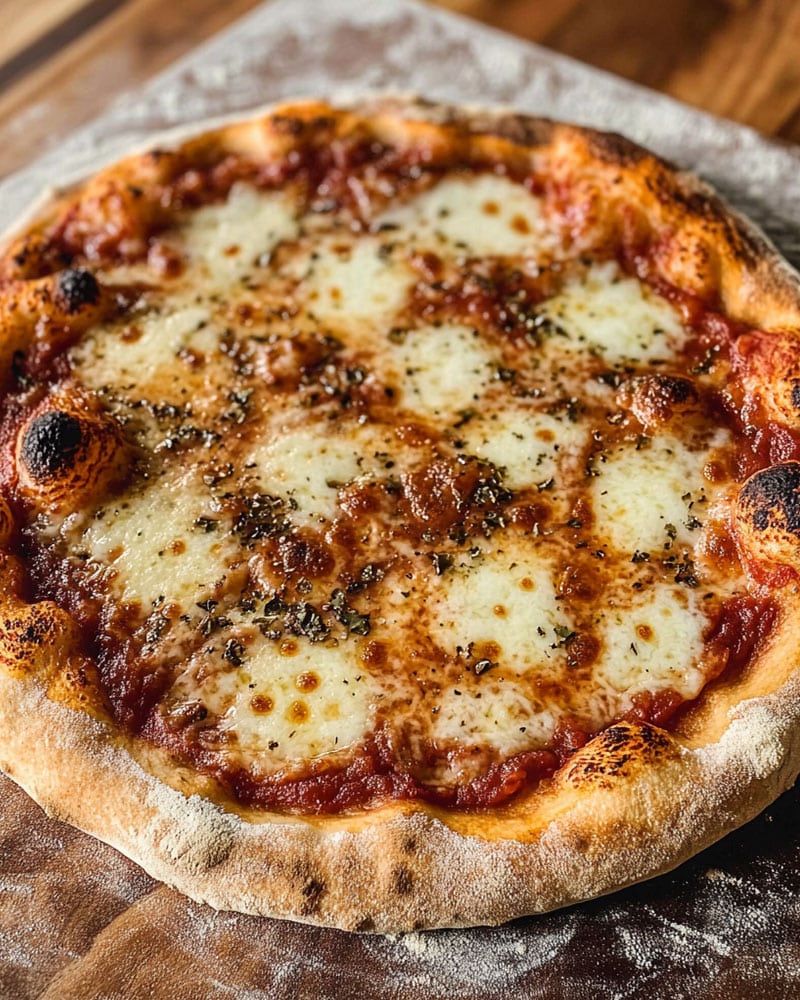
Artisan Sourdough Pizza Crust
A chewy, flavorful sourdough pizza crust with a crispy exterior and airy interior. Perfect for homemade pizzas with your favorite toppings, this recipe uses a natural sourdough starter for depth of flavor.
🥘Ingredients
- 1 cup (227g) active sourdough starter (100% hydration)
- 3 1/4 cups (400g) bread flour or all-purpose flour, plus more for dusting
- 1 1/4 cups (300ml) warm water (90-95°F)
- 1 1/2 tsp (9g) fine sea salt
- 1 tbsp (15ml) olive oil (plus extra for greasing)
- 1/2 cup (120ml) tomato sauce or pizza sauce
- 8 oz (225g) shredded mozzarella cheese
- Toppings of your choice (pepperoni, vegetables, etc.)
👨🍳Directions
-
1
In a large mixing bowl, combine the sourdough starter and warm water. Mix until the starter is mostly dissolved. -
2
Add the flour and salt to the bowl. Mix with a wooden spoon or your hands until a shaggy dough forms. Let the dough rest for 30 minutes (autolyse). -
3
After resting, add the olive oil and knead the dough in the bowl for 5-7 minutes until smooth and elastic. The dough should be slightly sticky but not wet. -
4
Cover the bowl with plastic wrap or a damp towel and let the dough ferment at room temperature (70-75°F) for 12-18 hours. The dough should double in size and be bubbly. -
5
Preheat your oven to 500°F (260°C) with a pizza stone or baking steel inside for at least 30 minutes. If using a baking sheet, invert it and preheat it in the oven. -
6
Turn the dough out onto a lightly floured surface. Divide it into 2 equal portions (about 350g each) and shape into balls. Cover and let rest for 30 minutes. -
7
On a floured surface, stretch or roll out one dough ball into a 12-inch circle (or your desired shape). Transfer to a piece of parchment paper. -
8
Add your desired sauce, cheese, and toppings to the stretched dough, leaving a 1/2-inch border for the crust. -
9
Slide the pizza (with parchment paper) onto the preheated pizza stone or baking sheet. Bake for 12-15 minutes, or until the crust is golden and the cheese is bubbly. -
10
Remove the pizza from the oven, let cool for 2-3 minutes, then slice and serve. Repeat with the second dough ball if desired.
🔧Equipment
- Large mixing bowl
- Kitchen scale (recommended)
- Plastic wrap or damp towel
- Pizza peel or baking sheet
- Pizza stone or baking steel (or inverted baking sheet)
- Rolling pin (optional)
- Parchment paper
📊Nutrition Facts (per serving)
📝Notes
Watch Video Of How Artisan Sourdough Pizza Crust Works
❓ Frequently Asked Questions About Artisan Sourdough Pizza Crust
1. How do I know when my sourdough starter is ready to use for pizza dough?
Your sourdough starter should be active and bubbly before using it in pizza dough. A good test is the “float test”: drop a small spoonful of starter into a glass of water—if it floats, it’s ready. Ideally, it should have doubled in size within 4–6 hours after feeding. If it’s sluggish or smells overly sour, feed it again and wait until it’s lively.
2. Can I make sourdough pizza dough without a long fermentation?
Yes, but the flavor and texture will be less developed. For a quicker version, you can use a warm environment (like an oven with the light on) to speed up fermentation to 4–6 hours. However, a slow, cold fermentation (12–24 hours in the fridge) enhances flavor and digestibility. If you’re short on time, a hybrid approach (2–3 hours at room temp, then 4–6 hours in the fridge) works too.
3. Why is my sourdough pizza crust dense instead of light and airy?
A dense crust can result from several factors: underproofing (not enough fermentation time), over-kneading, or too much flour. Ensure your dough has doubled in size before shaping, handle it gently to avoid degassing, and use a scale for precise measurements. High hydration (65–75%) also helps create air pockets. If your kitchen is cold, extend the fermentation time.
4. Do I need to pre-bake (par-bake) the sourdough pizza crust?
Pre-baking isn’t always necessary but can help prevent a soggy crust, especially if you’re using wet toppings. For a thin, crispy crust, par-bake at 475°F (245°C) for 3–5 minutes before adding sauce and toppings. For a thicker, chewier crust, you can skip this step and bake directly with toppings, but watch for excess moisture.
5. How do I store leftover sourdough pizza dough?
For short-term storage (1–2 days), place the dough in an airtight container in the fridge. For longer storage, freeze it: portion the dough, wrap tightly in plastic, and freeze for up to 3 months. Thaw overnight in the fridge before using. Always let refrigerated dough come to room temperature (1–2 hours) before shaping to relax the gluten.


