
venezuelan food recipe

The Best venezuelan food recipe
The recipes are also surprisingly healthy for what they are. A lot of Venezuelan dishes rely on beans, rice, and fresh vegetables, which keep things balanced. My kids eat arepas with yogurt and honey for breakfast, and they’ll happily eat pabellón criollo for dinner—no complaints, just good, filling food. It’s the kind of meal that works for any occasion, whether it’s a casual Sunday lunch or a bigger gathering. Plus, it’s easy to adapt for dietary preferences, like making it gluten-free or serving it with extra veggies.
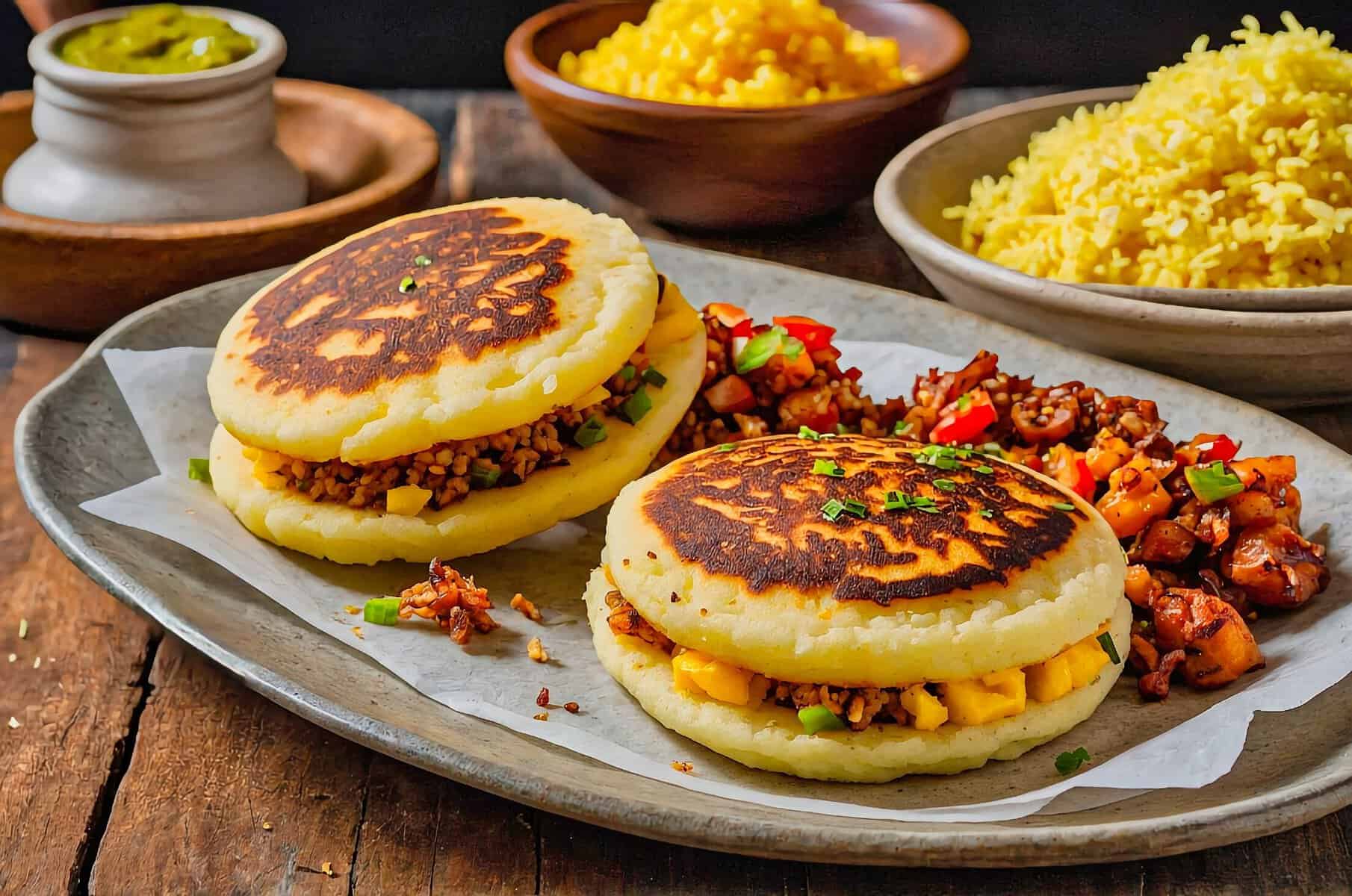
Arepas with Venezuelan Tomato Sauce
A beloved Venezuelan staple, these soft corn cakes are stuffed with savory tomato sauce and topped with cheese. Perfect for a quick weeknight meal or a festive gathering.
🥘Ingredients
- 2 cups cornmeal (fine grind)
- 1 cup all-purpose flour
- 1 tsp salt
- 1 cup warm water
- 1 tbsp olive oil
- 1 cup canned crushed tomatoes
- 1 small onion, finely diced
- 2 cloves garlic, minced
- 1 tbsp tomato paste
- ½ tsp cumin
- ½ tsp paprika
- Salt and black pepper to taste
- 1 cup shredded cheese (cheddar or Monterey Jack)
- Fresh cilantro, chopped (optional)
👨🍳Directions
-
1
Preheat oven to 375°F. In a large bowl, mix cornmeal, flour, salt, warm water, and olive oil until a soft dough forms. Cover and let rest for 10 minutes. -
2
In a skillet, sauté onion and garlic over medium heat until soft. Stir in crushed tomatoes, tomato paste, cumin, paprika, salt, and pepper. Simmer for 10 minutes until thickened. -
3
Roll dough into 8 small discs, about ¼-inch thick. Place on a baking sheet lined with parchment paper. Bake for 10–12 minutes until golden brown. -
4
Spread warm tomato sauce onto each arepa. Top with cheese and broil for 2–3 minutes until melted. Garnish with cilantro if desired.
🔧Equipment
- Mixing bowls
- Rolling pin
- Skillet
- Oven
📊Nutrition Facts (per serving)
📝Notes
Watch Video Of How Arepas with Venezuelan Tomato Sauce Works
❓ Frequently Asked Questions About Arepas with Venezuelan Tomato Sauce
What is the cultural significance of this dish in Venezuela?Can I substitute any ingredients if I don’t have them?
Yes, but keep the flavor balance in mind. For example, if you can’t find black beans, use kidney beans or pinto beans—just adjust the seasoning slightly to account for the difference in texture. If you’re missing onion, use garlic or shallots in smaller quantities. Always taste as you go to adjust salt or acidity. For the coconut milk, you could use cashew cream or light coconut milk if needed, but the dish will taste slightly different.
—
How do I store leftovers to keep them fresh?
Store cooked leftovers in an airtight container in the refrigerator for up to 4 days. To reheat, warm them gently on the stove over low-medium heat, stirring occasionally, until hot through. Avoid microwaving directly, as it can make the sauce too thick. If you plan to freeze, cool the dish completely first, then portion into freezer-safe containers. Thaw overnight in the fridge before reheating.
—
Why does the recipe call for so much lime juice?
The lime juice in this dish brightens the flavors and cuts through the richness of the coconut and spices. It also helps tenderize the meat slightly and adds a tangy contrast to the savory elements. If you’re using a fresh lime, squeeze it just before adding to the pan—this keeps the juice bright and flavorful. If you prefer a milder taste, you can reduce the lime juice by about half, but the dish will lose some of its signature zing.
—
Is this dish suitable for vegetarians or vegans?
This recipe is traditionally made with chicken or pork, so it’s not vegetarian or vegan by default. However, you can easily adapt it: replace the meat with extra-firm tofu, tempeh, or a hearty vegetable like eggplant or mushrooms. For the sauce, ensure you use a plant-based oil (like vegetable or canola) if needed. The dish will still taste delicious, though the texture and flavor profile may shift slightly.

