
old fashioned recipe for pickled eggs

The Best old fashioned recipe for pickled eggs
My kids always ask for pickled eggs after school, and honestly, I don’t blame them. They’re not just delicious—they’re a great way to sneak in some extra nutrients. The brine is packed with probiotics from the vinegar, which helps support gut health, and the eggs themselves are a great source of protein and vitamin B12. Plus, they’re easy to customize—you can swap out the spices or add a little extra garlic or mustard for extra kick if you like. It’s one of those recipes that’s simple enough to be foolproof but still feels like a little effort when you’re making it, which is why it’s always a hit. Whether you’re prepping for a summer gathering or just want something healthy and satisfying to grab when you’re hungry, pickled eggs are a no-fuss, flavor-packed answer.
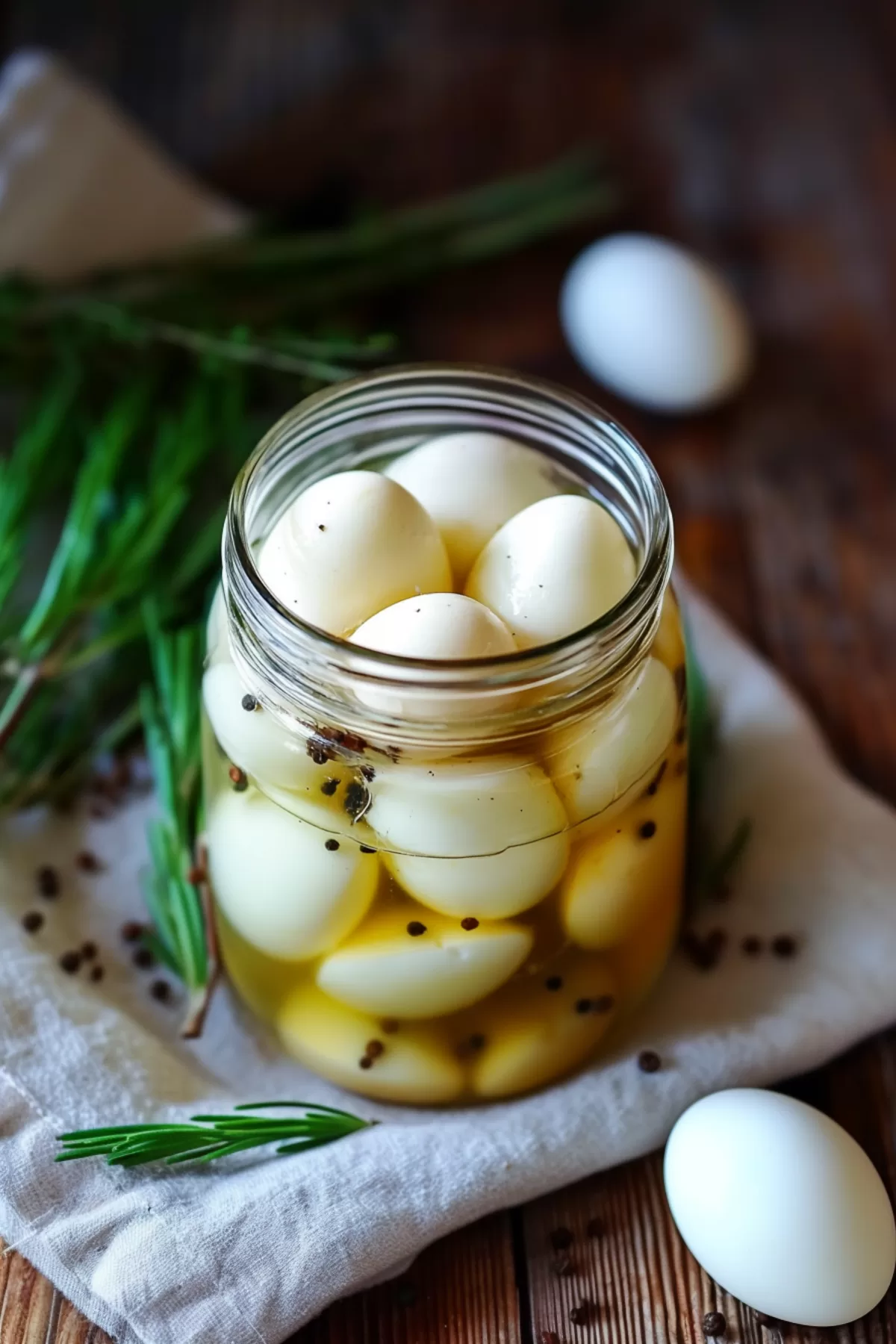
Classic Pickled Eggs
A tangy, briny treat that pairs perfectly with salads, sandwiches, or charcuterie boards. These eggs are quick to prepare and full of flavor.
🥘Ingredients
- 12 large eggs
- 4 cups vinegar
- 4 cups water
- 2 tbsp salt
- 1 tsp black peppercorns
- 1 tsp mustard seeds
- 1 tsp whole cloves
- 1 bay leaf
👨🍳Directions
-
1
Rinse eggs under cold water and place them in a pot. Cover with cold water by two inches and bring to a boil. Boil for 10 minutes, then drain and rinse eggs with cold water to cool. -
2
In a saucepan, combine vinegar, water, salt, peppercorns, mustard seeds, cloves, and bay leaf. Bring to a boil and simmer for 5 minutes to infuse flavors. -
3
Pour the hot brine over the cooled eggs in clean jars, ensuring they are fully submerged. Seal jars tightly and let them sit at room temperature for 24 hours before refrigerating.
🔧Equipment
- Large pot
- Clean jars with lids
- Kitchen twine
📊Nutrition Facts (per serving)
📝Notes
Watch Video Of How Classic Pickled Eggs Works
❓ Frequently Asked Questions About Pickled Eggs
How long can I store pickled eggs in the brine?
Pickled eggs in their brine will typically keep for 3 to 6 months in a cool, dark place like a pantry or fridge. Once opened, they stay safe to eat for up to 2 weeks in the refrigerator, provided the brine remains fresh and the eggs haven’t developed any off smells or slimy textures.
Can I submerge the eggs in vinegar or use a different acid instead of white vinegar?
Yes, you can use apple cider vinegar or lemon juice for a slightly different flavor, but white vinegar is the most common and reliable choice for pickling. For extra preservation, some cooks add a pinch of salt or a small amount of sugar to the brine, but these aren’t strictly necessary.
What if I don’t have a water bath canner for sterilizing the jars?
If you lack a water bath canner, you can still safely pickle eggs by boiling the jars and lids in water for 10 minutes, then filling them with the hot brine. Seal immediately and store in the fridge until ready to use. This method works best for short-term storage (up to 1 month).
Why do some pickled eggs turn greenish or brownish?
A greenish tint often appears due to iron in the egg whites reacting with sulfur compounds from the vinegar. This isn’t harmful but may indicate overcooking or exposure to air. Brownish spots can be from oxidation—just peel the eggs before eating if they’re not fully translucent.
Can I make pickled eggs without a pressure canner for long-term storage?
For long-term storage (beyond 1 month), a pressure canner is the safest method to kill bacteria and molds. Without it, pickled eggs should be eaten within 1–2 weeks for best quality, as the acidity alone won’t fully prevent spoilage over time.
