
dutch oven beef stew recipe


The Best dutch oven beef stew recipe
I make this beef stew in my Dutch oven at least twice a month, and it has become the meal my family asks for before I even plan the week. The pot goes on the stove in the morning and the house smells like onions and thyme by noon. My kids, who normally inspect every bite, eat the carrots and potatoes without a single complaint. There is something about a heavy pot of stew that makes dinner feel settled, and I like knowing exactly what went into it.
The Dutch oven does most of the work here. It holds heat evenly, so the beef turns tender instead of tough, and I can brown the meat on the stovetop and then move the whole thing into the oven without dirtying another pan. Chuck roast is the cut I buy, and it costs less than most steaks while giving you a richer broth. The vegetables go in at different times so the potatoes hold their shape and the peas stay bright. It is a forgiving recipe, and if you walk away for an extra 20 minutes, nothing falls apart.
We eat this on ordinary Tuesday nights and I also make it for birthdays and holiday weekends when people are in and out of the kitchen. It feeds a crowd, it reheats well the next day, and it freezes without turning mushy. On the nutrition side, you get protein from the beef and a good amount of vegetables in one bowl, plus you control the salt and skip the additives that come in canned stew. Serve it with bread to soak up the broth, or keep it on its own if you want something lighter.
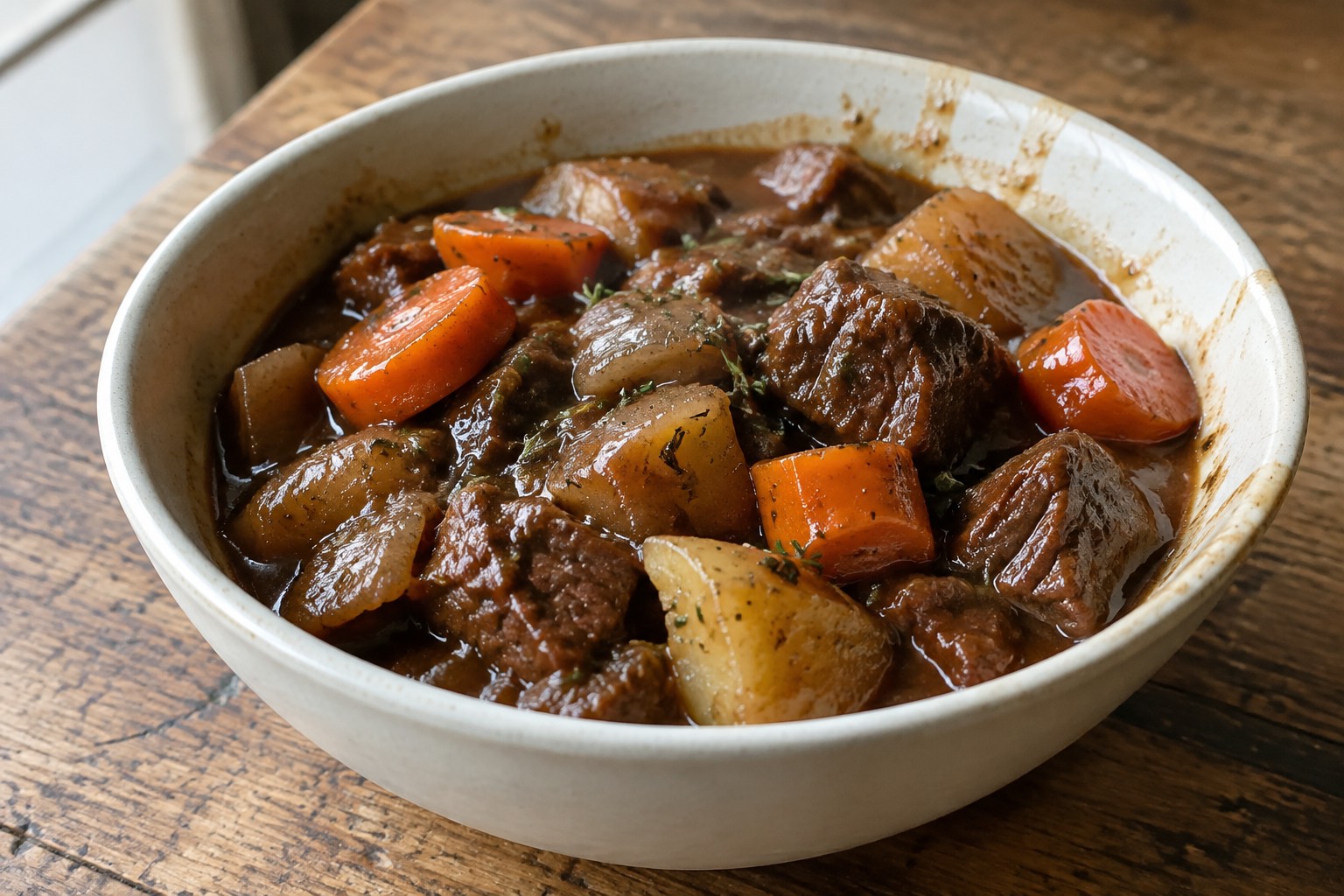
Dutch Oven Beef Stew
Chunks of beef chuck brown deeply on the stovetop, then braise low and slow with red wine, onions, and herbs until they pull apart with a fork. Potatoes, carrots, and celery go in partway through so they hold their shape, and a handful of frozen peas stirred in at the end keeps the whole pot bright.
🥘Ingredients
For the Stew
👨🍳Directions
🔧Equipment
📊Nutrition Facts (per serving)
📝Notes
Watch Video Of How Dutch Oven Beef Stew Works
This beef stew is my go-to for family gatherings because it feeds a crowd, holds up well on a buffet table, and tastes even better when I make it a day ahead. The Dutch oven does most of the work, so I can visit with everyone instead of standing over the stove. Any occasion works here, from Sunday dinner to a holiday get together, and people always ask for the recipe.
❓ Frequently Asked Questions About Dutch Oven Beef Stew
1. What cut of beef works best for Dutch oven beef stew?
Choose a cut with plenty of connective tissue, like chuck, round, or brisket. Chuck is the most forgiving because its marbling bastes the meat as it cooks and turns tender during a long braise. Avoid lean cuts such as sirloin or tenderloin, which dry out and turn stringy when simmered.
2. Do I have to brown the beef before adding the liquid?
It is not strictly required, but skipping it costs you flavor. Searing the cubes in batches over medium-high heat builds a browned crust that deepens the finished stew. The key is to work in small batches so the meat browns instead of steaming in its own moisture.
3. Why did my beef stew turn out tough?
Toughness usually comes from undercooking or from cooking at too high a simmer. Collagen needs a long, gentle braise to break down, so keep the liquid at a bare simmer with the lid slightly ajar and give it the full time. Undercooked stew can also be fixed: return it to the oven or stovetop for another 20 to 30 minutes and check again.
4. How do I thicken beef stew that looks too thin?
Let the stew simmer uncovered for the last 15 to 20 minutes so some liquid cooks off. If it still needs body, whisk a tablespoon of flour or cornstarch into a few tablespoons of cold water and stir it in, then simmer for another five minutes. A handful of mashed potato or a spoonful of tomato paste also adds body without extra starch.
5. Can I make Dutch oven beef stew ahead of time or freeze it?
Yes to both. The stew tastes even better the next day, so cool it quickly, refrigerate it in a sealed container for up to three days, and reheat gently on the stovetop. To freeze, portion it into airtight containers and store for up to three months, leaving room for expansion. Potatoes can turn soft and grainy after freezing, so consider adding them fresh when you reheat if texture matters to you.
