
japanese eggplant recipe

- The Best japanese eggplant recipe
- Japanese Eggplant (Goma Dango) with Sweet Soy Glaze
- 🥘Ingredients
- 👨🍳Directions
- 🔧Equipment
- 📊Nutrition Facts (per serving)
- 📝Notes
- Watch Video Of How Japanese Eggplant (Goma Dango) with Sweet Soy Glaze Works
- ❓ Frequently Asked Questions About Japanese Eggplant (Goma Dango) with Sweet Soy Glaze
The Best japanese eggplant recipe
What really makes this recipe special is how easy it is to customize. You can keep it simple with just the eggplant and seasoning, or you can throw in some tofu, shrimp, or even leftover chicken if you’re feeling lazy but still want something satisfying. My family always says it’s the perfect dish for busy weeknights because it cooks fast and doesn’t require much prep—just chop, sauté, and toss. And honestly? It’s packed with good stuff. Eggplant is low in calories but high in fiber and vitamins, and the soy sauce adds a little protein and flavor without overdoing it. Plus, the sesame oil gives it that little extra richness that makes it feel indulgent, even though it’s really just wholesome. It’s one of those recipes that doesn’t just fill your plate—it fills your heart with warmth, whether you’re serving it to your family or just enjoying it for yourself.
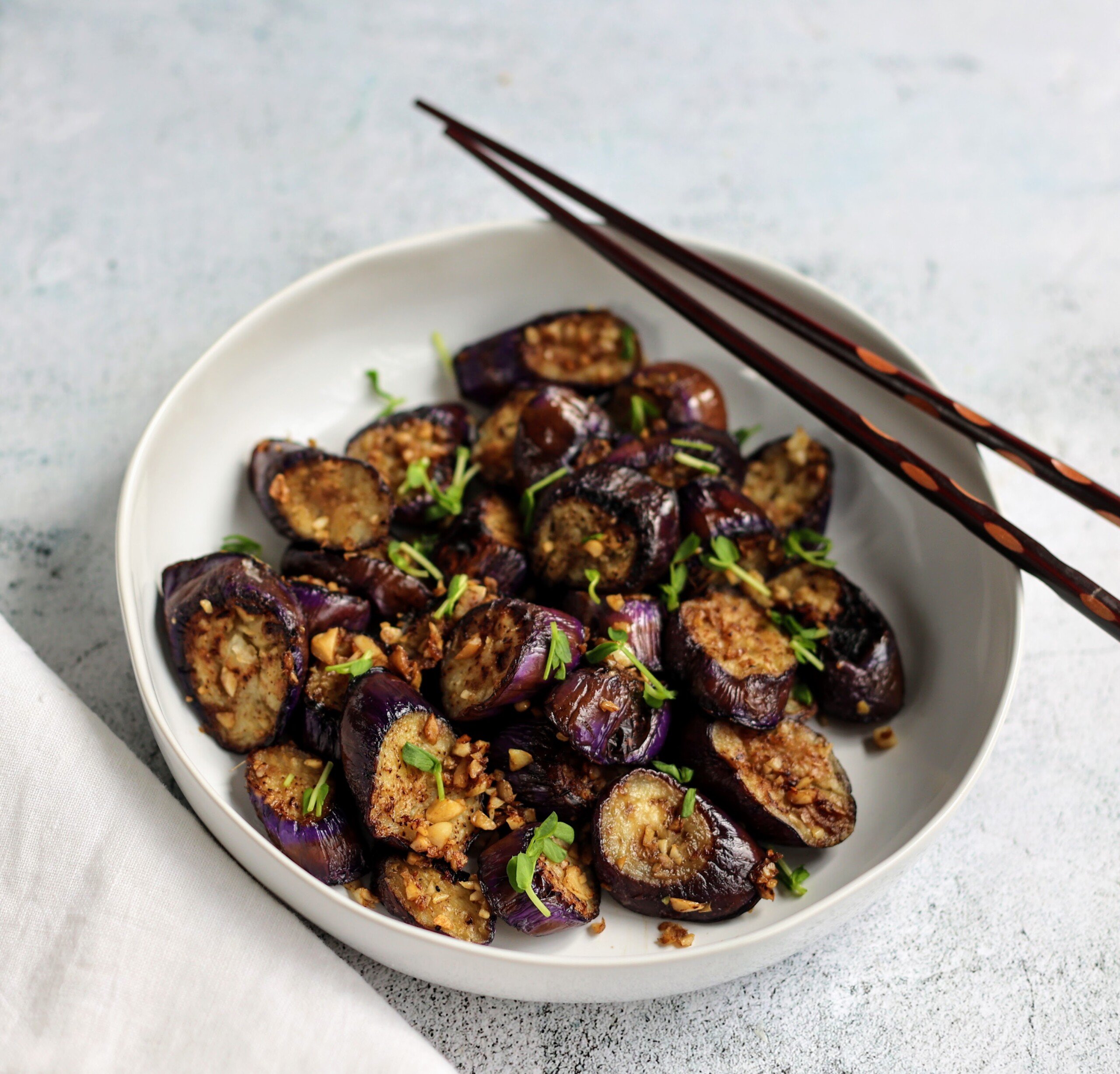
Japanese Eggplant (Goma Dango) with Sweet Soy Glaze
A traditional Japanese dessert featuring chewy eggplant dough balls coated in a sweet and savory soy glaze. Lightly sweetened and aromatic, this dish highlights the natural flavors of Japanese cuisine.
🥘Ingredients
- 1 medium eggplant (about 1 lb), cut into 1-inch cubes
- 1 cup all-purpose flour
- 1 tsp salt
- 1 tbsp sugar
- 1 tsp baking powder
- ½ cup soy sauce
- ¼ cup mirin
- 2 tbsp sugar
- 1 tbsp sake (optional)
- 1 tsp grated ginger (optional)
👨🍳Directions
-
1
Preheat oven to 375°F (190°C). Cut eggplant into 1-inch cubes and sprinkle with salt. Let sit for 10 minutes to draw out bitterness, then rinse and pat dry. -
2
In a bowl, mix flour, sugar, salt, and baking powder. Set aside. -
3
Steam eggplant cubes for 5–7 minutes until tender. Let cool slightly, then mix with flour until evenly coated. -
4
Preheat oven to 375°F (190°C). Arrange eggplant dough balls on a baking sheet and bake for 15–18 minutes until golden. -
5
While baking, prepare glaze by mixing soy sauce, mirin, sugar, sake (if using), and grated ginger in a saucepan. Simmer for 3–5 minutes until slightly thickened. -
6
Drizzle hot glaze over baked eggplant balls and let set for 2 minutes before serving.
🔧Equipment
- Mixing bowls
- Knife and cutting board
- Steamer basket
- Baking sheet
- Fine-mesh sieve
- Oven (or steamer)
📊Nutrition Facts (per serving)
📝Notes
- For extra flavor, add a pinch of red pepper flakes or a dash of sesame oil to the glaze.
- Can be made ahead and reheated gently before serving.
- For a gluten-free version, use gluten-free flour.
Watch Video Of How Japanese Eggplant (Goma Dango) with Sweet Soy Glaze Works
❓ Frequently Asked Questions About Japanese Eggplant (Goma Dango) with Sweet Soy Glaze
1. What is the traditional Japanese eggplant dish called, and what are the main ingredients used?
The traditional Japanese eggplant dish is called Goma-dofu (ゴマドーファ) or Kakiage (かきあげ). The most common versions include:
– Goma-dofu: Made with silken tofu, sesame paste (goma), and sometimes soy sauce, mirin, or sugar.
– Kakiage: A stir-fried dish with diced eggplant, potatoes, onions, and sometimes green beans, coated in a sweet-savory sauce (often made from soy sauce, sugar, mirin, and oil).
—
2. Can I substitute regular eggplant for the Japanese eggplant (nigiri gobo) in this recipe?
No, it’s best to use Japanese eggplant (nigiri gobo) for the best texture and flavor. Regular eggplant can be too watery or bitter when cooked. If unavailable, try yellow eggplant or Japanese yam (like kabocha), which are less watery and hold shape better.
—
3. What’s the best way to prepare Japanese eggplant before cooking to avoid bitterness?
To reduce bitterness and improve texture, follow these steps:
1. Soak sliced eggplant in cold water for 30–60 minutes (or up to 2 hours for stronger bitterness).
2. Drain and pat dry thoroughly before cooking.
3. Salt lightly (a pinch of salt) and let it sit for 5–10 minutes, then rinse again to remove excess salt.
4. Pat dry completely before stir-frying to prevent sogginess.
—
4. How do I make the classic sweet-savory sauce for Kakiage, and can I adjust the flavors?
The traditional Kakiage sauce is simple but flavorful:
– Base: 3 tbsp soy sauce (or tamari for gluten-free)
– Sweetener: 1 tbsp sugar or mirin (or ½ tbsp honey)
– Umami boost: 1 tbsp sake or mirin
– Flavor enhancer: 1 tsp grated ginger or a dash of katsuobushi (dried bonito flakes)
– Finish: 1 tbsp neutral oil (like vegetable or canola) for shine.
Adjustments:
– For sweeter Kakiage, increase mirin or sugar.
– For savory, add a splash of fish sauce or Worcestershire sauce.
– For umami depth, sprinkle sesame seeds or toasted soybeans on top.
—
5. Why does my Kakiage turn mushy, and how can I prevent it?
Mushy Kakiage usually happens from:
– Overcooking (Japanese eggplant loses moisture quickly).
– Not drying the eggplant properly before cooking.
– Using too much water in the sauce.
Solutions:
✔ Cook quickly in high heat (3–4 minutes max per side).
✔ Pat eggplant super dry before cutting and stir-frying.
✔ Reduce sauce thickness—stir-fry first, then add sauce in the last minute.
✔ Use a little oil (½ tsp) to prevent sticking and steam buildup.
✔ Serve immediately if possible—Kakiage is best fresh!
—
6. Can I make Goma-dofu (sesame tofu) ahead of time and reheat?
Yes! Goma-dofu can be made 1–2 days ahead and reheated gently:
– Storage: Keep in an airtight container in the fridge.
– Reheating:
– Microwave: Cover with a damp paper towel, heat on low for 10–15 sec, stir, then repeat.
– Stovetop: Warm in a small pan with a splash of water or oil for 1–2 minutes until heated through.
– Avoid boiling—it can make the tofu rubbery.

