
recipe for pickled eggs

The Best recipe for pickled eggs
I’ve found that pickled eggs are perfect for everyday eating too—snacking on them with a side of cheese or crackers, tossing them into salads for extra texture, or even serving them alongside sandwiches or charcuterie boards. They’re a little something that feels special but doesn’t take much effort, which is why they’ve become a staple in our house. And honestly, the health benefits make it even better. Eggs are packed with protein and vitamins, and the pickling process adds probiotics, which are great for gut health. It’s a way to eat something delicious without feeling like you’re missing out on anything. Plus, the kids always ask for seconds, so I’m always happy to have them on hand.
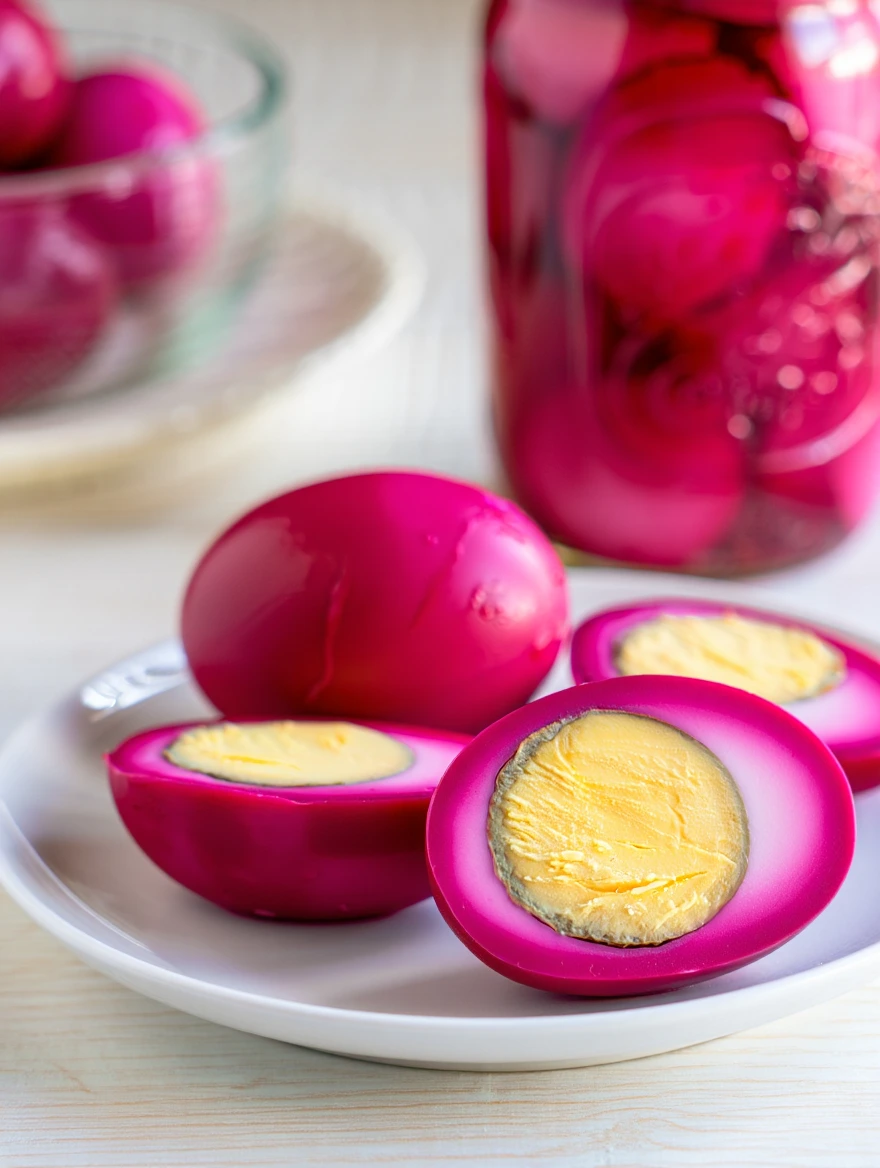
Classic Pickled Eggs
A tangy and refreshing dish featuring hard-boiled eggs preserved in a vinegar-based brine. Perfect for adding a zesty crunch to salads, sandwiches, or as a snack.
🥘Ingredients
- 6 large eggs
- 1 cup white vinegar
- 1 cup water
- 1 tbsp salt
- 1 tsp black peppercorns
- 1 tsp mustard seeds
- 1 tsp dill seeds (or fresh dill)
- 1 small red onion, thinly sliced
- 1 tbsp sugar (optional)
- 1 tsp turmeric (for color)
- 1 jalapeño, sliced (for heat)
👨🍳Directions
-
1
Boil water in a saucepan. Add eggs and cook for 10–12 minutes. Drain and let cool in cold water for 5 minutes. -
2
Peel eggs under running cold water, then rinse with cold water to remove any remaining shell fragments. -
3
In a clean jar, combine vinegar, water, salt, peppercorns, mustard seeds, dill seeds, and red onion. Stir well. -
4
Place peeled eggs into the jar, ensuring they are fully submerged. If needed, add sugar or turmeric. Stir gently. -
5
Cover the jar tightly and refrigerate for at least 4 hours (or overnight for best flavor).
🔧Equipment
- Medium saucepan
- Whisk
- Fine-mesh strainer
- Clean jars or containers (16 oz each)
- Lid or cover
- Cheesecloth or paper towels
- Thermometer (optional)
📊Nutrition Facts (per serving)
📝Notes
Tips
- For extra tang, add a pinch of cayenne pepper or a splash of lemon juice.
- Use fresh dill for a brighter flavor. If using dried, use half the amount.
- Store pickled eggs in the fridge for up to 2 weeks. Refrigerate after opening.
Variations
- Add a pinch of paprika or smoked paprika for a smoky twist.
- Use a mix of green and red onions for a layered flavor.
Watch Video Of How Classic Pickled Eggs Works
❓ Frequently Asked Questions About Pickled Eggs
How long should I brine the eggs before pickling them?
To achieve the best flavor and texture, brine the hard-boiled eggs for about 12–24 hours before pickling. Longer brining (up to 48 hours) deepens the flavor, but you can skip it if short on time—just ensure they’re fully cooked and cooled before adding them to the brine.
Can I use vinegar directly in the pickling brine, or do I need a specific ratio?
Yes, you can use white vinegar (5% acidity) in a 1:1 ratio with water (e.g., 1 cup vinegar + 1 cup water). For a tangier flavor, use apple cider or balsamic vinegar (5–10% acidity). Avoid lemon juice—it’s not acidic enough for proper pickling. Always check the acidity level if making large batches.
What spices or herbs should I include for extra flavor?
Classic pickling spices like black peppercorns, mustard seeds, dill seeds, bay leaves, and allspice berries work well. For herbs, add fresh dill, tarragon, or chives (if using vinegar). For a smoky twist, include smoked paprika or a pinch of cayenne. Avoid overly strong flavors like garlic (use in small amounts or separately) to prevent bitterness.
Can I use store-bought pickling spices instead of homemade?
Absolutely! Store-bought pickling spice blends (found in the spice aisle) work perfectly—just follow the package instructions for ratios. Look for ones with black peppercorns, mustard seeds, and bay leaves for the best results. Avoid pre-mixed “hot sauce” blends, as they may contain excessive salt or spices.
What’s the best way to store pickled eggs for long-term use?
Store pickled eggs in an airtight glass jar in the fridge for up to 6 months. For longer storage (if using vinegar and salt), you can freeze them in portions—just peel the eggs first, pack them tightly in a freezer-safe bag, and thaw in the fridge before eating. Always check for spoilage (mold, off smells, or slimy texture) before consuming.

