
ethiopian cuisine recipe

The Best ethiopian cuisine recipe
What I love most about Ethiopian cuisine is how it’s both hearty and healthy. The stews are usually loaded with beans, vegetables, and lean proteins, which means they’re packed with fiber and plant-based nutrients. And the spices—like berbere and fenugreek—give it that perfect balance of warmth and depth without being heavy. My family loves how it’s easy to customize—whether we’re serving it with injera for a full Ethiopian feast or just a side of rice and greens for a simpler meal. It’s that kind of dish that feels special but doesn’t take forever to make, which is why it’s always a hit. Plus, the kids think it’s fun to try new flavors, and honestly, I think it’s one of those recipes that makes the whole family feel connected.
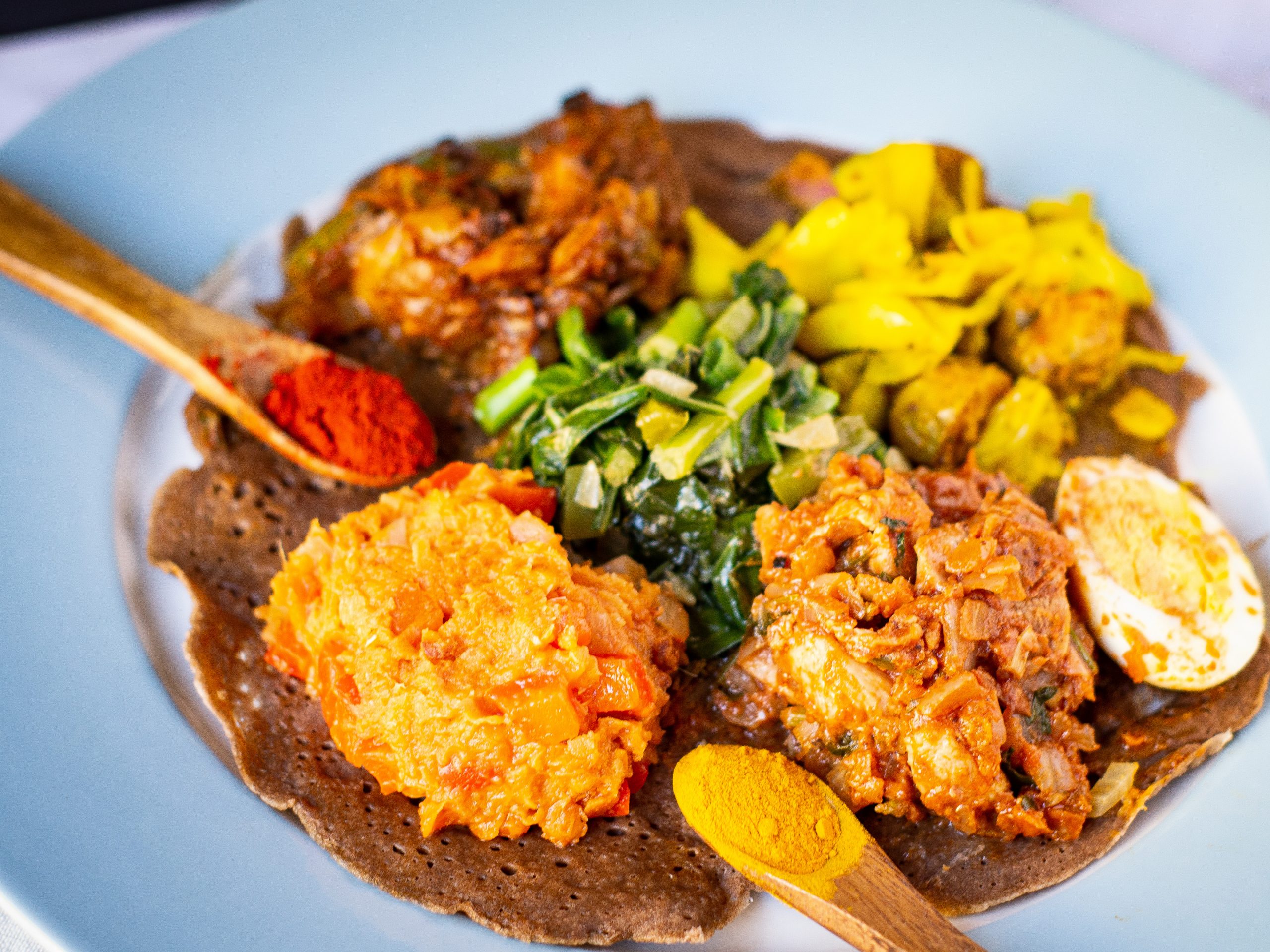
Doro Wat with Injera
A flavorful and iconic Ethiopian stew made with chicken, spices, and served with spongy flatbread called Injera. It’s a staple dish in Ethiopian cuisine, rich in tradition and taste.
🥘Ingredients
- 2 boneless chicken thighs (skin-on)
- 2 tbsp olive oil
- 1 tsp salt
- 1 tsp black pepper
- 1 tsp ground cumin
- 1 tsp ground coriander
- 1 tsp turmeric
- 1 tsp fenugreek leaves (kikaye)
- 1 tsp berbere spice blend
- 2 cups tomato paste
- 1 large onion, finely chopped
- 3 cloves garlic, minced
- 1 tbsp ginger, grated
- 1 red bell pepper, finely chopped
- 1 cup chicken broth
- 1 tbsp vinegar (optional, for tanginess)
- 1 tbsp butter or oil
- 2 cups teff flour (or all-purpose flour as substitute)
- 1 cup water
- 1 tsp salt
👨🍳Directions
-
1
Marinate the chicken: In a bowl, mix chicken thighs with olive oil, salt, pepper, cumin, coriander, turmeric, fenugreek leaves, and berbere spice. Let it sit for 10 minutes. -
2
Cook the chicken: Heat a pot with a little oil. Brown the chicken on both sides, then remove and set aside. In the same pot, sauté onions until golden. Add garlic, ginger, and bell pepper; cook for 2 minutes. -
3
Build the sauce: Stir in tomato paste and cook for 5 minutes. Add chicken broth and vinegar (if using), simmer for 10 minutes. Return chicken to the pot, cover, and simmer for 30-40 minutes until chicken is tender. -
4
Prepare Injera: Mix teff flour, water, and salt into a smooth batter. Let it rest for 15 minutes. Heat a skillet or oven (preheated to 350°F) and pour small portions of batter to form thin, round flatbreads. Cook until puffed and golden. -
5
Serve: Plate the chicken with sauce and serve with freshly made Injera. Use the flatbread to scoop up the stew.
🔧Equipment
- Large pot or deep skillet
- Mixing bowls
- Knife and cutting board
- Wooden spoon
- Oven (optional, for baking Injera)
- Injera mold (optional, for traditional shape)
📊Nutrition Facts (per serving)
📝Notes
Tips
- For a healthier version, use lean chicken breasts instead of thighs.
- Substitute teff flour with all-purpose flour if unavailable, though texture may differ.
- Berbere spice is key—adjust to taste; it adds heat and complexity.
- Injera can be baked in the oven or cooked on a stovetop for convenience.
Tradition: Traditionally, Doro Wat is served at family gatherings and religious celebrations in Ethiopia.
Watch Video Of How Doro Wat with Injera Works
❓ Frequently Asked Questions About Doro Wat with Injera
1. What are the most essential ingredients in traditional Ethiopian cuisine, and how do you typically prepare them?
Ethiopian cuisine is deeply rooted in communal dining, with key ingredients like injera (a sourdough flatbread made from teff flour), spicy stews (wat), and dals (legume dishes) being staples. Teff flour is central—it’s used for injera and dishes like shiro (chickpea stew). Spices like berbere (a fiery blend of chili, fenugreek, and other herbs) define flavors, while yogurt (shiro) and spiced lentils (like misir wat) are common. Traditional methods include slow-cooking stews with layers of spices and simmering legumes until tender.
—
2. How does Ethiopian cuisine differ from other African or Middle Eastern cuisines, and what makes it unique?
Ethiopian cuisine stands out due to its religious and cultural influences, particularly Orthodox Christianity, which shapes dietary traditions like fasting (eating only bread, lentils, and vegetables). Unlike Middle Eastern cuisines (which often feature olive oil-heavy dishes), Ethiopian food relies more on teff flour and spiced stews served with injera. The communal dining style—where everyone eats from a shared platter—also sets it apart. Additionally, spices like berbere and yogurt-based sauces give it a distinct, slightly tangy, and fiery profile.
—
3. Can you explain the role of injera in Ethiopian meals, and how is it different from other flatbreads?
Injera is the cornerstone of Ethiopian meals, acting as both a plate and utensil. Unlike Western flatbreads (like naan or pita), injera is fermented and spongy, made from teff flour (a tiny, gluten-free grain) mixed with water and left to rise for 24–48 hours. Its slightly sour taste balances the richness of stews. Unlike pita (which bakes into a crispy shell), injera cooks in a clay oven (tella), becoming soft and slightly chewy. It’s also non-stick, allowing easy scooping of stews and sauces.
—
4. What are the best ways to prepare berbere spice, and how can I adjust the heat level?
Berbere is a complex blend of dried chili peppers, spices, and herbs, with variations across regions. The classic mix includes:
– Dried chilies (like Ethiopian bird’s eye chili, habanero, or Scotch bonnet)
– Spices: cumin, coriander, cardamom, fenugreek, ginger, garlic powder
– Herbs: fenugreek leaves, cilantro, oregano
– Extras: black pepper, turmeric, cinnamon
Adjusting heat: Start with 1–2 tbsp for mild, 3–4 tbsp for medium-spicy, or 5+ tbsp for extreme heat. Remove seeds from chilies for less spice, or add more chili powder for extra kick. For a softer berbere, reduce ginger or add a pinch of sugar to balance bitterness.
—
5. How do Ethiopian stews (wat) differ from other African stews, and what’s the best way to cook them?
Ethiopian stews (wat) are layered, slow-cooked dishes with a thick, saucy texture, unlike many African stews (e.g., West African jollof rice or Nigerian egusi soup) that are more brothy. Key traits:
– Spice depth: Berbere or other blends create a complex, smoky flavor.
– Protein variety: Often includes lamb, chicken, or beef (or a mix), simmered with onions, garlic, and tomatoes.
– Grain integration: Many wat include cooked grains (like bulgur or rice) or legumes (lentils, chickpeas) for heartiness.
Best cooking method:
1. Sauté aromatics: Cook onions, garlic, and ginger in oil until fragrant.
2. Toast spices: Add berbere or other blends to release flavors (don’t burn!).
3. Simmer slowly: Add meat, broth, and tomatoes; cook for 1–2 hours until tender.
4. Finish with injera: Serve immediately with injera to scoop up the stew’s sauce. Avoid boiling the stew—gentle simmering preserves texture.

