
beef sausage recipe

The Best beef sausage recipe
What really sets this recipe apart is how versatile it is. You can serve it fresh with warm rolls and a fresh salad, or slow-cook it for a pulled pork-style sausage that’s perfect for tacos or sandwiches. My kids swear by it too—no one ever complains about eating it, and it’s always a hit at family gatherings. Plus, it’s got a good amount of protein and healthy fats from the grass-fed beef I use, which keeps us full and satisfied without being too heavy. It’s the kind of meal that feels special on a Sunday night but also fits right into a busy weeknight if you’re in a hurry. The kids love the texture, and the adults always say it’s the best way to enjoy a simple, satisfying dish.
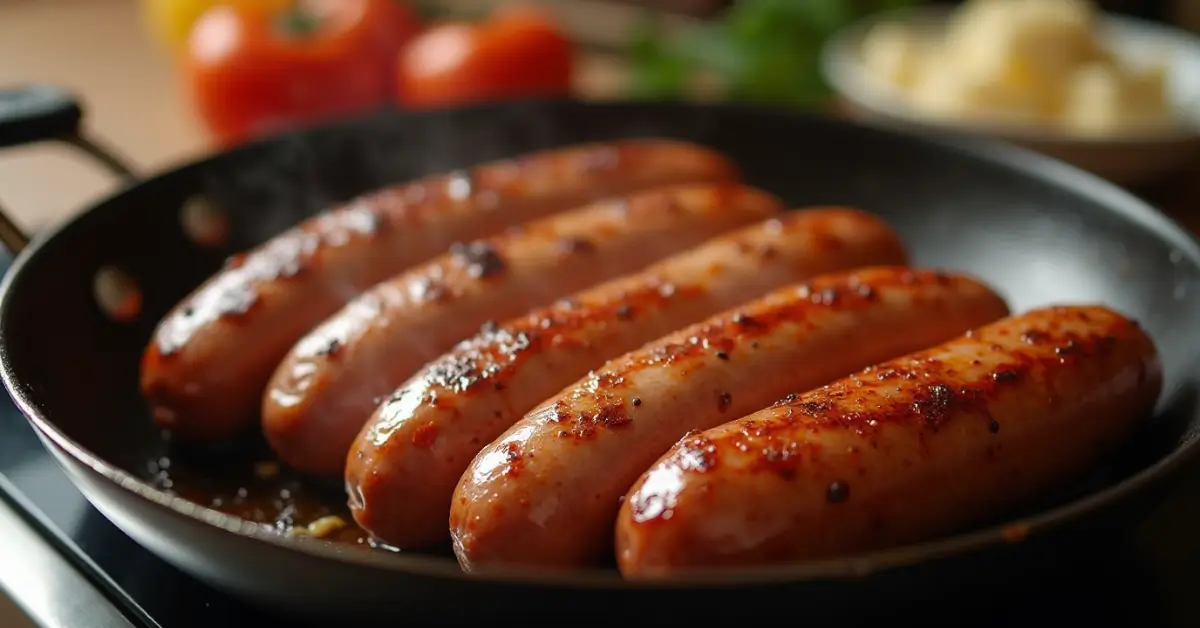
Classic Homemade Beef Sausage
A flavorful, homemade beef sausage recipe that’s perfect for grilling, frying, or stuffing into sausages. Rich in taste and easy to customize with herbs and spices.
🥘Ingredients
- 2 lbs (900g) ground beef (80/20 fat ratio)
- 1 lb (450g) ground pork (optional for extra richness)
- 1 cup (120g) breadcrumbs (or crushed crackers)
- 1 large egg
- 1 tsp salt
- 1 tsp black pepper
- 1 tsp garlic powder
- 1 tsp onion powder
- 1 tsp dried oregano
- 1 tsp dried thyme
- 1/2 tsp smoked paprika
- 1/2 cup (150ml) grated Parmesan cheese (optional)
- 1/2 cup (60ml) cold water
- 1 tbsp olive oil
👨🍳Directions
-
1
Preheat oven to 375°F (190°C) or set up a grill for medium-high heat. -
2
In a food processor, combine ground beef, pork (if using), breadcrumbs, egg, salt, pepper, garlic powder, onion powder, oregano, thyme, smoked paprika, and Parmesan (if using). Pulse until well mixed but still slightly chunky. -
3
Add cold water and olive oil, pulse again to form a sticky, cohesive mixture. -
4
If using casings, thread the mixture into them using a sausage stuffing tool or two forks. Tie off the ends with kitchen twine. -
5
Place sausages on a baking sheet lined with parchment paper. Bake for 40-45 minutes, turning occasionally, until cooked through (internal temp 160°F/71°C). -
6
For grilling, cook sausages over medium-high heat for 10-12 minutes per side, turning occasionally, until browned and cooked through.
🔧Equipment
- Mixing bowl
- Food processor or large mixing bowl
- Measuring cups and spoons
- Sausage casings (large or medium)
- Plastic wrap
- Sausage stuffing tool or two forks
- Paring knife
- Baking sheet or grill
📊Nutrition Facts (per serving)
📝Notes
Tips
- For extra flavor, add 1 tbsp of Worcestershire sauce or a pinch of cayenne pepper to the mixture.
- Store cooked sausages in an airtight container in the fridge for up to 5 days or freeze for up to 3 months.
- Use a meat thermometer to ensure sausages reach an internal temperature of 160°F (71°C) for safety.
Customizations
- Swap pork for chicken or turkey for a lighter version.
- Add finely chopped bell peppers, onions, or mushrooms for extra texture.
Watch Video Of How Classic Homemade Beef Sausage Works
❓ Frequently Asked Questions About Beef Sausage
What is the best way to store homemade beef sausage after cooking?
To store cooked beef sausage properly, let it cool to room temperature, then transfer it to an airtight container or resealable plastic bag. Store in the refrigerator for up to 3–4 days or freeze it for up to 3 months. If freezing, label it with the date to keep track of freshness.
—
Can I use ground beef with different fat percentages for sausage?
Yes, you can adjust the fat percentage, but it affects texture and flavor. 80/20 ground beef (80% lean, 20% fat) is ideal for traditional sausage as it balances juiciness and richness. 90/10 or leaner (e.g., 93/7) may result in a drier sausage, so add extra fat (like lard, pork fat, or butter) or increase the binder (like egg or breadcrumbs) to compensate. For extra tenderness, consider using ground chuck (at least 20% fat).
—
What common mistakes should I avoid when making beef sausage?
1. Overmixing the meat – Use a meat grinder or mixer with a coarse attachment to prevent overworking the meat, which can make the sausage tough.
2. Skipping the binders – Without enough egg, breadcrumbs, or salt, the sausage may crumble. Use 1 egg per 1 lb of meat or ¼ cup breadcrumbs for structure.
3. Not salting properly – Salt should be evenly distributed; add it before grinding if possible, or mix it into the ground meat thoroughly. Salt also helps tenderize.
4. Undercooking or overcooking – Beef sausage should be cooked to 160°F (71°C) internally for safety (especially if it contains pork or poultry). Overcooking dries it out, while undercooking risks foodborne illness.
5. Ignoring the fat cap – If your recipe calls for a fat cap (e.g., for Italian sausage), leave it intact—it adds flavor and keeps the sausage moist.
—
How do I adjust the recipe if I don’t have a meat grinder?
If you don’t have a meat grinder, you can use a food processor (with a pulse setting) or a hand mixer (with a bowl attachment). Pulse the ground beef in short bursts to avoid overmixing. For a coarse texture, pulse until the mixture resembles crumbles; for a smoother sausage, blend until fully combined. If the mixture is too sticky, chill it for 30 minutes before forming patties or links.
—
Can I use spices or herbs other than the typical Italian seasoning for beef sausage?
Absolutely! The classic Italian sausage blend (rosemary, thyme, garlic, black pepper) is versatile, but you can customize it based on preference:
– Smoky flavor: Add smoked paprika, liquid smoke, or a pinch of cayenne.
– Herbal twist: Try fresh cilantro, dill, or sage for a Mediterranean or Southern style.
– Spicy kick: Mix in red pepper flakes, chipotle powder, or a dash of hot sauce.
– Sweet & savory: Add a touch of brown sugar or honey for a BBQ-style sausage.
– Gourmet options: Experiment with cardamom, allspice, or even a pinch of nutmeg for depth.
Just adjust the quantity—start with ½–1 tsp per pound of meat and taste as you go. For smoked sausage, consider adding a small amount of smoked salt or liquid smoke for extra depth.
