
agedashi tofu recipe

The Best agedashi tofu recipe
What really makes this dish special is how it’s versatile. You can make it for a quick weeknight meal, or you can dress it up for a bigger gathering, like a potluck or a family dinner. The health benefits are nice too—it’s packed with protein from the tofu, and the way it’s lightly seasoned keeps it light without being boring. Plus, the dashi gives it that umami depth that makes it feel like a gourmet dish, even if you’re not using fancy ingredients. My husband swears it’s his favorite way to eat tofu, and honestly, I don’t blame him. It’s comforting, it’s easy, and it’s something your whole family can enjoy without feeling like it’s just for “special occasions.”
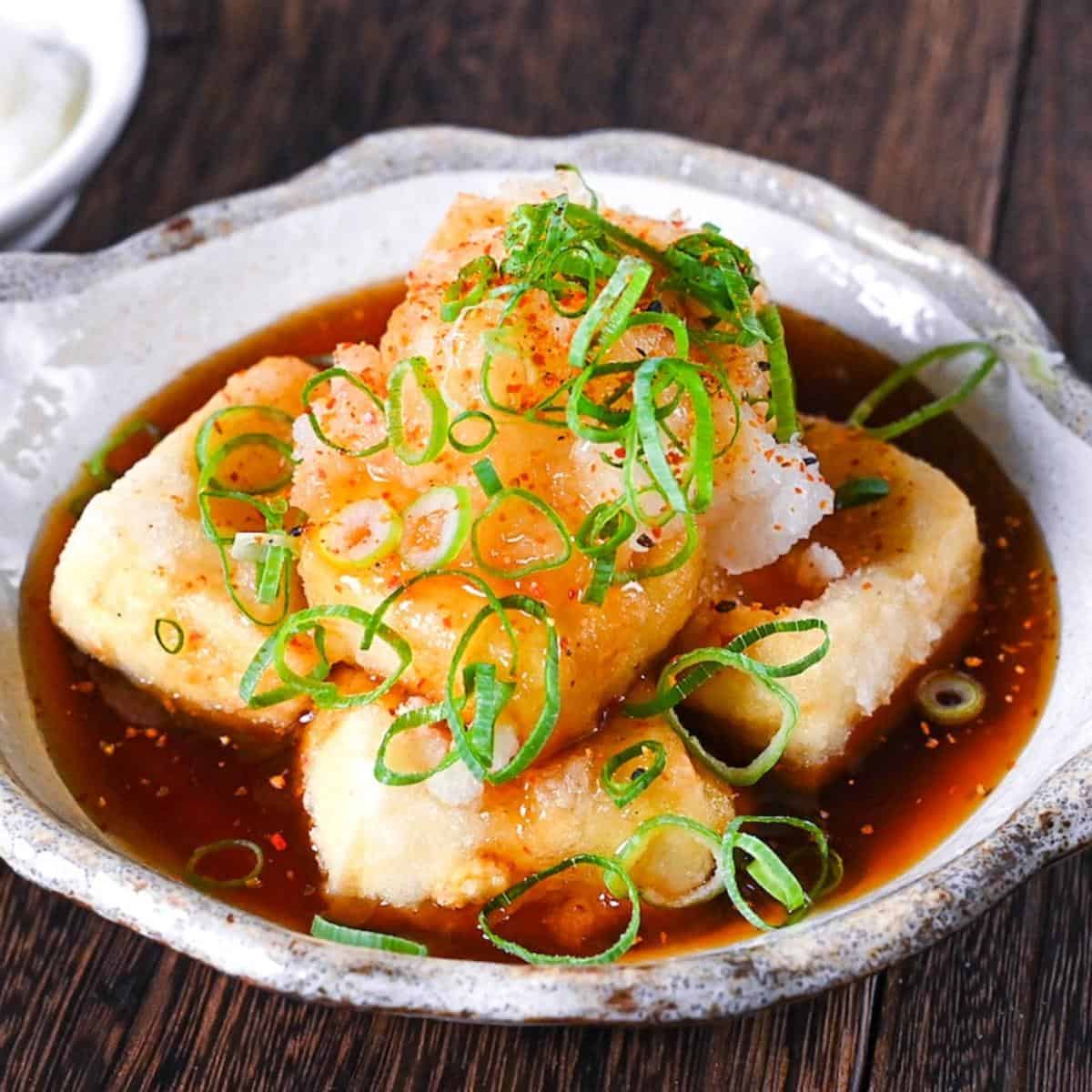
Classic Agedashi Tofu with Vegetables
A delicate and flavorful Japanese dish featuring soft tofu simmered in a light dashi broth with crisp vegetables, served with a savory-sweet sauce. This recipe is a must-try for any occasion.
🥘Ingredients
- 1 block (14 oz) extra-firm tofu, pressed and cubed
- 1 tbsp cornstarch
- 4 cups dashi stock (or kombu + bonito flakes)
- 1 tbsp soy sauce
- 1 tsp mirin
- ½ tsp sugar
- 1 carrot, julienned
- 1 cup shiitake mushrooms, sliced
- 1 cup bok choy, chopped
- 1 small daikon radish, julienned
- 2 tbsp ponzu sauce
- 1 tbsp mirin
- 1 tsp sesame oil
- 1 tsp grated ginger
👨🍳Directions
-
1
Press tofu for 15–20 minutes, then cube and toss with cornstarch. -
2
In a pot, combine dashi stock, soy sauce, mirin, and sugar. Simmer for 5 minutes. -
3
Steam vegetables (carrot, mushrooms, bok choy, daikon) for 3–4 minutes until tender-crisp. -
4
In a separate pan, lightly pan-fry tofu cubes in oil until golden (2–3 mins per side). -
5
In a bowl, mix ponzu, mirin, sesame oil, and ginger. -
6
Divide broth among bowls, top with tofu, vegetables, and drizzle with sauce.
🔧Equipment
- Large pot
- Steamer basket
- Mixing bowls
- Knife and cutting board
- Tongs
📊Nutrition Facts (per serving)
📝Notes
- Use kombu and dried bonito for homemade dashi.
- For extra richness, add a dash of wasabi paste to the sauce.
- Serve with steamed rice.
Watch Video Of How Classic Agedashi Tofu with Vegetables Works
❓ Frequently Asked Questions About Agedashi Tofu with Vegetables
1. What is the difference between agedashi tofu and regular boiled tofu?
Agedashi tofu is a light, crispy, and slightly sweet Japanese dish made by lightly frying cubes of soft tofu in a dashi-based broth and coating them with a sweet-savory bonito-flavored sauce. Unlike regular boiled tofu, which is typically served plain or in soups, agedashi tofu has a distinct texture—it’s crispy on the outside but soft and delicate inside—thanks to the frying process and specific cooking techniques.
—
2. Can I use any type of tofu for agedashi tofu, or does it need to be a specific kind?
For the best results, use silken or soft tofu (like silken tofu or firm but not extra-firm). Regular store-bought tofu (silken, soft, or medium-firm) works well, but avoid extra-firm tofu, as it becomes too dense and loses its delicate texture when fried. If you can’t find silken tofu, slightly undercooked soft tofu (firm but still soft) works too—just drain it well and press it to remove excess water.
—
3. How do I prevent agedashi tofu from becoming greasy or overly oily?
To keep agedashi tofu crispy and not greasy, follow these key steps:
– Press the tofu well (wrap in a clean towel and place a heavy pan on top for 15–20 minutes) to remove excess water.
– Use a neutral oil (like vegetable or canola oil) and cook in a lightly oiled pan—don’t overcrowd the pan, and cook in batches if needed.
– Don’t overcook—the tofu should be golden and crispy but still soft inside. Remove it from the pan as soon as it’s lightly browned.
– Pat dry with paper towels before adding the sauce to avoid a soggy finish.
—
4. What’s the secret to making the bonito-flavored sauce taste authentic?
The sauce is the heart of agedashi tofu! For the best flavor, use these ingredients and techniques:
– Dashi stock (Japanese fish stock) is essential—use a high-quality, dry dashi powder or homemade stock for depth.
– Katsuobushi (bonito flakes) should be fresh and flaky; lightly toast them in a dry pan before adding to the sauce for a smoky aroma.
– Sugar and soy sauce balance the flavors—use mirin (sweet cooking rice wine) and sake for extra umami and sweetness.
– A pinch of salt enhances the taste, but avoid overdoing it. Adjust to taste after cooking.
– Gochujang (Korean chili paste) or shichimi togarashi (Japanese spicy seasoning) can add heat if you prefer it, but traditional agedashi is mild.
—
5. Can I make agedashi tofu ahead of time, and how should I store it?
Yes, you can prep agedashi tofu in advance, but the texture changes slightly:
– Fry and cool the tofu immediately after cooking to preserve crispiness. Store in an airtight container in the fridge for 1–2 days.
– Reheat gently in a pan with a little oil or dashi broth to restore crispiness. Avoid microwaving, as it can make the tofu soggy.
– For longer storage, freeze the tofu (uncooked) for up to 3 months, then fry fresh when needed—it’ll be less crispy but still tasty.
– Best served fresh if possible, as the crispy texture fades over time.

