
baked custard recipe

The Best baked custard recipe
This recipe is perfect for so many reasons. It’s versatile—you can serve it at a casual family dinner or dress it up for a special occasion like a birthday or holiday gathering. My husband loves it when we make it for Sunday brunch, and my kids swear by it for their after-school snack. The way it holds its shape but still melts slightly in your mouth? That’s the magic. And let’s not forget the health benefits—it’s got a good amount of protein from the eggs and a touch of sweetness that doesn’t spike blood sugar like some other desserts. It’s not just tasty; it’s balanced, too. Plus, it’s easy to customize—add a little cinnamon, a dash of vanilla, or even some berries for a lighter twist. My kids and I like to make it with a hint of lemon for a bright, zesty flavor, and it’s always a hit. It’s that kind of recipe that feels like home, no matter how you serve it.
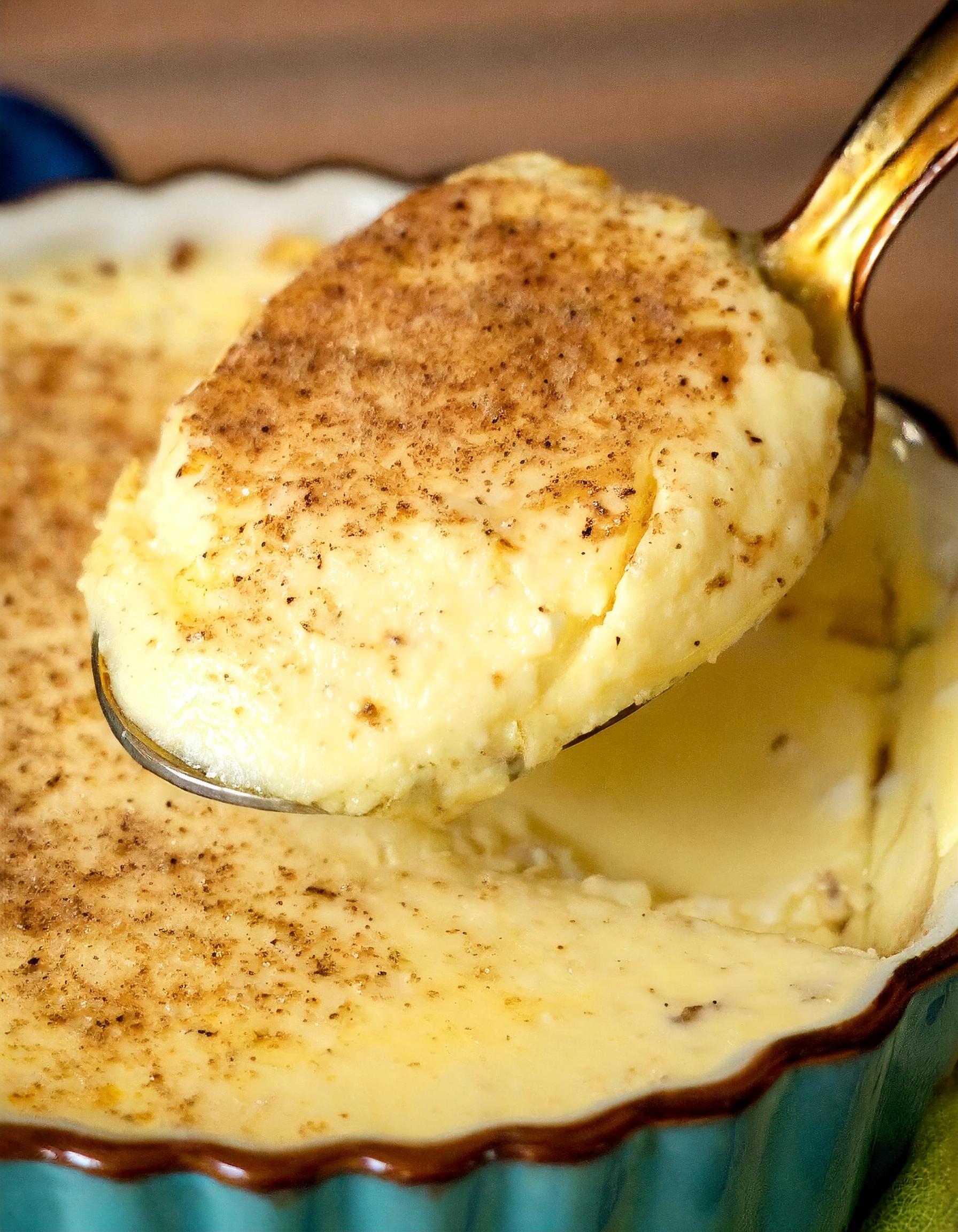
Classic Baked Custard
A creamy, comforting baked custard perfect for breakfast or dessert. Rich, velvety, and lightly sweetened, it’s ideal for soaking up fruit or served on its own.
🥘Ingredients
- 4 large eggs
- 1 cup whole milk
- 1/2 cup granulated sugar
- 1 tsp vanilla extract
- 1/2 tsp salt
- 1/2 cup heavy cream (optional)
- 1/2 cup powdered sugar
- 1 tbsp unsalted butter
- 1 tsp vanilla extract
- 1/2 cup mixed berries (e.g., strawberries, blueberries)
👨🍳Directions
-
1
Preheat oven to 350°F (175°C). Grease a 9-inch round baking dish lightly with butter or oil. -
2
In a medium bowl, whisk together eggs, milk, sugar, vanilla, salt, and heavy cream (if using) until smooth. -
3
Pour the custard mixture into the prepared baking dish and smooth the top with a spatula. -
4
Bake for 35–40 minutes, or until the custard is set but still slightly jiggly in the center. Let cool for 10 minutes before serving. -
5
For the topping, mix powdered sugar, butter, and vanilla until smooth. Stir in berries. Spread over the cooled custard before serving. -
undefined
undefined -
undefined
undefined -
undefined
undefined -
undefined
undefined
🔧Equipment
- Mixing bowls
- Whisk
- 9-inch round baking dish
- Rubber spatula
- Oven
📊Nutrition Facts (per serving)
📝Notes
- For extra richness, add ¼ cup heavy cream to the custard mixture.
- Let custard cool slightly before serving to avoid a runny texture.
- Store leftovers in the fridge for up to 3 days; reheat gently before serving.
Watch Video Of How Classic Baked Custard Works
❓ Frequently Asked Questions About Baked Custard
What is the best way to prevent custard from curdling when baking?
To prevent custard from curdling, ensure the eggs and milk are at room temperature before mixing. Whisk them together gently, and avoid overmixing. Be careful not to overheat the mixture by keeping the oven temperature low (around 325°F/160°C) and using a water bath (bain-marie) by placing the custard dish in a larger pan filled with hot (not boiling) water. Stirring occasionally helps maintain a smooth texture.
Why does my baked custard turn out grainy or lumpy instead of silky smooth?
Grainy or lumpy custard often results from overmixing, undercooking, or using cold ingredients. Make sure to gently fold the eggs and milk together without overbeating them. If the mixture is too thick, it may not cook evenly. For a smoother texture, strain the mixture through a fine-mesh sieve after combining the wet and dry ingredients. Also, ensure the oven isn’t too hot—low and slow is key.
Can I substitute any ingredients in the classic baked custard recipe?
Yes, you can make adjustments, but keep the ratio of liquid to thickener balanced. Common swaps include:
– Milk → Almond milk, coconut milk, or half-and-half (for creamier texture).
– Eggs → Use a mix of eggs and aquafaba (chickpea brine) for a vegan option, but adjust cooking time.
– Vanilla → Add a splash of vanilla extract or use flavored syrups (like caramel or coffee).
– Sweetener → Replace sugar with honey, maple syrup, or agave (reduce liquid slightly if needed).
Avoid substituting thickeners like cornstarch or flour unless you adjust the baking time.
How long should I bake the custard, and how do I know it’s done?
Baking time varies by recipe but typically ranges from 45 to 60 minutes at 325°F (160°C). To check doneness, insert a knife or toothpick into the center—it should come out clean or with a few loose strands. The custard should be set but still slightly jiggly. Overbaking can make it dry, so start checking around the lower end of the time range.
What should I do if my baked custard doesn’t set properly?
If the custard remains runny, it may need more time or a lower temperature. Try these fixes:
– Extend baking time by 5–10 minutes (check at 5-minute intervals).
– Lower the oven temperature slightly (e.g., 300°F/150°C) to allow even cooking.
– Add a pinch of cream of tartar to the eggs—it helps stabilize the mixture.
– Stir gently every 5 minutes to prevent scorching.
If it’s still undercooked, let it sit covered at room temperature for 10–15 minutes before serving (it’ll thicken slightly as it cools).
