
chimichurri recipe cilantro

The Best chimichurri recipe cilantro
What really sells this recipe for me is how healthy it is. No processed ingredients, no weird additives—just fresh herbs, garlic, red wine vinegar, and olive oil. It’s packed with antioxidants from the cilantro and parsley, and the garlic gives a natural boost to your immune system. Plus, it’s so light yet bold, it doesn’t overpower anything. My husband’s been eating it straight from the jar with his salads for weeks now, and I swear he’s eating better than ever. It’s the kind of dish that feels like a treat but is actually good for you. And honestly? It’s the perfect thing to make when you’re hosting or just want to impress someone without the fuss. A little jar goes a long way, and it’s always ready to elevate whatever you’re serving.
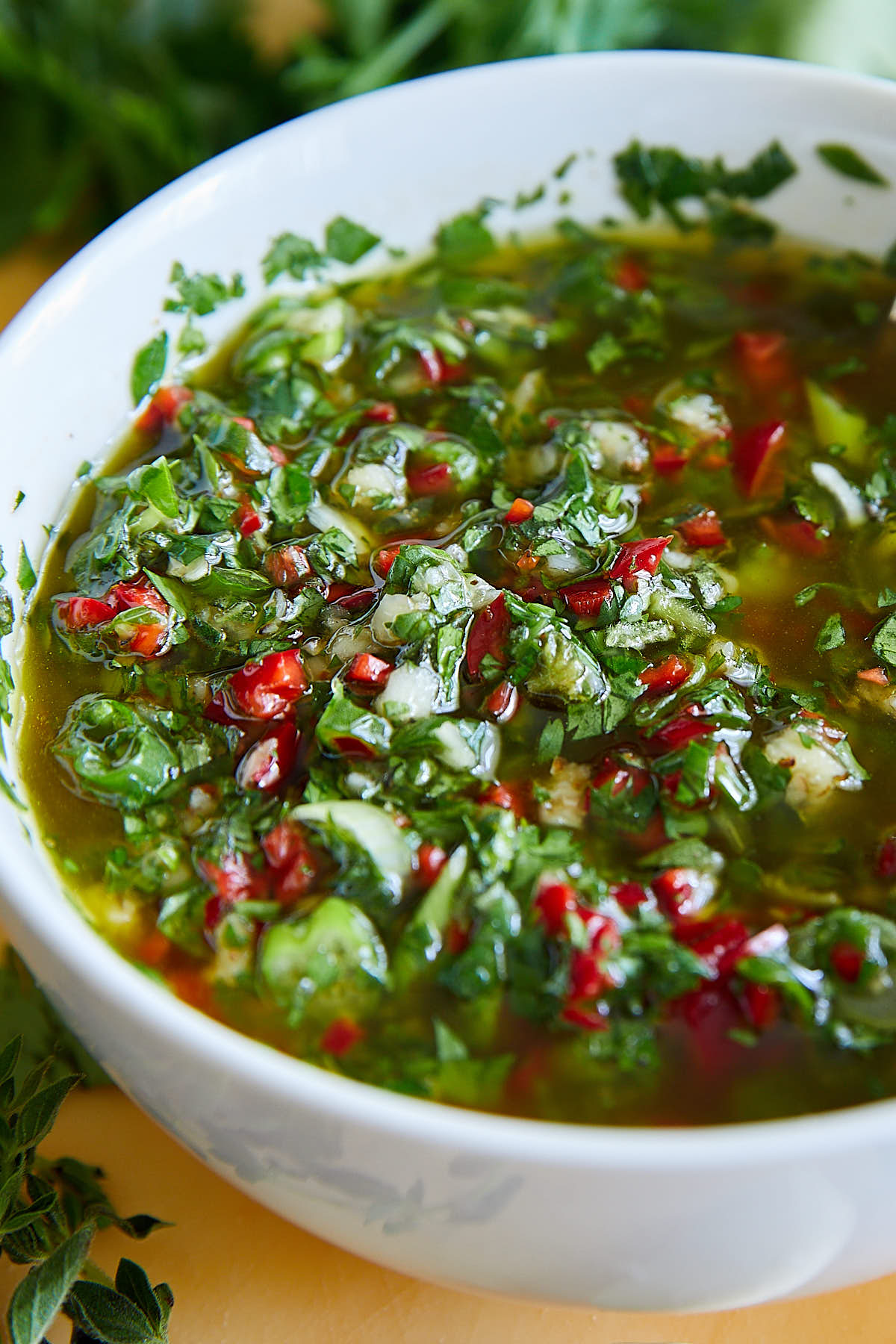
Classic Argentine Chimichurri
A vibrant, herby Argentine sauce made with parsley, garlic, red wine vinegar, and olive oil, perfect for grilling meats, fish, or pasta. This recipe is a must-try for any occasion.
🥘Ingredients
- 2 cups fresh parsley leaves (stems removed)
- 4 cloves garlic, finely chopped
- ¼ cup red wine vinegar
- ¼ cup extra-virgin olive oil
- 1 tsp red pepper flakes (optional)
- Salt and black pepper to taste
👨🍳Directions
-
1
In a food processor, combine parsley, garlic, red wine vinegar, olive oil, red pepper flakes, salt, and black pepper. Pulse until finely chopped. -
2
Transfer the chimichurri to a large bowl and whisk to combine evenly. -
3
Adjust seasoning with salt and pepper if needed. Chimichurri can be stored in an airtight container in the refrigerator for up to 5 days.
🔧Equipment
- Food processor or mortar and pestle
- Large bowl
- Whisk
📊Nutrition Facts (per serving)
📝Notes
Tips
- For a deeper flavor, add a splash of cold water or broth while blending.
- Use fresh ingredients for the best taste. If parsley is unavailable, substitute with cilantro or dill.
- Chimichurri pairs beautifully with grilled steak, chicken, lamb, or even seafood.
Variations
- Add 1 tbsp capers and a pinch of oregano for a Mediterranean twist.
- For a smoky version, mix in 1 tsp smoked paprika.
Watch Video Of How Classic Argentine Chimichurri Works
❓ Frequently Asked Questions About Argentine Chimichurri
What is the difference between chimichurri and cilantro-based chimichurri?
Chimichurri is traditionally made with parsley, garlic, red pepper flakes, vinegar, and oil, giving it a fresh, herby flavor. A cilantro-based chimichurri is less common but can include cilantro (coriander) leaves instead of parsley, often blended with garlic, lime juice, and a touch of olive oil. The taste will be more citrusy and slightly anise-like due to cilantro.
Can I substitute cilantro for parsley in a classic chimichurri recipe?
While possible, cilantro won’t replicate the classic chimichurri’s bright, grassy flavor. If you want a cilantro twist, focus on a lighter, fresher blend with more lime juice and a smaller garlic-to-leaf ratio. For a true chimichurri, parsley remains the best traditional choice.
How do I store cilantro chimichurri properly to keep it fresh?
Store cilantro chimichurri in an airtight container in the fridge for up to 3 days. To prevent wilting, press the leaves slightly before sealing. For longer storage, freeze portions in ice cube trays (with a little oil) for up to 3 months. Thaw before using.
What’s the best way to use cilantro chimichurri on grilled meats?
For a bold, citrusy kick, drizzle cilantro chimichurri over grilled steaks, chicken, or shrimp after cooking. Toss it with grilled vegetables like zucchini or bell peppers. It also works well as a marinade for lamb or pork chops—just let it sit for 15–30 minutes before grilling.
Can I make cilantro chimichurri without garlic?
Yes, but the flavor will be milder. If omitting garlic, balance it with extra lime juice or a pinch of smoked paprika for depth. For a more pronounced taste, consider adding a tiny bit of chili powder or a splash of vinegar to enhance brightness. Traditional chimichurri relies on garlic, so this version will differ significantly.


