
pan seared ahi tuna recipe


The Best pan seared ahi tuna recipe
I started making pan seared ahi tuna on nights when I wanted something that tasted like a restaurant dinner without the restaurant wait. From the time the pan gets hot to the time it hits the plate, you are looking at maybe 10 minutes, and most of that is just paying attention so the crust sets instead of steaming. My husband asks for it now, and my kids eat it sliced thin over rice without complaints, which is saying something in this house.
This is one of those recipes that works on a regular Tuesday and also works when we have people over, because the tuna does its thing fast and the rest of the plate can be whatever you already have on hand. I usually do rice and something green, and I let people sauce their own. It also taught me to stop being scared of cooking fish at home. Get the pan hot, pat the tuna dry, season it well, and leave it alone for a couple of minutes per side.
Tuna is lean protein and a real source of omega-3 fats, and it is a light meal that still keeps me full until morning, which is not true of every dinner I make. It is also low in fat compared to a lot of the meat I cook, so I feel good serving it to my kids and to my parents when they visit. The main thing is to buy good tuna and not overcook it, because a well-cooked ahi turns gray and dry fast and then nobody at the table is happy.
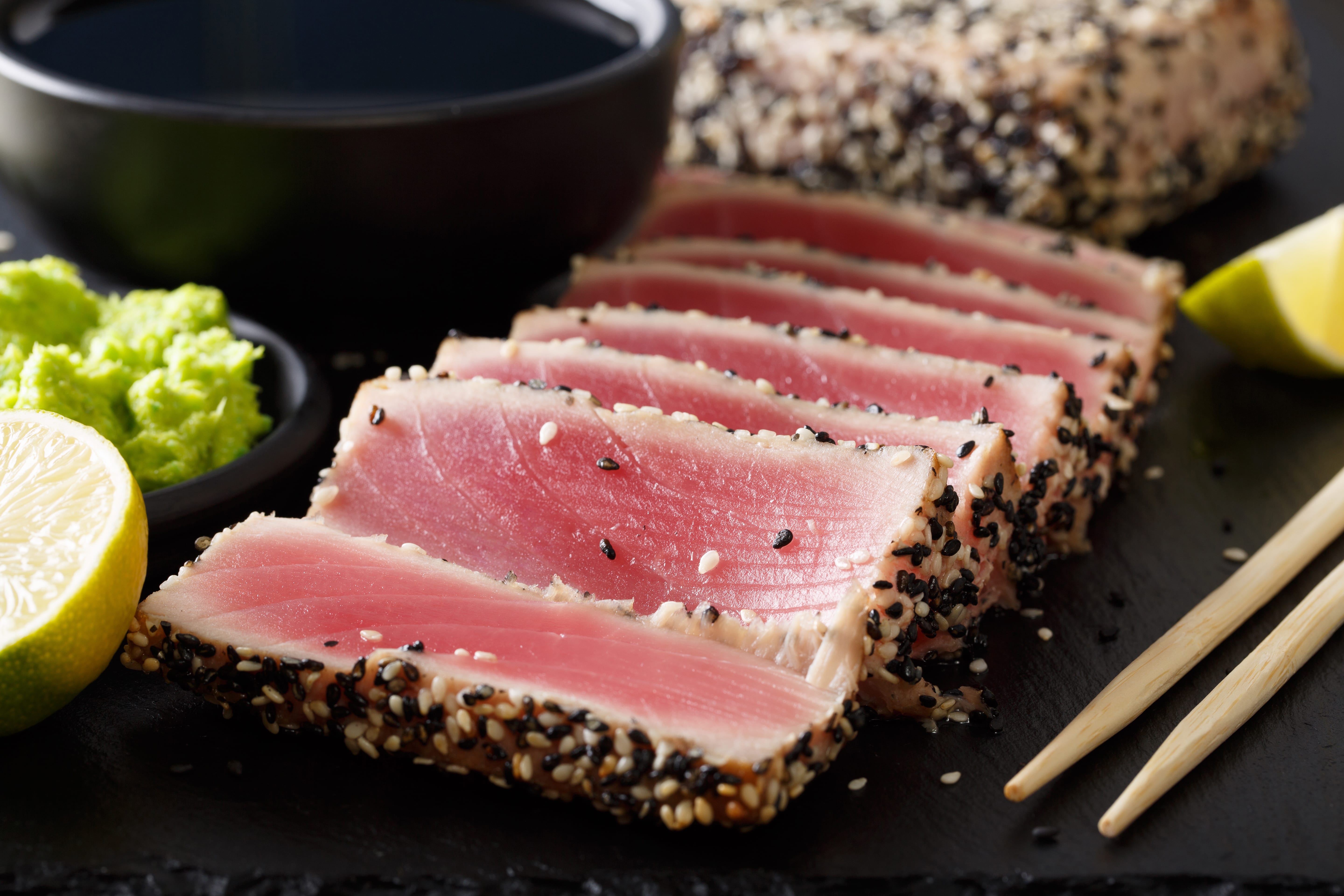
Pan Seared Ahi Tuna with Sesame Crust
A quick, restaurant-style ahi tuna dish with a toasted sesame crust and a bright ginger-soy dipping sauce. The tuna is seared hard and fast so the center stays rare and silky.
🥘Ingredients
For the Tuna
For the Sesame Crust
For the Dipping Sauce
For Serving
👨🍳Directions
🔧Equipment
📊Nutrition Facts (per serving)
📝Notes
Watch Video Of How Pan Seared Ahi Tuna with Sesame Crust Works
Pan seared ahi tuna is one of those recipes I keep coming back to because it looks impressive but takes barely any time, and everyone at the table gets a perfectly cooked piece. It works just as well for a quick weeknight dinner as it does for a family gathering where I want something special without spending all day in the kitchen. Give it a try and it will probably earn a regular spot in your rotation too.
❓ Frequently Asked Questions About Pan Seared Ahi Tuna with Sesame Crust
1. What kind of tuna should I buy for pan searing?
Look for sashimi-grade or sushi-grade ahi tuna, usually labeled yellowfin or bigeye. The grade matters because the center stays rare, so the fish needs to be safe to eat raw. Frozen tuna that has been properly thawed works well too, as long as the package states it is suitable for raw consumption. Skip canned tuna and any fish that looks dull, brown, or smells strong.
2. How do I keep the tuna from drying out?
Cook it hot and fast. Get your pan smoking hot, sear each side for 60 to 90 seconds, and pull the fish while the middle is still pink. Tuna is lean and turns chalky once it cooks past medium-rare. Letting it rest a couple of minutes off the heat finishes the carryover cooking without pushing it over.
3. Can I use frozen tuna, and how should I thaw it?
Yes, and thawing it slowly is the key. Move the fish to the refrigerator the night before and let it come down to temperature on its own. A quick water thaw can leave the outside mushy before the center gives way. Pat it completely dry before seasoning, since surface moisture is the enemy of a good crust.
4. What should the inside of the tuna look like when it is done?
The exterior should be browned and slightly firm, and the center should still be translucent pink to deep red, depending on how thick your steak is. If you slice into it and the middle is opaque all the way through, it went too far. A thin band of gray between the crust and the pink center is normal.
5. What can I serve with pan seared ahi tuna?
Keep sides light so the fish stays the focus. Steamed rice, a crisp cucumber salad, charred scallions, or a simple slaw all work. A dipping sauce of soy, sesame oil, and a squeeze of lime is enough, and a ponzu or ginger-soy dressing adds brightness without masking the tuna.
