
pastina soup recipe

- The Best pastina soup recipe
- Traditional Italian Pastina Soup (Pasta alla Pizzoccherina)
- 🥘Ingredients
- 👨🍳Directions
- 🔧Equipment
- 📊Nutrition Facts (per serving)
- 📝Notes
- Watch Video Of How Traditional Italian Pastina Soup (Pasta alla Pizzoccherina) Works
- ❓ Frequently Asked Questions About Italian Pastina Soup (Pasta alla Pizzoccherina)
The Best pastina soup recipe
What I love most about this recipe is how versatile it is. It’s perfect for everyday meals because it’s easy to make ahead and reheats beautifully, but it also shines during special occasions—like holidays or family dinners—because it feels festive and hearty. Plus, it’s packed with nutrients. The pasta itself is a great source of fiber and protein, and the broth is usually made with vegetables and herbs, giving it a deep, savory flavor without being heavy. It’s a way to eat well without feeling like you’re sacrificing taste. My husband and I have even made it for potlucks, and people always ask for the recipe because it’s so simple yet impressive. It’s that kind of comfort food that doesn’t require a lot of fuss, but still leaves everyone satisfied and happy.
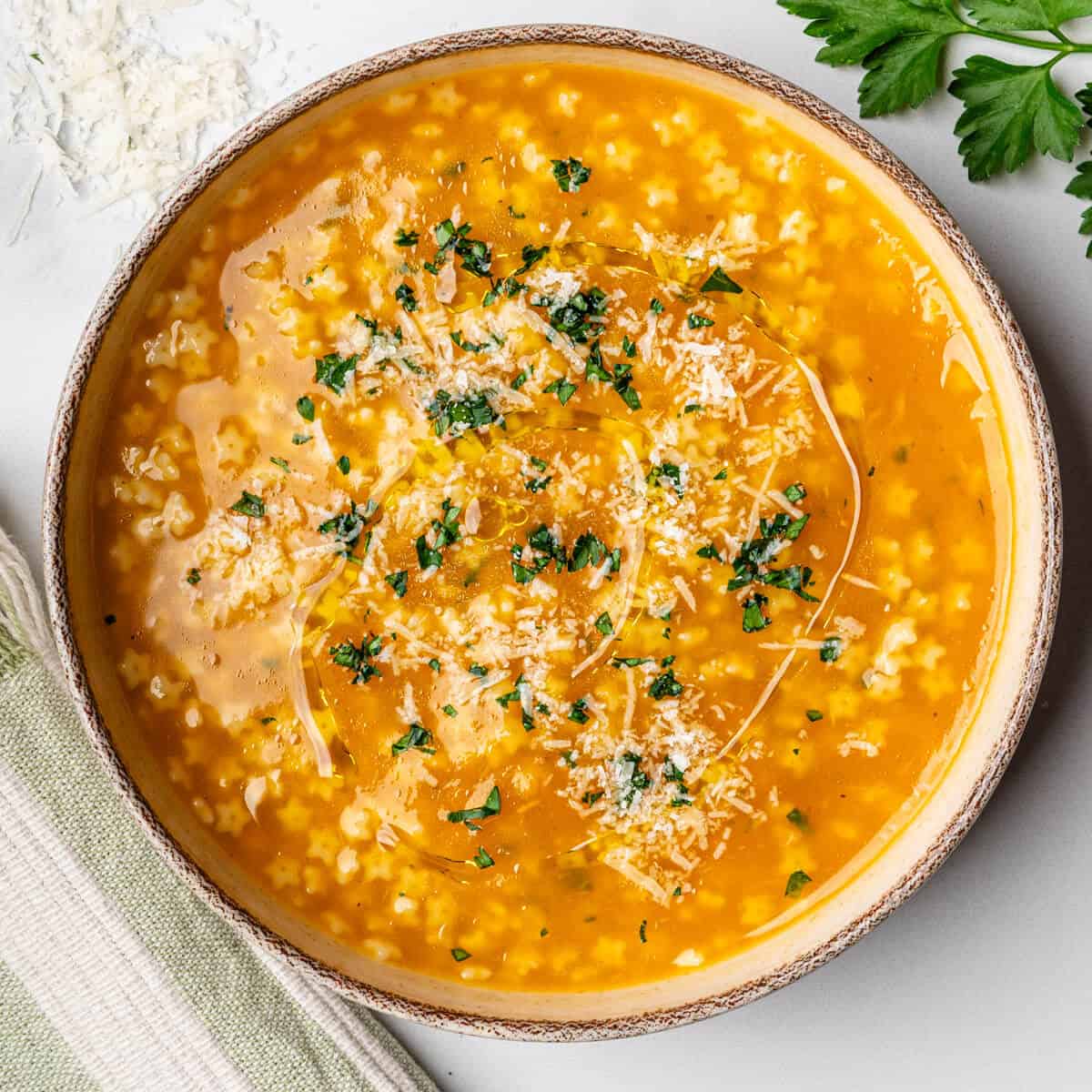
Traditional Italian Pastina Soup (Pasta alla Pizzoccherina)
A comforting Italian soup made with tiny pasta shapes called pastina, simmered in a rich tomato-based broth. Perfect for cold days, this dish is both hearty and simple.
🥘Ingredients
- 1 cup (120g) all-purpose flour
- 1/2 tsp salt
- 1/4 cup (60ml) cold water
- 4 cups (1L) vegetable or chicken broth
- 1 cup (240ml) canned crushed tomatoes
- 2 cloves garlic, minced
- 1 small carrot, finely diced
- 1 small celery stalk, finely diced
- 1/2 tsp red pepper flakes (optional)
- 1 bay leaf
- Fresh basil leaves
- Grated Parmesan cheese
- Extra virgin olive oil
👨🍳Directions
-
1
Preheat oven to 375°F (190°C). In a bowl, mix flour and salt. Gradually add cold water, kneading until a soft dough forms. Divide into 4 equal portions and flatten each into small discs. -
2
Roll each disc into a thin, flat circle (about 2 inches wide). Cut into small triangles or diamond shapes (traditional pastina size). Place on a baking sheet and bake for 10-12 minutes until lightly golden. -
3
In a large pot, heat broth until warm. Add crushed tomatoes, garlic, carrot, celery, red pepper flakes, and bay leaf. Simmer for 10 minutes. -
4
Remove bay leaf. Add baked pastina to the broth and simmer for 5-7 minutes until pasta is tender but still slightly al dente. -
5
Discard baked pastina if desired, or keep for garnish. Ladle soup into bowls, garnish with fresh basil, grated Parmesan, and drizzle with olive oil.
🔧Equipment
- Mixing bowls
- Rolling pin (or kitchen tool for dough rolling)
- Fine-mesh sieve
- Large pot
- Slotted spoon
- Wooden spoon
📊Nutrition Facts (per serving)
📝Notes
- For extra flavor, add a splash of white wine while simmering the broth.
- Use a fine-mesh sieve to strain out any large vegetables if preferred.
- Substitute whole wheat flour for a gluten-free option (adjust water slightly for consistency).
- Serve with a side of crusty bread to soak up the broth.
Watch Video Of How Traditional Italian Pastina Soup (Pasta alla Pizzoccherina) Works
❓ Frequently Asked Questions About Italian Pastina Soup (Pasta alla Pizzoccherina)
What is the origin of pastina soup and why is it traditionally made with chickpea flour?
Pastina soup, also known as “soup of the poor,” originates from Northern Italy, particularly regions like Lombardy and Veneto. Traditionally, it was made with chickpea flour (farina di ceci) because it was a cheap and accessible ingredient for working-class families. The flour’s fine texture mimics that of semolina, which was often reserved for richer families. The soup became a symbol of simplicity and resourcefulness, especially during times of scarcity.
—
How do I know if my chickpea flour is suitable for making pastina soup?
Chickpea flour (farina di ceci) should be fine, powdery, and free of lumps. It should have a neutral to slightly earthy taste without strong odors. For best results, use a high-quality, unbleached chickpea flour that hasn’t been processed too finely—some brands may have a slightly coarser texture, which can still work if blended well. Avoid flour with added salt or preservatives, as they can alter the flavor.
—
Can I substitute chickpea flour with another type of flour in pastina soup, and if so, what are the best alternatives?
While chickpea flour is traditional, you can experiment with other fine, neutral-flavored flours for a slightly different texture. The best substitutes include:
– Semolina flour (for a closer match to traditional pastina, but it may require extra blending).
– Cornmeal (for a slightly gritty, rustic texture, though it’s less common in classic recipes).
– All-purpose flour (blended finely, but it may lack the nutty depth of chickpea flour).
For the best results, ensure the flour is very finely ground to mimic the fine consistency of chickpea flour.
—
How do I ensure the pasta in pastina soup doesn’t turn mushy or stick together?
To avoid a mushy or clumpy texture, follow these key steps:
1. Cook the pasta separately—boil chickpea flour (or semolina) in a separate pot until it forms a thin, creamy paste (like a roux). Stir frequently to prevent burning.
2. Add the broth gradually—once the paste is set, slowly whisk in the hot vegetable or chicken broth (about 1:2 ratio of flour to liquid) to create a smooth, velvety consistency. Avoid adding too much at once to prevent lumps.
3. Use a fine-mesh strainer—if the soup clumps, strain it through a fine sieve to remove any lumps before serving.
4. Cook low and slow—simmer gently to let flavors meld without breaking down the pasta’s structure. A light, airy texture is ideal.
—
What are the best broths to use in pastina soup, and how do I make a rich, flavorful one?
The best broths for pastina soup are simple, aromatic, and rich in flavor without overpowering the delicate texture of the pasta. Traditional options include:
– Vegetable broth (with carrots, celery, onions, and garlic—simmered for 30–45 minutes for depth).
– Chicken or turkey broth (for a heartier, protein-rich base).
– White fish or seafood stock (if using seafood-based pastina, like “pesce pastina”).
For a rich, homemade broth:
1. Sauté aromatics—fry onions, garlic, carrots, celery, and parsley in olive oil until soft.
2. Deglaze with wine—add a splash of dry white wine (like Pinot Grigio) to release flavors.
3. Simmer with herbs—include bay leaves, thyme, or a sprig of rosemary for depth.
4. Reduce slightly—let the broth reduce by half to intensify flavors before using it in the soup.
Avoid overly salty or seasoned broths, as the chickpea flour’s mild taste should shine.

