
pesto recipe with walnuts

The Best pesto recipe with walnuts
What I love most about this pesto is how easy it is to customize. If you want it extra creamy, you can add a little olive oil or even a splash of milk. My kids like it sweeter, so sometimes I toss in a little honey or maple syrup, and it still tastes great. It’s perfect for meal prep too—make a big batch and store it in the fridge for a few days, and you’ll always have a quick fix when you’re hungry. It’s also great for leftovers, whether you’re using it in a frittata, on a grain bowl, or even as a dip for veggies. The kids and I love how it makes everything feel fresh and flavorful, and honestly, it’s one of those recipes that proves you don’t need fancy ingredients to make something taste amazing. Plus, it’s a great way to use up walnuts if you have a batch on hand—nothing beats that fresh, earthy taste in your food.
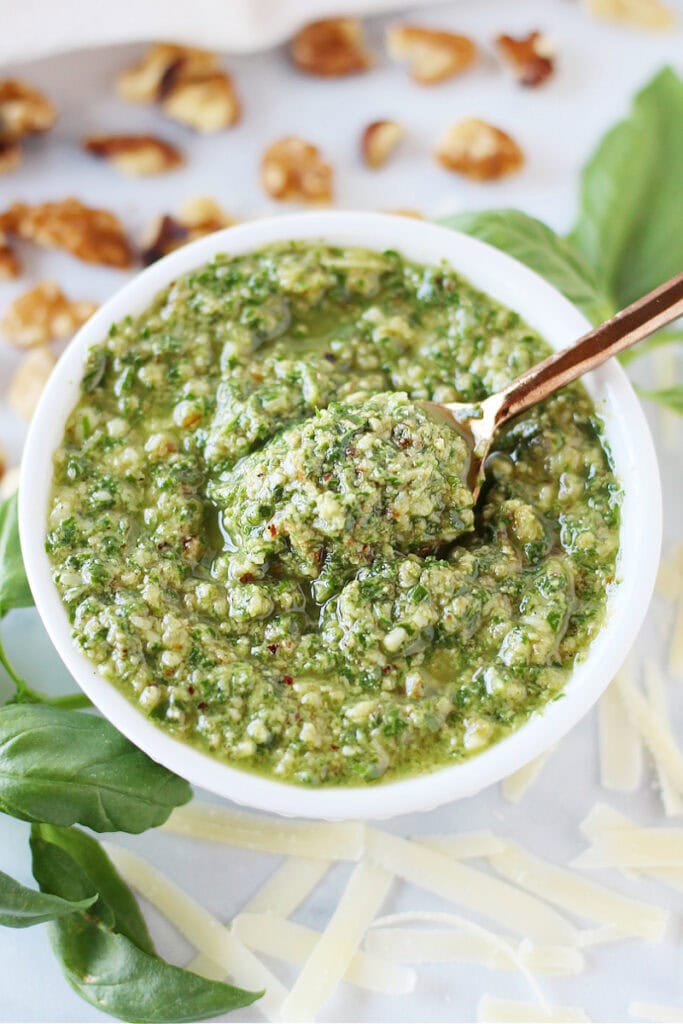
Walnuts and Basil Pesto with Walnut Pasta
A rich, nutty pesto made with walnuts, fresh basil, garlic, and Parmesan, paired with walnut-infused pasta for a protein-packed, Mediterranean-inspired dish. This recipe is a must-try for any occasion.
🥘Ingredients
- 1 cup (120g) walnuts, toasted
- 2 cups (30g) fresh basil leaves
- 1/2 cup (50g) grated Parmesan cheese
- 3 cloves garlic
- 1/4 cup (60ml) extra-virgin olive oil
- 1/2 tsp salt
- 1/4 tsp black pepper
- 12 oz (340g) whole wheat or chickpea pasta
- 1/2 cup (50g) walnuts, toasted
- 1/2 cup (120ml) olive oil
- 1/4 cup (50g) grated Parmesan cheese
- 1/2 tsp red pepper flakes (optional)
👨🍳Directions
-
1
Toast the walnuts in a dry skillet over medium heat for 3–5 minutes until golden. Let cool. -
2
Cook the pasta according to package instructions until al dente. Reserve 1/2 cup of pasta water before draining. -
3
In a food processor, pulse the toasted walnuts, basil leaves, Parmesan, garlic, salt, and pepper until finely chopped. Slowly drizzle in olive oil while processing until smooth. -
4
In a large bowl, toss the drained pasta with reserved pasta water, 2 tablespoons of walnut pesto, olive oil, and red pepper flakes (if using). Mix well. -
5
Transfer the pasta to a serving bowl, top with remaining walnut pesto, and sprinkle with additional Parmesan cheese.
🔧Equipment
- Food processor or blender
- Large mixing bowl
- Kitchen shears
- Cooking pot
- Serving bowls
📊Nutrition Facts (per serving)
📝Notes
- For extra flavor, add a splash of balsamic vinegar to the pesto.
- Use a mix of walnuts and pine nuts for a different nutty twist.
- Store pesto in an airtight container in the fridge for up to 5 days or freeze for longer storage.
Watch Video Of How Walnuts and Basil Pesto with Walnut Pasta Works
❓ Frequently Asked Questions About Walnuts and Basil Pesto with Walnut Pasta
1. What is the best way to prepare fresh basil for pesto with walnuts?
To prepare fresh basil for walnut pesto, gently wash the leaves under cold water to remove any dirt. Pat them dry with a clean towel or paper towels, then chop them finely with a sharp knife or using a food processor. For best texture, leave some stems intact to help stabilize the leaves. Avoid over-washing or soaking the basil, as it can make the pesto watery.
2. Can I substitute walnuts for another type of nut in this pesto recipe?
Yes, you can substitute walnuts with other nuts like pine nuts, almonds, pecans, or hazelnuts. Pine nuts give a slightly sweeter, more delicate flavor, while almonds and pecans add a richer, slightly earthier taste. Hazelnuts are a classic choice for a classic pesto. Just ensure you use a similar amount (about ¼ cup per serving) and adjust the oil gradually if needed for consistency.
3. Why does my walnut pesto turn out too runny or too thick?
A runny pesto can happen if you overprocess the ingredients or add too much oil. To fix it, let the pesto sit for 15–30 minutes before serving—it will naturally thicken as the oils emulsify. If it’s still too thin, reduce the oil by 1–2 tablespoons and re-emulsify by whisking vigorously. For a thicker texture, use slightly less oil (start with ½ cup) and let it sit longer before blending.
4. How should I store walnut pesto to maintain its freshness?
Walnut pesto keeps best when stored properly. Transfer the pesto to an airtight container and refrigerate within 2 hours of making it. It will stay fresh for about 5–7 days. For longer storage (up to 3 months), freeze portions in ice cube trays or small containers, then transfer to a freezer bag. Thaw in the fridge before using.
5. What are some creative ways to use walnut pesto besides on pasta?
Beyond pasta, walnut pesto is versatile! Use it as a dip for veggies, spread on sandwiches or toast, or toss with grilled chicken, fish, or roasted vegetables like zucchini or eggplant. It works well in salads (mixed with greens and cherry tomatoes), as a marinade for meats, or even as a topping for pizza or flatbread. For a savory twist, blend it into soups or use it as a base for dips like bruschetta or hummus.


