
pickled daikon recipe

The Best pickled daikon recipe
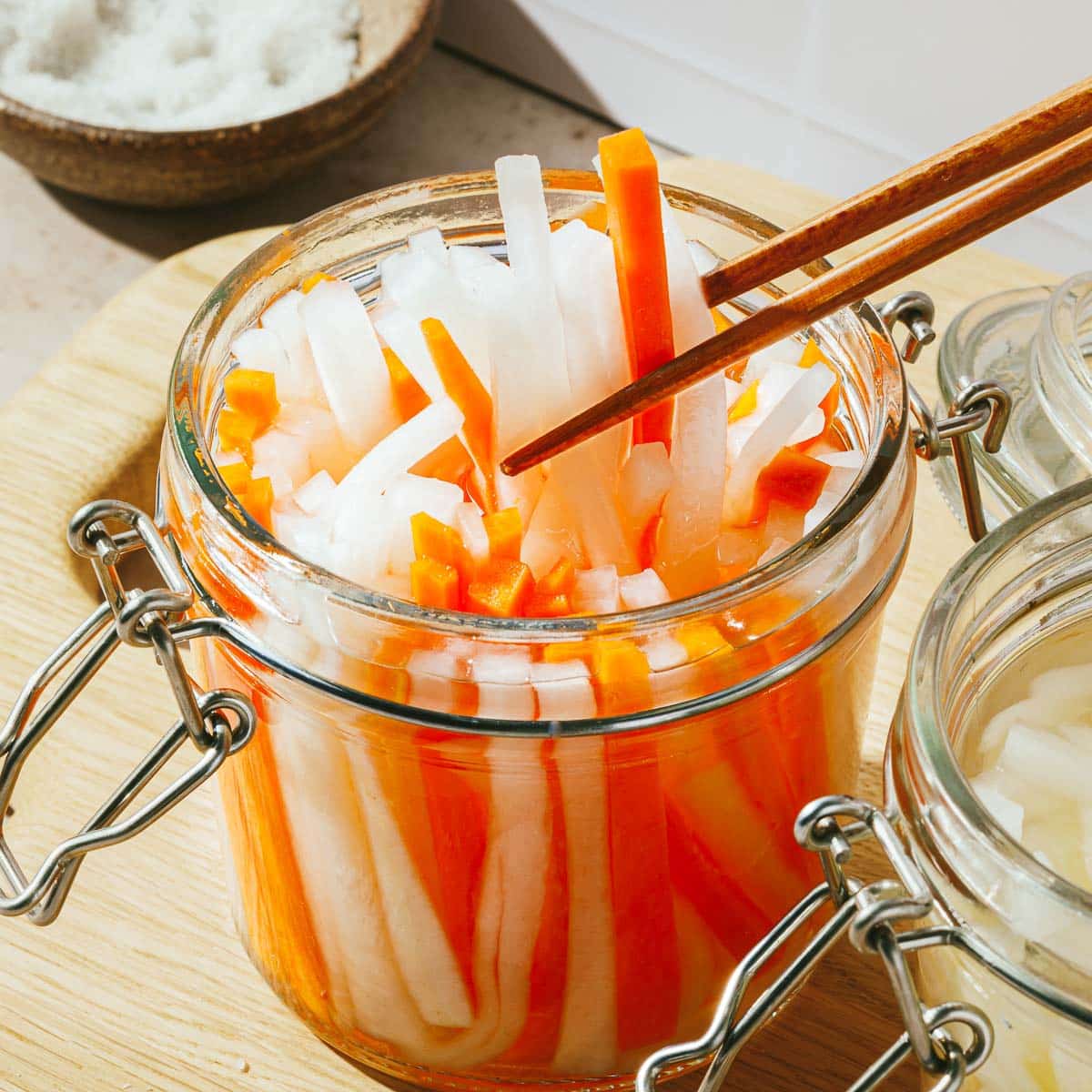
Japanese-Style Pickled Daikon (Tsukemono)
A refreshing and tangy Japanese pickled daikon radish that adds a zesty crunch to salads, sushi rolls, or as a side dish. The fermented flavor pairs beautifully with grilled fish or rice bowls.
🥘Ingredients
- 1 large daikon radish, thinly sliced (about 2 lbs)
- 1 cup rice vinegar
- 1 cup water
- 1 tbsp sugar
- 1 tsp salt
- 1 tsp salted bonito flakes (optional)
- 1 tsp grated ginger
- 1 tbsp sesame seeds
- 1 tbsp chopped green onions
- 1 tsp toasted sesame oil
👨🍳Directions
-
1
Wash the daikon radish thoroughly under cold water. Cut off the root end and the top green leaves. Slice the daikon into thin, even matchsticks (about 1/8-inch thick). -
2
In a mixing bowl, combine rice vinegar, water, sugar, and salt. Stir until the sugar and salt dissolve completely to form a syrup-like solution. -
3
Place the sliced daikon in a clean glass jar or container. Pour the vinegar solution over the daikon, ensuring it is fully submerged. Add salted bonito flakes and grated ginger if using. -
4
Seal the jar tightly and let it sit at room temperature for at least 12 hours (or up to 24 hours for stronger flavor). For a quicker version, refrigerate for 4–6 hours. -
5
Once pickled, transfer the daikon to an airtight container and refrigerate. It will keep for up to 2 weeks. Before serving, garnish with sesame seeds, chopped green onions, and a drizzle of sesame oil.
🔧Equipment
- Large clean glass jar or container
- Fine-mesh sieve
- Cutting board
- Sharp knife
- Mixing bowl
- Chef’s knife
📊Nutrition Facts (per serving)
📝Notes
Tips
- Ensure the daikon is fully submerged in the vinegar solution to prevent spoilage.
- For a milder flavor, reduce the vinegar slightly and increase the sugar.
- Use fresh daikon for the best texture and flavor.
- If using salted bonito flakes, ensure they are properly rinsed to avoid a briny taste.
Variations
- Add 1 tbsp sriracha or chili flakes to the vinegar solution for a spicy kick.
- Replace sugar with 1 tbsp honey and add 1 tsp lemon juice for a sweeter pickling solution.
Watch Video Of How Japanese-Style Pickled Daikon (Tsukemono) Works
❓ Frequently Asked Questions About Japanese-Style Pickled Daikon (Tsukemono)
What is the best way to prepare daikon radish for pickling?
To prepare daikon radish for pickling, start by washing it thoroughly under cold water to remove any dirt or debris. Cut it into even-sized sticks or half-moons, ensuring they are clean and free of any green tops or tough outer skins. You can peel the skin if it feels too tough, but leave it intact for a more traditional texture. If using whole daikon, slice it into 2-3 cm (about 1 inch) thick rounds.
—
How long does it take for pickled daikon to fully develop its flavor?
Pickled daikon typically requires about 4 to 7 days in the brine to develop its best flavor, especially if using a traditional method with vinegar, salt, and sugar. The longer it sits, the more tangy and complex the flavor becomes. For quicker results, you can try a shorter fermentation time (2-3 days), but the texture might be softer. Always check the brine’s acidity before consuming—it should be slightly bubbly and have a vinegary aroma.
—
Can I use store-bought vinegar instead of homemade fermentation for pickling daikon?
Yes, you can use store-bought white vinegar (5% acidity) for pickling daikon, but there are a few key adjustments to ensure safety and proper fermentation. Use 1 cup of vinegar per 1 liter of water and add 1-2 tbsp of sugar (or a pinch of salt) to balance the flavors. If you’re not using a salt-rich brine (like in traditional Japanese or Korean pickling), add ½ tsp of salt per quart to help preserve the daikon. Avoid using apple cider vinegar or balsamic vinegar, as they may alter the taste.
—
Why does my pickled daikon turn mushy or soft after a few days?
Pickled daikon can become mushy if the brine isn’t acidic enough or if the daikon wasn’t prepared correctly. Possible causes include:
– Insufficient vinegar/salt: Ensure your brine has at least 5% acidity (use white vinegar) and includes salt (1-2 tbsp per quart). If using a salt-rich brine (like in Japanese tsukemono), the texture should hold better.
– Overcrowding: Pack daikon tightly but not too tightly in the jar—leave some space for brine to circulate.
– Room temperature storage: Keep the jar in a cool, dark place (below 20°C/68°F) to slow fermentation. If stored too warm, the daikon may soften quickly.
– Underripe daikon: Older daikon is harder to pickle effectively. Use fresh, firm radishes for best results.
—
How can I make pickled daikon last longer without refrigeration?
To extend the shelf life of pickled daikon without refrigeration, follow these steps:
1. Use a strong brine: Mix 1 cup white vinegar, 1 cup water, 2 tbsp sugar, and 1 tbsp salt per quart of daikon. This creates an acidic environment that inhibits bacteria growth.
2. Seal tightly: Use a wide-mouth jar and press daikon firmly under the brine. Leave 1 inch of headspace and cover with a non-metallic lid (like a silicone lid) to prevent air exposure.
3. Store in a cool, dark place: Keep the jar in a cool, shaded spot (like a pantry) where temperatures stay below 25°C (77°F). Avoid direct sunlight.
4. Add a pinch of salt to the brine: This helps prevent mold and extends freshness.
5. Check regularly: If mold appears, discard the daikon—it’s no longer safe. Properly stored pickled daikon can last up to 6 months in ideal conditions.
—
Can I add spices or herbs to the pickled daikon for extra flavor?
Absolutely! Adding spices and herbs enhances the flavor and aroma of pickled daikon. Here are some great options:
– Classic combinations: Garlic cloves, red pepper flakes, black peppercorns, and a bay leaf.
– Asian-inspired: Add ginger slices, green onions, or a dash of soy sauce for umami depth.
– Herbs: Fresh dill, cilantro, or a sprinkle of dried chives add brightness.
– Sweet & tangy: A pinch of sugar or a small piece of carrot can balance the acidity.
Tip: If using fresh herbs, chop them finely and add them after pickling to prevent wilting. Avoid overly strong flavors (like too much black pepper) if you prefer a milder taste.

