
pork recipe for dinner

- The Best pork recipe for dinner
- Honey Garlic Glazed Pork Tenderloin with Roasted Vegetables
- 🥘Ingredients
- 👨🍳Directions
- 🔧Equipment
- 📊Nutrition Facts (per serving)
- 📝Notes
- Watch Video Of How Honey Garlic Glazed Pork Tenderloin with Roasted Vegetables Works
- ❓ Frequently Asked Questions About Honey Garlic Glazed Pork Tenderloin with Roasted Vegetables
The Best pork recipe for dinner
I love this recipe because it’s practical yet impressive. It’s something you can make ahead if you’re hosting a dinner party or just need a stress-free meal on a busy night. My family loves it because it’s hearty enough to fill a plate without being heavy, and the flavors are rich but not overpowering. Plus, pork has some real health benefits—it’s leaner than you might think when you choose the right cuts, and it’s packed with protein and vitamins. It’s not just a dinner; it’s a way to make sure everyone’s getting what they need without feeling like they’re sacrificing taste. And honestly? There’s nothing like the smell of pork cooking in the oven to make the whole house feel cozy. It’s a recipe that’s simple enough for beginners but deep enough for anyone who loves good food.
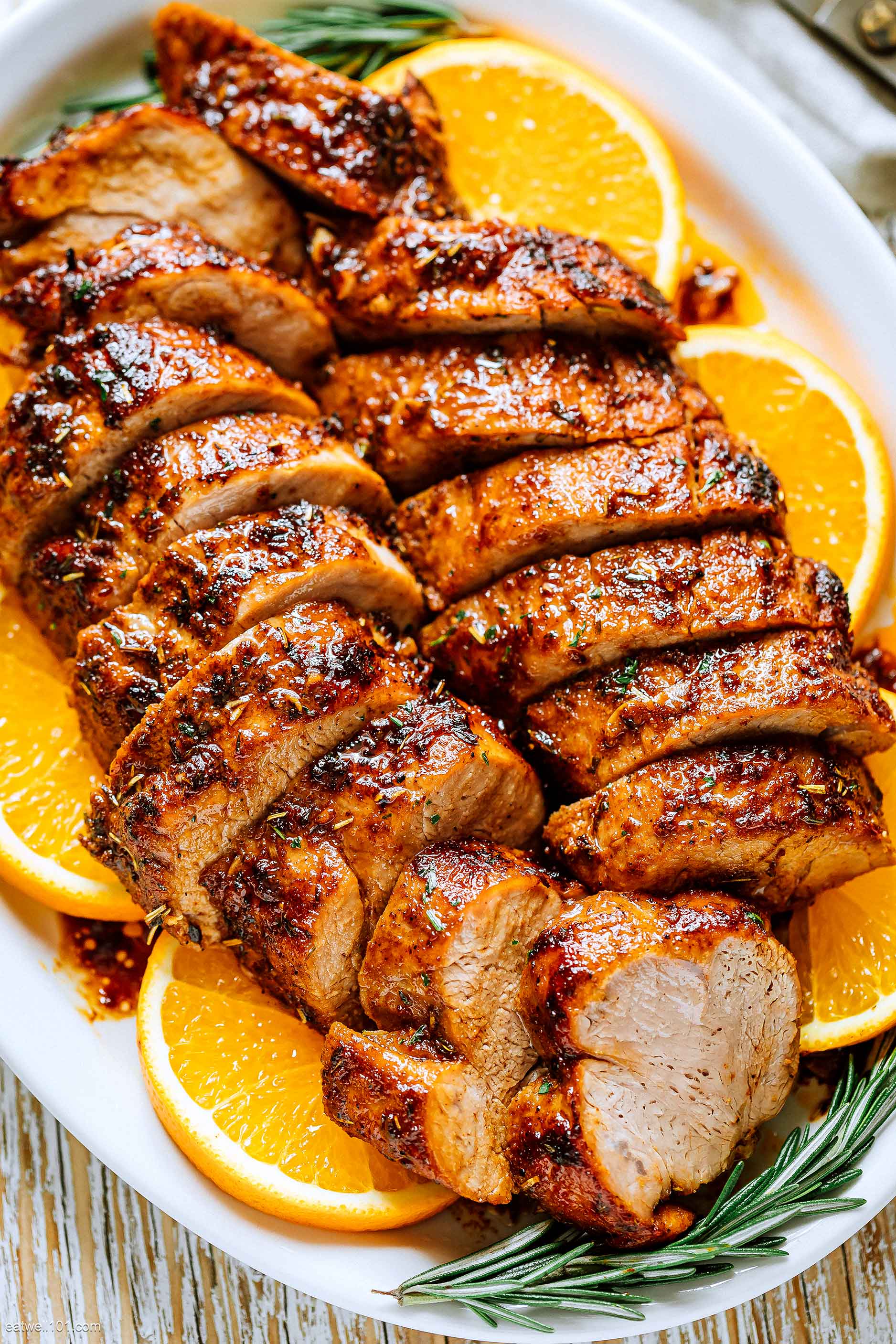
Honey Garlic Glazed Pork Tenderloin with Roasted Vegetables
A flavorful and tender pork tenderloin glazed with a sweet and savory honey garlic sauce, paired with vibrant roasted vegetables for a balanced and delicious dinner. This recipe is a must-try for any occasion.
🥘Ingredients
- 2 lbs pork tenderloin
- 2 tbsp olive oil
- 1 tsp salt
- 1 tsp black pepper
- 1 tsp garlic powder
- 3 tbsp honey
- 3 cloves garlic, minced
- 2 tbsp soy sauce
- 1 tbsp apple cider vinegar
- 1 tbsp Dijon mustard
- 1 tsp fresh thyme (or ½ tsp dried)
- 2 medium bell peppers, sliced
- 2 medium zucchini, sliced
- 1 large red onion, sliced
- 2 tbsp olive oil
- Salt and pepper to taste
👨🍳Directions
-
1
Preheat oven to 400°F (200°C). Line a baking sheet with parchment paper. -
2
Pat the pork tenderloin dry with paper towels. Rub with olive oil, salt, black pepper, and garlic powder. Place on the prepared baking sheet. -
3
Mix honey, minced garlic, soy sauce, apple cider vinegar, Dijon mustard, and thyme in a bowl to make the glaze. -
4
Preheat oven to 400°F (200°C). In a separate oven-safe dish, combine sliced bell peppers, zucchini, and red onion. Drizzle with olive oil, salt, and pepper. Roast for 15 minutes. -
5
After 15 minutes, transfer the vegetables to the baking sheet with the pork. Pour half of the honey garlic glaze over the pork and vegetables. Bake for another 25-30 minutes, basting occasionally with the remaining glaze.
🔧Equipment
- Mixing bowl
- Cutting board
- Knife
- Oven-safe baking dish
- Oven
- Mixing spoon
- Glass or ceramic dish (for glazing)
📊Nutrition Facts (per serving)
📝Notes
Tips
- For extra tenderness, let the pork rest for 10 minutes after cooking before slicing.
- Adjust the honey-to-soy ratio in the glaze to taste—more honey for sweeter, more soy for saltier.
- Use any combination of vegetables (e.g., broccoli, carrots) for added variety.
Substitutions
- Substitute honey with maple syrup for a slightly different flavor profile.
- Use pork loin instead of tenderloin if tenderloin is unavailable.
Watch Video Of How Honey Garlic Glazed Pork Tenderloin with Roasted Vegetables Works
❓ Frequently Asked Questions About Honey Garlic Glazed Pork Tenderloin with Roasted Vegetables
1. What is the best way to prepare pork for a delicious dinner recipe?
The best way to prepare pork for a delicious dinner depends on the dish, but generally, marinating the pork in a mix of olive oil, garlic, soy sauce, and herbs (like rosemary or thyme) for at least 30 minutes before cooking enhances flavor. For grilling or pan-searing, a high-heat sear creates a crispy exterior, while baking or slow-cooking ensures tender, juicy meat. Avoid overcrowding the pan to prevent steaming instead of browning.
—
2. How do I ensure my pork is cooked safely and properly?
To ensure pork is cooked safely, use a food thermometer to check internal temperatures. For pork chops or tender cuts, aim for 145°F (63°C), and for roasts or larger cuts, cook to 145°F (63°C) for at least 3 minutes after reaching the minimum safe temperature. Resting the meat for 5–10 minutes before slicing allows juices to redistribute. Avoid eating raw or undercooked pork, as it may contain harmful bacteria like Trichinella or Salmonella.
—
3. What are some simple and flavorful marinades or seasoning ideas for pork?
For a quick marinade, mix olive oil, lemon juice, minced garlic, soy sauce, honey, and fresh herbs (like parsley or cilantro) for about 1–2 hours. For dry rubs, try a blend of smoked paprika, brown sugar, garlic powder, onion powder, and a pinch of cayenne for a smoky, sweet kick. For Asian-inspired dishes, use a soy-ginger-garlic marinade with rice vinegar and sesame oil. Always marinate in the fridge to prevent bacterial growth.
—
4. How long should I cook pork chops or tenderloin for?
For pork chops, cook them to 145°F (63°C) internal temperature. Pan-sear them for 2–3 minutes per side for medium-rare, then finish in the oven at 375°F (190°C) for 8–10 minutes until fully done. For pork tenderloin, cook at 375°F (190°C) for 20–25 minutes (about 135–140°F/57–60°C internal) for medium-rare. Avoid overcooking, as pork dries out quickly.
—
5. Can I use frozen pork for cooking, and how do I thaw it properly?
Yes, you can use frozen pork, but it’s best to thaw it first for even cooking. The safest methods are refrigerating overnight (slowest and safest) or thawing in cold water (submerge the package in a bowl of cold water, changing it every 30 minutes). Avoid thawing at room temperature to prevent bacterial growth. Once thawed, cook as directed, but adjust cooking time by 15–20% longer than fresh pork to account for the extra coldness.

